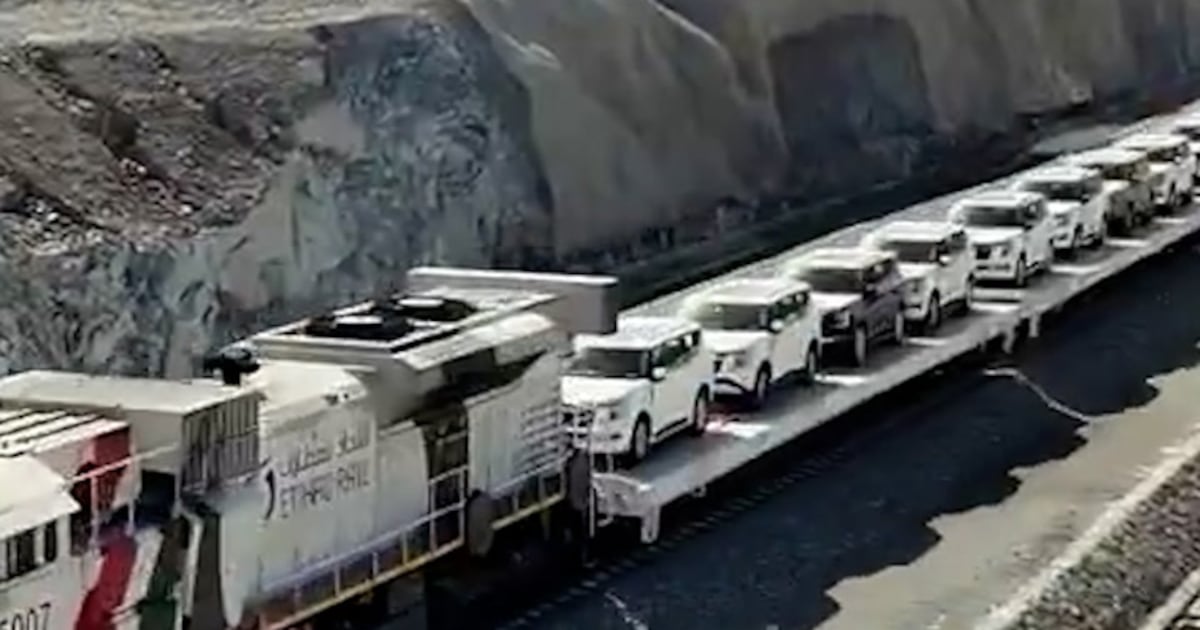

The robust expansion of transport infrastructure across the Middle East and North Africa (MENA) region is catalyzing a paradigm shift in sovereign capital deployment and venture capital dynamics. The recent inauguration of Etihad Rail’s inaugural Niassy Express service between Abu Dhabi and Fujairah exemplifies this trend, merging regional infrastructure ambitions with private-sector innovation. This project, leveraging Abu Dhabi’s sovereign wealth funds, underscores a strategic pivot by Gulf Cooperation Council (GCC) states to diversify revenue streams through public-private partnerships (PPPs). By integrating advanced logistics networks, the UAE is positioning itself as a nexus for trade between Asia, Europe, and Africa, directly amplifying the region’s business impact through enhanced connectivity and supply chain efficiency. Such initiatives are likely to attract increased sovereign capital inflows via green financing frameworks, with UAE’s recent $150bn renewable energy fund signaling broader institutional appetite for infrastructure-linked investments.
Venture capital interest in MENA infrastructure is accelerating, driven by opportunities at the intersection of digital transformation and physical asset modernization. The Etihad Rail project, which employs AI-driven predictive maintenance systems, exemplifies how sovereign-backed megaprojects are lowering execution risks for institutional investors. This is particularly resonant in a region where venture capital ecosystems have historically underperformed globally—Q2 2023 saw VC funding drop 22% year-on-year to $1.1bn—but infrastructure-scale bets offer a compelling alternative. Institutional LPs are prioritizing sovereign quasi-equity vehicles, such as India’s Hindenburg Impact Fund’s $500mn Middle East-focused mandate, which explicitly targets dual-use infrastructure assets blending energy, transport, and digital logistics. The ripple effects are evident in rising valuations for regional fintech-enabled logistics platforms like Egypt’s CURe, which recently raised $100mn to integrate blockchain with freight tracking systems.
Beyond immediate economic spins, these infrastructure bets are reshaping MENA’s geopolitical footprint. Sovereign capital-backed projects like Saudi Arabia’s NEOM smart city and UAE’s Dubai Futures Exchange modernization are creating interdependent corporate ecosystems that transcend traditional national boundaries. This decentralization of capital power is particularly critical amid shifting global investment patterns—with 40% of Abu Dhabi’s sovereign wealth fund now allocated to foreign assets since 2022, reflecting a deliberate de-risking strategy but also exposing regional partners to heightened volatility during currency fluctuations. Meanwhile, cross-border venture capital co-investments, such as Qatar’s MWan Venture Capital’s $250mn partnership with ScaleUp Ventures, are establishing a new paradigm where sovereign capital de-risks and scales nascent ventures, particularly in fintech and climate tech sectors where regulatory headwinds remain prohibitive for purely private investors.