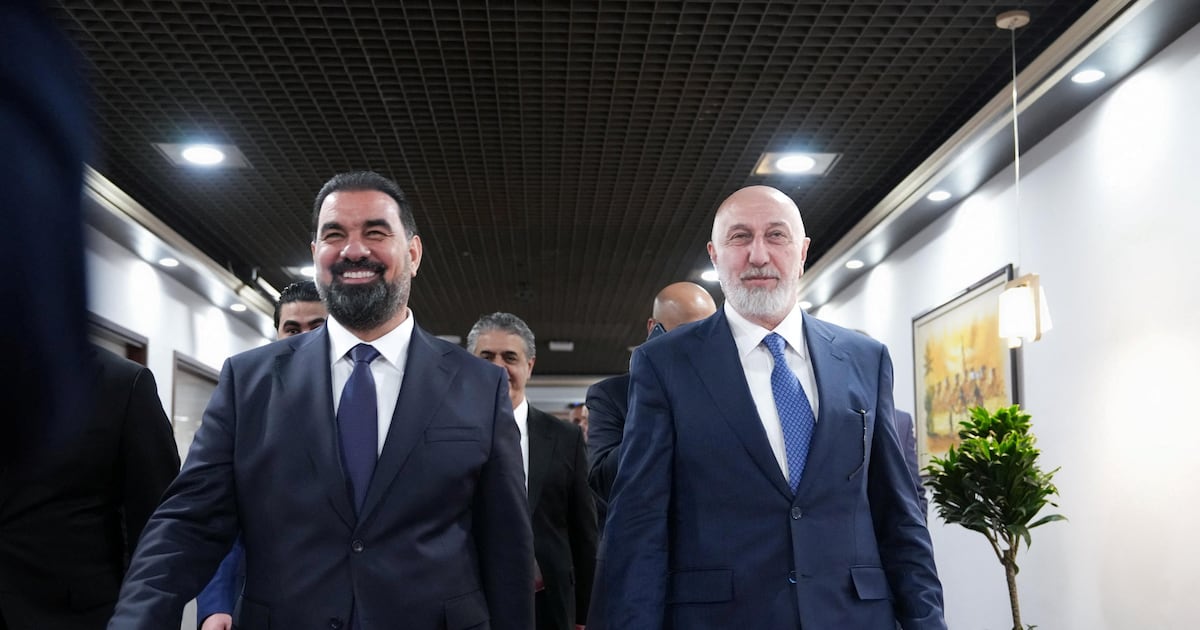

Iraq’s parliamentary election of Nizar Amedi as president amid prolonged political negotiations underscores the region’s persistent challenges in achieving stable governance, with profound implications for business ecosystems, sovereign capital flows, and regional infrastructure development. The prolonged delay in forming a cohesive government—Rooted in sectarian power-sharing dynamics and Kurdish parliamentary gridlock—has created uncertainty that reverberates across the MENA region. Investors and policymakers must recognize that the absence of a unified administration in Iraq risks stalling economic reforms, deterring foreign direct investment (FDI), and constraining the execution of large-scale infrastructure projects. For sovereign capital markets, the situation highlights the volatility of political transitions in the region, where delays in government formation often correlate with reduced capital inflows and increased reliance on external financing. Venture capital ecosystems, particularly in Iraq and neighboring states, face an indirect but tangible challenge: the inability to secure stable regulatory frameworks or consistent policy priorities hampers the scalability of tech startups, which rely on predictable environments for growth. The Kurdish-dominated presidency, while symbolizing a longstanding regional power-sharing arrangement, may also signal a recalibration of geopolitical alliances, potentially complicating cross-border investment flows in energy or tech sectors tied to Baghdad’s central authority. Regional infrastructure projects, from border-crossing logistics to energy networks, could face further bottlenecks if the new administration prioritizes political consolidation over economic integration.
The business impact of Iraq’s governance crisis extends beyond immediate fiscal concerns, exposing vulnerabilities in the MENA region’s sovereign capital reserves and venture capital resilience. For countries reliant on regional stability—such as Saudi Arabia, the UAE, or Jordan—the situation underscores the cost of prolonged political uncertainty in neighboring states. Sovereign wealth funds and regional development banks may need to recalibrate strategies to mitigate risks, potentially redirecting capital toward more stable MENA markets or increasing hedging against political volatility. In the venture capital space, the lack of a clear path to government engagement in Iraq could dampen innovation hubs in Baghdad and Erbil, discouraging early-stage investments in fintech or agritech, where local regulatory clarity is critical. Conversely, the emphasis on Kurdish representation might catalyze niche opportunities in decentralized governance models or regional tech solutions, attracting specialized VC interest. However, the broader MENA region must acknowledge that such instability acts as a compounding liability, eroding confidence in peer markets and necessitating heightened due diligence for cross-border investments. The interplay between Iraq’s political calculus and its economic integration with the GCC or European markets will determine whether this crisis sparks regional introspection or accelerates efforts to diversify capital sources.
Regional infrastructure development in the MENA context faces a bifurcated challenge following Iraq’s political uncertainties. Critical projects—ranging from post-pandemic economic recovery initiatives to transnational energy corridors—depend on coordinated governance structures that Iraq currently lacks. The delay in electing a president, let alone forming a ministry, risks sidelining Iraq from hosting or participating in regional infrastructure consortia, which often require stable bureaucratic frameworks. For example, cross-border digital infrastructure projects linking Iraq to Lebanon or Syria could stall without clear regulatory oversight, while energy partnerships with oil-rich Gulf states may face renegotiation risks. Nationally, the new government’s ability to secure sovereign loans or attract green technology partnerships will hinge on its capacity to present a unified economic agenda. Meanwhile, the Kurdistan Region’s administrative autonomy could either complement or hinder national infrastructure goals, depending on the cohesion between Baghdad and Erbil. The mesh of these dynamics suggests that MENA infrastructure stakeholders must prepare for fragmented execution timelines and increased budgetary overruns, particularly in projects reliant on Iraqi coordination. This scenario also amplifies the urgency for regional players to prioritize resilient, decentralized infrastructure models that can withstand political volatility.
Ultimately, Iraq’s electoral deadlock serves as a microcosm of broader challenges confronting the MENA region’s financial and technological trajectories. The interplay of business imperatives, sovereign capital flows, and infrastructure demands underscores the necessity for holistic governance reform—not merely in Iraq but across the region. While the election of a Kurdish president may symbolize progress in power-sharing, its tangible benefits for economic and technological development will depend on the new administration’s ability to transcend political theater. Regional players must therefore adopt a pragmatic approach: diversifying investment portfolios to avoid overreliance on volatile markets, fostering regional collaborations that mitigate internal instability, and accelerating digital infrastructure projects that can decouple from centralized state oversight. In an era where technological disruption and economic interdependence dominate global agendas, the MENA region cannot afford to treat political instability as a peripheral concern. The stakes are too high, and the opportunity costs of inaction—measured in lost capital, stalled innovation, and underutilized infrastructure—are too substantial to ignore.”