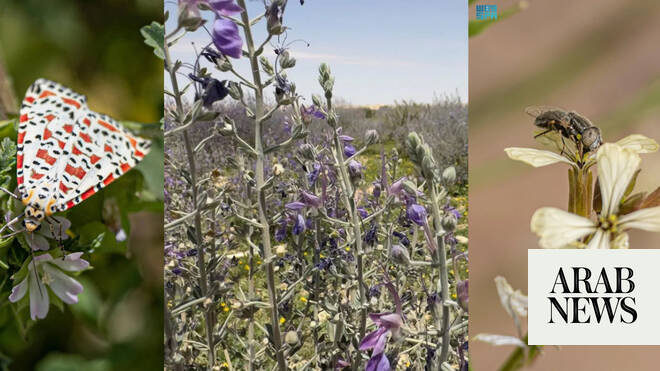

The resurgence of Teucrium oliverianum in Saudi Arabia’s Northern Borders region signals not only ecological renewal but also a strategic shift with profound business implications. As a barometer of soil health and land rehabilitation, the plant’s proliferation underscores the Kingdom’s success in reversing desertification through targeted conservation and sustainable land management. For investors, this mirrors a broader trend of environmental restoration unlocking long-term economic opportunities. Improved ecological stability reduces operational risks for agriculture and logistics firms in the region, while enhancing the viability of climate-resilient infrastructure projects. Absent deliberate sovereign investment in such initiatives, these gains would not have been possible, highlighting the critical role of state-backed capital in catalyzing large-scale environmental and economic transformation.
Venture capitalists are increasingly eyeing the Northern Borders region as a testing ground for green technologies tailored to arid ecosystems. The return of pollinators like the spot-eyed hoverfly and migratory species such as the crimson-speckled moth indicates a recovering habitat—a prerequisite for agritech startups specializing in desert-adapted crop systems, AI-driven pest control, and sustainable tourism ventures. These sectors align with global ESG investment flows, but their regional deployment requires localized capital injection to bridge technological gaps. Sovereign wealth funds, by earmarking portions of their portfolios for environmental and social governance projects, could provide the patient capital needed to scale these ventures. Such partnerships would not only address climate challenges but also diversify investment portfolios away from traditional hydrocarbon-centric models, positioning the Middle East as a hub for climate-adaptive innovation.
Regionally, this ecological revival underscores the urgency of infrastructure modernization to support both conservation efforts and economic diversification. Efficient logistics networks and digital monitoring systems are essential to ensure that restored ecosystems contribute to carbon offset programs and sustainable agriculture value chains. For instance, enhanced transportation links between the Northern Borders and neighboring Gulf states could facilitate the export of native flora and fauna-based bioproducts, while satellite-based biodiversity tracking could anchor regional carbon markets. Saudi Arabia’s integration of such initiatives into its National Renewable Energy and Circular Carbon Economy strategies offers a blueprint for MENA countries to leverage environmental recovery as a driver of sovereign capital mobilization and foreign direct investment, particularly in the wake of oil-driven economic transitions.