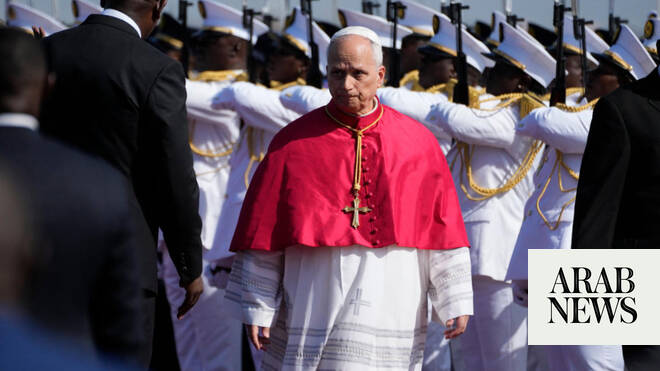

Amid escalating geopolitical tensions, the evolving rhetoric of Pope Leo during his recent Africa tour has captured global attention, particularly following remarks that appeared to criticize the actions and policies of US President Donald Trump. While the pontiff maintains that his comments were mischaracterized by international media, the incident underscores the delicate balancing act faced by global religious figures in maintaining diplomatic neutrality. His Africa tour, spanning 18,000 km across four countries and 11 cities, reflects a modernized approach to papal outreach, signifying a potential shift in both communication style and geopolitical engagement for the Vatican. These developments are closely observed by international investors, sovereign governments, and global capital allocators attuned to how religious soft power intersects with broader economic and political currents.
For the Gulf Cooperation Council (GCC) and broader MENA region, the Pope’s remarks and subsequent clarification offer salient lessons for both sovereign wealth funds and venture capitalists navigating complex geopolitical risk. In an era marked by increasing multipolar tensions, institutional capital allocators—including sovereign entities—are recalibrating exposure across emerging markets. Saudi Arabia, the UAE, and Qatar, as central players in international development finance, have sought to distance their strategic investments from overt political alignments while maintaining influence on the global stage. This balancing act prioritizes infrastructure development, sustainable urban projects, and technology partnerships, positioning the region as a neutral hub for talent, capital, and diplomacy. Moreover, regional venture capital firms are leveraging geopolitical uncertainties to identify new opportunities in fintech, renewable energy, and advanced manufacturing—sectors less vulnerable to direct political friction but essential to long-term economic resilience.
Looking ahead, as MENA sovereigns continue to diversify investment portfolios and expand soft power, the Vatican’s public engagements—whether in Africa or elsewhere—will remain a barometer for assessing global sentiment and risk. The religiously inspired critique of war, inequality, and global leadership underscores broader trends where religious, cultural, and institutional actors increasingly influence geopolitical risk narratives. GCC states, in particular, have the opportunity to capitalize on their geopolitical positioning, fostering international partnerships that align with both regional development agendas and global stability. As private and public sector leaders from the Middle East face rival super-power politics, geopolitical neutrality, and strategic infrastructure investment are emerging as critical determinants of capital flows and venture success across the region. The intersection of soft power and hard economics will continue to shape opportunities for MENA’s institutional investors in the years to come.