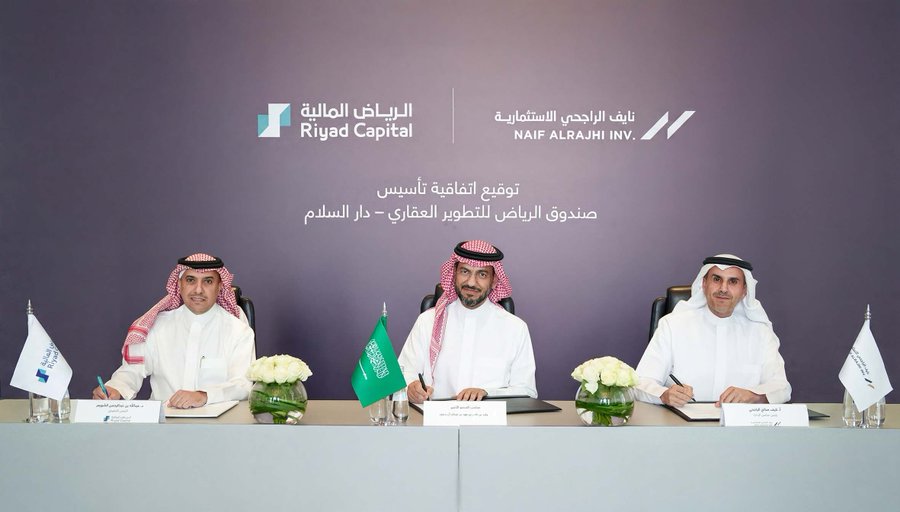

The Riyad Real Estate Development Fund, a U.S.-$400 million sovereign initiative, catalyzes strategic growth within MENA regional markets through its alignment with national economic priorities. Institutional players leverage sovereign capital deployment to fund mixed-use developments, catalyzing immediate infrastructure amplification across urban centers. Such initiatives intersect with venture capital ecosystems, enabling targeted investments in high-impact projects that reinforce sovereign identity amid geopolitical complexities. Regional stakeholders note heightened investor certainty as the fund catalyzes coordinated resource allocation, positioning MENA as a leading hub for convergent capital deployment.
Sovereign capital mobilization and venture capital-driven financing converge, amplifying visibility of infrastructural ambitions while mitigating project execution risks. The fund’s mandate necessitates seamless integration with pending infrastructure corridors, demanding rigorous due diligence to ensure scalability and sustainability. Consequently, regional contenders interpret this consolidation as a benchmark, influencing capital flows and prioritizing alignment with broader geopolitical objectives.
Long-term implications suggest structural transformation through enhanced urban resilience, economic momentum, and regional connectivity. Yet, skepticism persists regarding resource efficacy amid competing global priorities. The efficacy of such models remains contingent upon sustained governance rigor and adaptive governance frameworks, underscoring their pivotal yet precarious role in shaping MENA’s financial architecture.