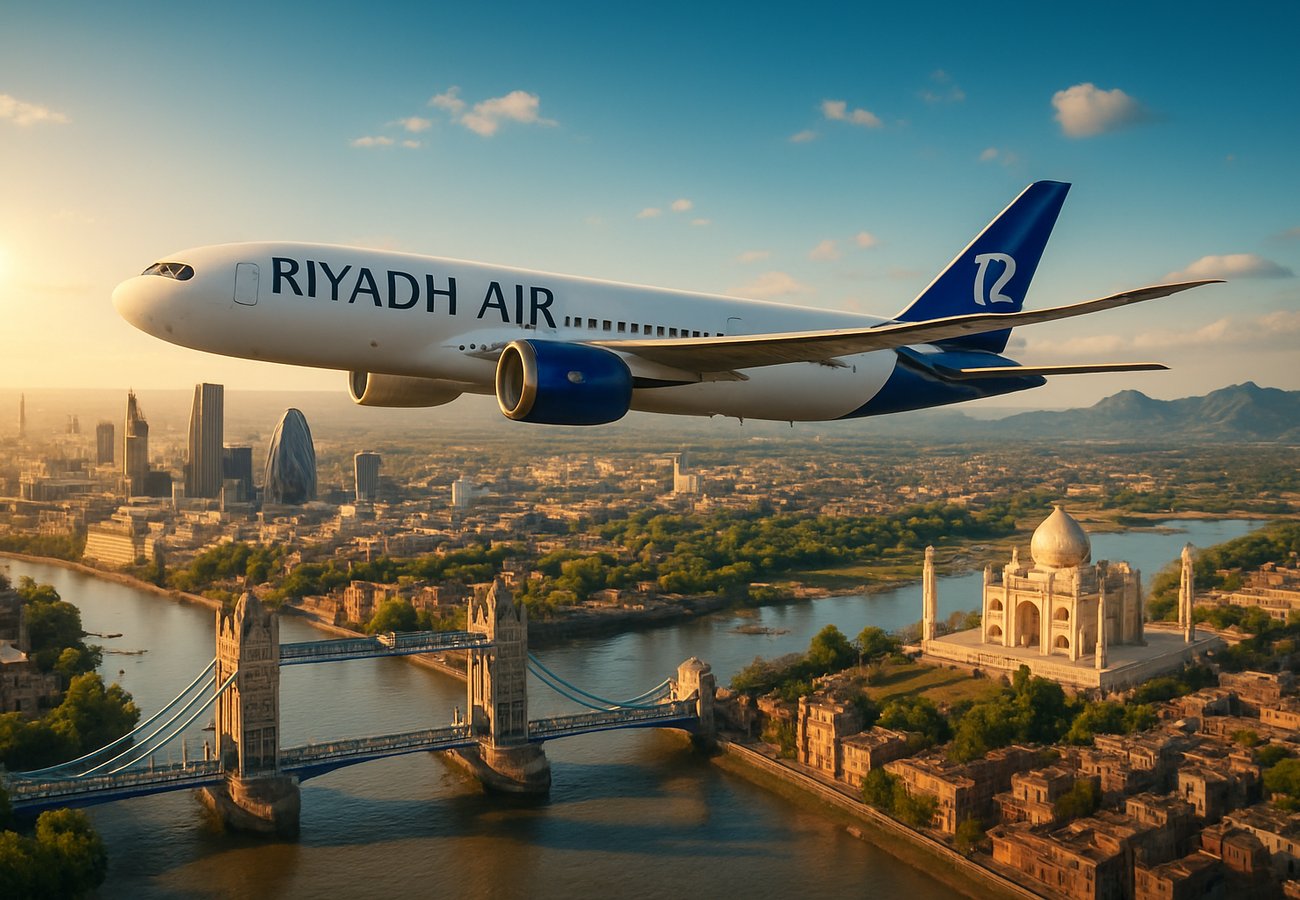

Riyadh Air, the sovereign carrier financed by Saudi Arabia’s Public Investment Fund, has disclosed a nine‑city long‑haul network that links the kingdom with Europe, North Africa, South Asia and Southeast Asia. Direct services to London (Heathrow), Manchester, Madrid, Cairo, Amman, Mumbai, Delhi and Bangkok will launch between 2026 and 2029, using a fleet of Boeing 787‑9 Dreamliners that deliver 30‑40 % lower fuel burn and a premium cabin product aimed at high‑yield leisure and business travelers. The route selection is calibrated to the Vision 2030 agenda: it supplies the connectivity required to triple inbound tourism to 30 million visitors, channel investment to mega‑projects such as NEOM and the Red Sea Resort, and diversify sovereign revenue away from hydrocarbons.
The strategic impact on regional aviation is profound. By inserting a state‑backed, capital‑rich carrier into a market long dominated by Emirates, Qatar Airways and Etihad, Saudi Arabia is creating a new competitive axis that challenges the hub‑and‑spoke dominance of Gulf airports. Riyadh Air’s focus on point‑to‑point premium routes avoids the volume‑driven model of its rivals, potentially siphoning transfer traffic that currently transits through Dubai, Doha and Abu Dhabi. This pressure is likely to compress yields on premium seats, benefitting consumers while forcing incumbent carriers to refine their service propositions and cost structures.
From a sovereign‑capital perspective, the PIF’s backing provides Riyadh Air with virtually unlimited financing capacity, enabling rapid fleet acquisition and aggressive route development without the balance‑sheet constraints that limit private entrants. The airline’s ambition to serve over 100 destinations by 2030 dovetails with broader MENA infrastructure initiatives, including the expansion of King Khalid International Airport’s terminals and the construction of a new Saudi aviation hub in the NEOM Special Economic Zone. These projects will not only augment passenger handling capacity but also create a pipeline of ancillary opportunities for local contractors, technology firms and logistics providers.
Venture capital and private‑equity firms focused on the MENA travel ecosystem stand to benefit from the spill‑over effects of Riyadh Air’s expansion. Enhanced connectivity lowers entry barriers for tourism‑related startups, from boutique hotel platforms to digital travel‑experience aggregators, while the airline’s anticipated code‑share agreements with Iberia, Air France‑KLM and Asian carriers open channels for cross‑border investment and joint‑venture formation. In sum, Riyadh Air’s launch is not merely an airline start‑up; it is a sovereign‑driven catalyst that reshapes regional air traffic flows, unlocks new capital for infrastructure, and accelerates the diversification agenda at the heart of Saudi Arabia’s long‑term economic strategy.