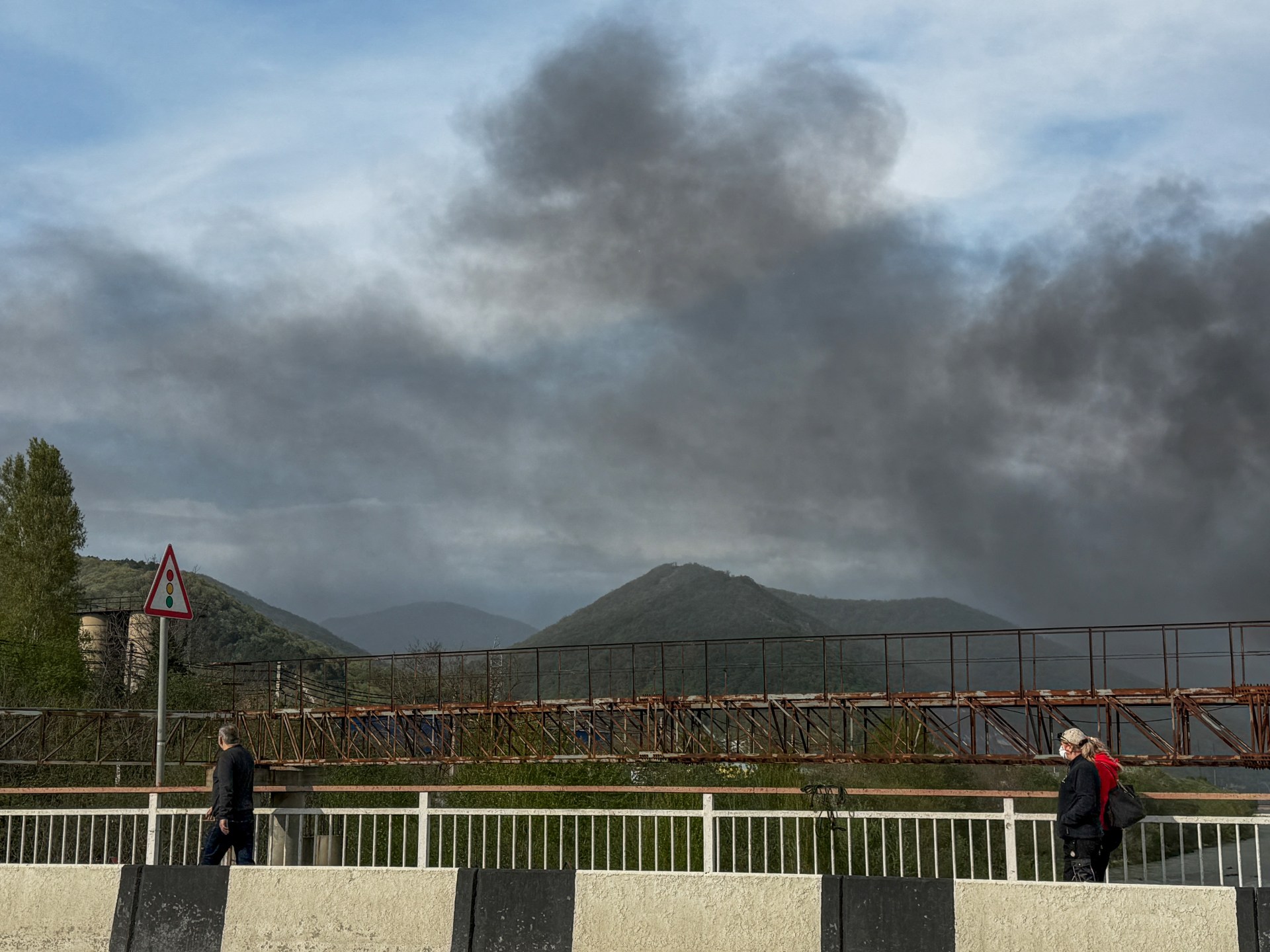

The environmental catastrophe unfolding along Russia’s Black Sea coast following Ukrainian strikes on the Tuapse refinery represents more than a regional ecological tragedy—it underscores the vulnerability of critical energy infrastructure to asymmetric warfare and exposes the fragility of global energy markets that disproportionately affect MENA economies. The disruption to Russian oil production and export capacity, coupled with the contamination of coastal infrastructure, has already sent ripples through global commodity pricing, compelling Gulf Cooperation Council (GCC) states and North African energy exporters to reassess supply chain resilience and downstream investment priorities. For sovereign wealth funds managing trillions in assets across the region, the incident reinforces the imperative to accelerate diversification away from carbon-intensive dependencies and toward renewable energy infrastructure, as traditional hydrocarbon hub risks—ranging from geopolitical targeting to regulatory opacity—threaten long-term portfolio stability.
This shift is catalyzing unprecedented capital reallocation within the region’s venture ecosystem, where green technology and environmental remediation startups are securing record funding. MENA’s institutional investors, including the UAE’s ADQ and Saudi Arabia’s Public Investment Fund, are increasingly backing solutions addressing industrial decarbonization, water security, and climate resilience—sectors where the absence of effective international legal frameworks for wartime environmental destruction creates both risk and opportunity. The lack of enforceable ecocide legislation, as highlighted by recent disasters in Ukraine and Russia, simultaneously weakens regulatory predictability for cross-border investments and elevates the strategic importance of regional climate adaptation financing, particularly in infrastructure-heavy jurisdictions like Egypt and Morocco.
From an infrastructure standpoint, MENA nations are confronting the urgent need to harden their own energy and logistics networks against similar vulnerabilities. The Tuapse incident exemplifies how degraded environmental oversight and state-controlled information systems can amplify disaster recovery costs, a lesson resonating with regional policymakers already investing billions in digital infrastructure and smart grid technologies. Countries such as Jordan and Tunisia, which host significant portfolios of European-backed renewable projects, are now prioritizing supply chain localization and dual-use infrastructure capable of absorbing shocks from upstream disruptions. Concurrently, the erosion of independent environmental monitoring in conflict zones underscores the growing strategic value of private-sector environmental intelligence platforms—an emerging vertical drawing substantial VC interest across Dubai’s and Riyadh’s incubators.
At the institutional level, the incident underscores deepening structural risks in Russia’s war economy that extend beyond humanitarian concerns to influence MENA’s macroeconomic planning. The Kremlin’s decision to prioritize beach tourism revival over environmental remediation mirrors a broader extractivist model that MENA economies are actively seeking to transcend. Regional sovereign capital vehicles are increasingly conditioning fossil fuel investments on enhanced governance frameworks, while multilateral development banks supporting $200 billion in annual infrastructure projects across the Maghreb and Mashreq are embedding stricter environmental impact criteria. Yet the absence of binding international mechanisms to hold aggressor states accountable for environmental warfare leaves MENA’s vanguard investors navigating heightened volatility without adequate legal recourse—a gap that is spurring domestic regulatory innovation in liability standards and cross-border climate risk disclosure.