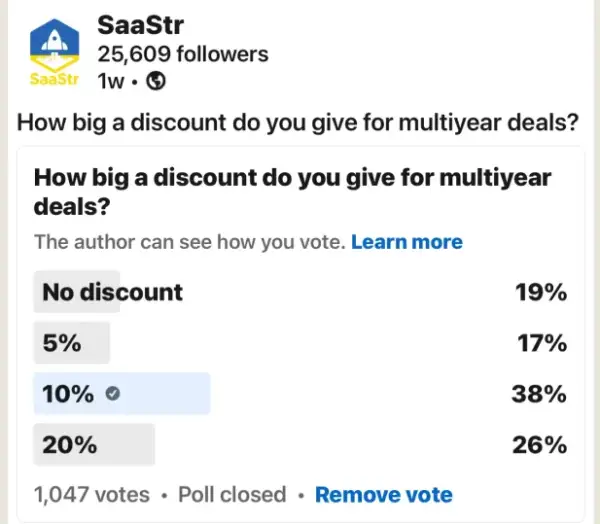

The debate over monthly versus annual subscription models in software-as-a-service enterprises has taken on renewed significance in the Middle East and North Africa, where sovereign wealth funds and regional venture capital arms are increasingly scrutinizing SaaS investments through the lens of unit economics and churn metrics. As sovereign capital from the Public Investment Fund of Saudi Arabia, the Abu Dhabi Investment Authority, and the Qatar Investment Authority seeks exposure to the region’s burgeoning digital economy, the predictability of revenue streams has become a critical determinant in valuation frameworks. Annual subscription structures, which lock in customer commitments for twelve-month periods, align more closely with the risk-adjusted return expectations of institutional investors who require demonstrable cash flow visibility—particularly in markets where digital payment infrastructure remains uneven and customer acquisition costs carry significant variance across Gulf Cooperation Council states and broader MENA markets.
The strategic calculus for SaaS operators in the region differs meaningfully from Western counterparts, given the nascent but rapidly maturing venture ecosystem. Regional venture capital, including vehicles backed by Saudi Aramco’s Prosperity7 Ventures, Dubai’s Venture Capital Fund, and Egypt’s Sawari Ventures, increasingly demands evidence of customer stickiness as a precondition for Series A and growth-stage financing. Annual plans, which typically yield 100-300 percent higher lifetime value than monthly arrangements, present a compelling narrative for investors seeking to justify valuations in a market where technology sector multiples have expanded substantially over the past twenty-four months. However, this pursuit of revenue predictability must be balanced against the practical realities of MENA market penetration, where small and medium enterprise adoption of cloud-based solutions remains in early stages and friction in the sales process can permanently foreclose customer relationships.
Regional infrastructure considerations further complicate the pricing strategy calculus. The Gulf state’s ambitious digital transformation agendas—Saudi Vision 2030’s target of positioning the Kingdom as a regional technology hub, the UAE’s national innovation strategy, and Qatar’s National Vision 2030—all depend on accelerating enterprise digitization across financial services, healthcare, logistics, and government sectors. SaaS companies that price out potential customers through annual-only commitment requirements risk slowing the broader ecosystem development that sovereign planners seek to engineer. The optimal approach for most MENA-focused SaaS operators appears to be a hybrid model: emphasizing annual plans through pricing incentives while maintaining monthly options as acquisition channels, thereby capturing both the institutional investor appetite for predictable revenue and the market penetration necessary for sustainable regional growth.