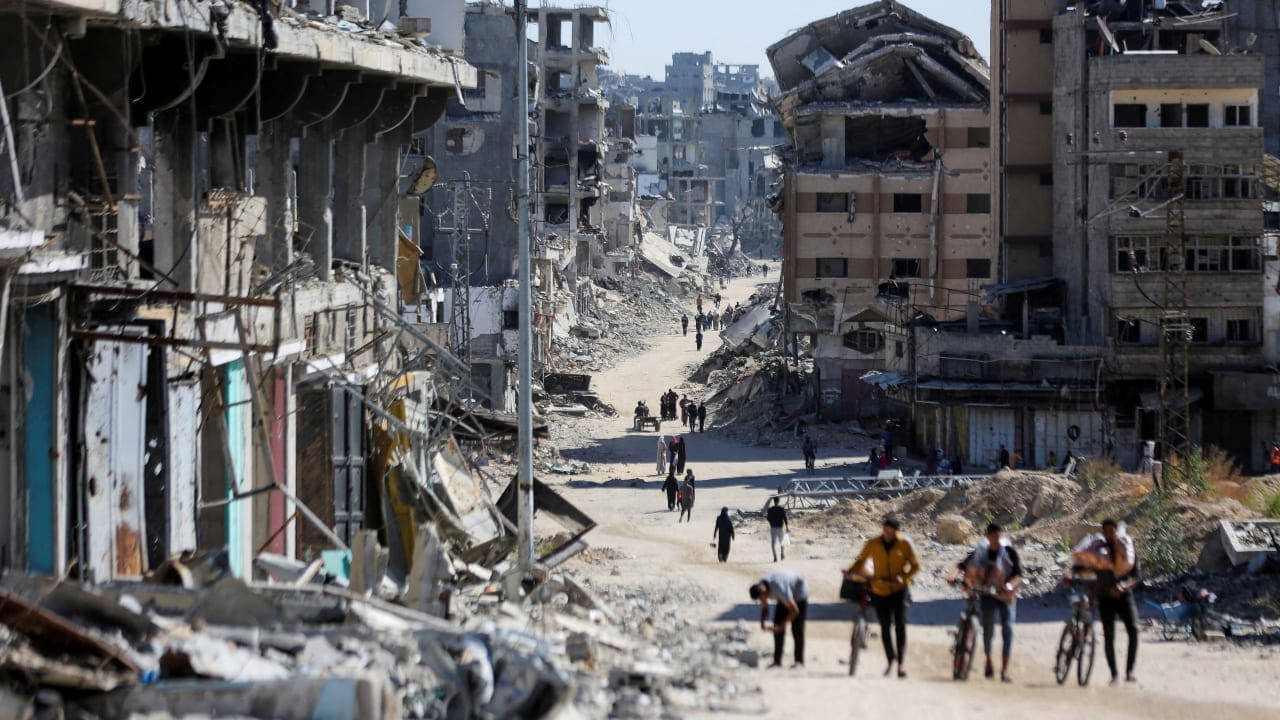

The recent talks between DP World and the U.S. Board of Peace regarding Gaza’s infrastructure and supply chain overhaul underscore a strategic economic recalibration with profound implications for the Middle East-North Africa (MENA) region. The proposed logistics and port initiatives, centered on a $70 billion reconstruction mandate, represent a high-stakes effort to transform Gaza into a modern trade hub. This aligns with broader regional interests in stabilizing fractured supply networks and fostering economic resilience amid ongoing geopolitical volatility. For sovereign entities, the project highlights a potential avenue to leverage capital for long-term value creation, though the absence of concrete funding commitments raises questions about fiscal prioritization. The envisioned free-trade zone and logistics infrastructure could catalyze regional trade flows, positioning MENA as a nexus for cross-border commerce. However, the current bottlenecks in entry systems—described as inefficient as a “straw”—reveal critical gaps in infrastructure modernization that must be addressed to realize these ambitions. The success of such initiatives would hinge on private-sector innovation and bureaucratic streamlining, areas where venture capital could play a transformative role.
From a sovereign capital perspective, the Gaza reconstruction proposal exemplifies the region’s complex balancing act between humanitarian imperatives and economic pragmatism. The $70 billion cost benchmark places immense fiscal pressure on stakeholders, necessitating innovative funding mechanisms such as sovereign-backed public-private partnerships or international loans. DP World’s involvement signals a shift toward private-sector leadership in infrastructure development, which could reduce the burden on state budgets and unlock efficiency gains. Yet, the lack of pledged funds to date underscores the challenges of translating vision into action, particularly in a context where political and security gridlock persists. The potential establishment of a free-trade zone in Gaza could also influence sovereign fiscal policies across MENA, offering a model for leveraging strategic geographic assets to attract foreign investment. For regional governments, this underscores the need to align reconstruction efforts with long-term economic integration strategies, ensuring that short-term aid does not overshadow sustainable development goals.
The venture capital and technology sectors stand to benefit significantly from the push to modernize Gaza’s infrastructure. The focus on advanced logistics systems, digital tracking platforms, and secure supply chains aligns with global trends in smart infrastructure, presenting opportunities for VC firms to fund tech-driven solutions tailored to conflict-affected regions. Additionally, the development of a new port or free-trade zone could spur demand for specialized engineering, asset management, and cybersecurity services, further attracting investment. Regionally, such projects could catalyze infrastructure modernization across MENA, addressing chronic bottlenecks in transportation and trade. However, the success of these initiatives will depend on scalable, replicable models that can be adapted to other instability-stricken markets. For venture capital, this represents a niche but high-impact area where strategic bets on infrastructure technology could yield both financial returns and geopolitical influence. Investors must, however, navigate the risks associated with regulatory uncertainty and operational volatility in the region.