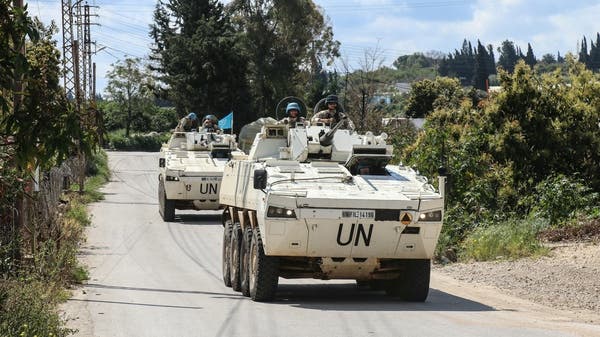

The United Nations’ confirmation on April 23, 2026 that it is formulating operational options for a residual presence in Lebanon beyond the year-end expiration of the UN Interim Force in Lebanon (UNIFIL) mandate represents a structural shift in Levantine security architecture, with immediate knock-on effects for sovereign risk pricing, Gulf sovereign wealth fund allocation, and regional infrastructure pipeline prioritization. UN Under-Secretary-General for Peace Operations Jean-Pierre Lacroix noted the Lebanese government has formally requested a continued UN presence, with any post-2026 uniformed deployment requiring Security Council approval, as the 47-nation, 8,200-strong peacekeeping force, first deployed in 1978 and currently caught in crossfire between Israeli forces and Hezbollah, faces mounting attrition. Five UNIFIL troops have been killed in recent ambushes, including three Indonesian and two French personnel, as Lebanon was drawn into the broader Middle East conflict on March 2 after Tehran-backed Hezbollah launched retaliatory strikes into Israel following the US-Israeli airstrikes that killed Iranian Supreme Leader Ali Khamenei.
From a capital markets perspective, the uncertainty surrounding the post-UNIFIL framework has already driven 14% widening in Lebanese sovereign credit default swap spreads since March, with spillover pressure on Jordanian and Syrian sovereign debt as institutional investors reprice Levantine exposure. Gulf sovereign wealth funds, which had committed $2.1bn to Lebanese port modernization, renewables, and logistics projects in 2024–2025 ahead of a projected economic stabilization, have frozen all new deployment to the market pending clarity on multilateral security guarantees, as 10-year infrastructure concession agreements require explicit risk mitigation frameworks to secure institutional co-investment. The Eastern Mediterranean basin, a priority corridor for EU-GCC energy cooperation, has seen FDI inflows drop 22% year-on-year in Q1 2026, per UNCTAD preliminary data, as multinational corporations defer CapEx commitments until the Security Council finalizes the post-UNIFIL mandate.
The MENA venture capital ecosystem, which allocated a record $4.7bn to Levantine early-stage startups in 2025, has seen deal velocity for Beirut-based fintech, supply chain tech, and agritech firms fall 37% in Q2 2026, as limited partners demand 400–600 basis point risk premiums for conflict-adjacent exposure. Regional infrastructure planners across the Gulf Cooperation Council are concurrently accelerating alternative corridor development to bypass Lebanese volatility, including fast-tracking the $3.6bn Iraq-Syria-Jordan gas pipeline and the Saudi-Egypt land bridge project, which would redirect Gulf capital away from the Levant toward lower-risk North African and Gulf markets. Lacroix’s note that any residual UN presence will retain monitoring, reporting, and liaison capacities aligns with investor demands for third-party verification of security conditions, though insurance costs for regional contractors operating in southern Lebanon have risen 18% year-to-date, per Lloyd’s of London regional filings, eroding project IRRs for cross-border infrastructure bets.
Broader regional stability hinges on the Security Council’s ability to craft a post-UNIFIL framework that addresses the security requirements of both Lebanon and Israel, as noted by Lacroix, with any durable solution serving as a prerequisite for the resumption of large-scale institutional capital flows to the Levant. For Gulf sovereign wealth funds, which hold a combined $3.2trn in assets under management, the outcome will determine whether Lebanon remains a viable diversification play for Mediterranean-facing infrastructure, or is excluded from near-term regional capital allocation roadmaps in favor of higher-yield opportunities in Saudi Arabia’s NEOM, Egypt’s Suez economic zone, and Morocco’s renewable energy hubs.