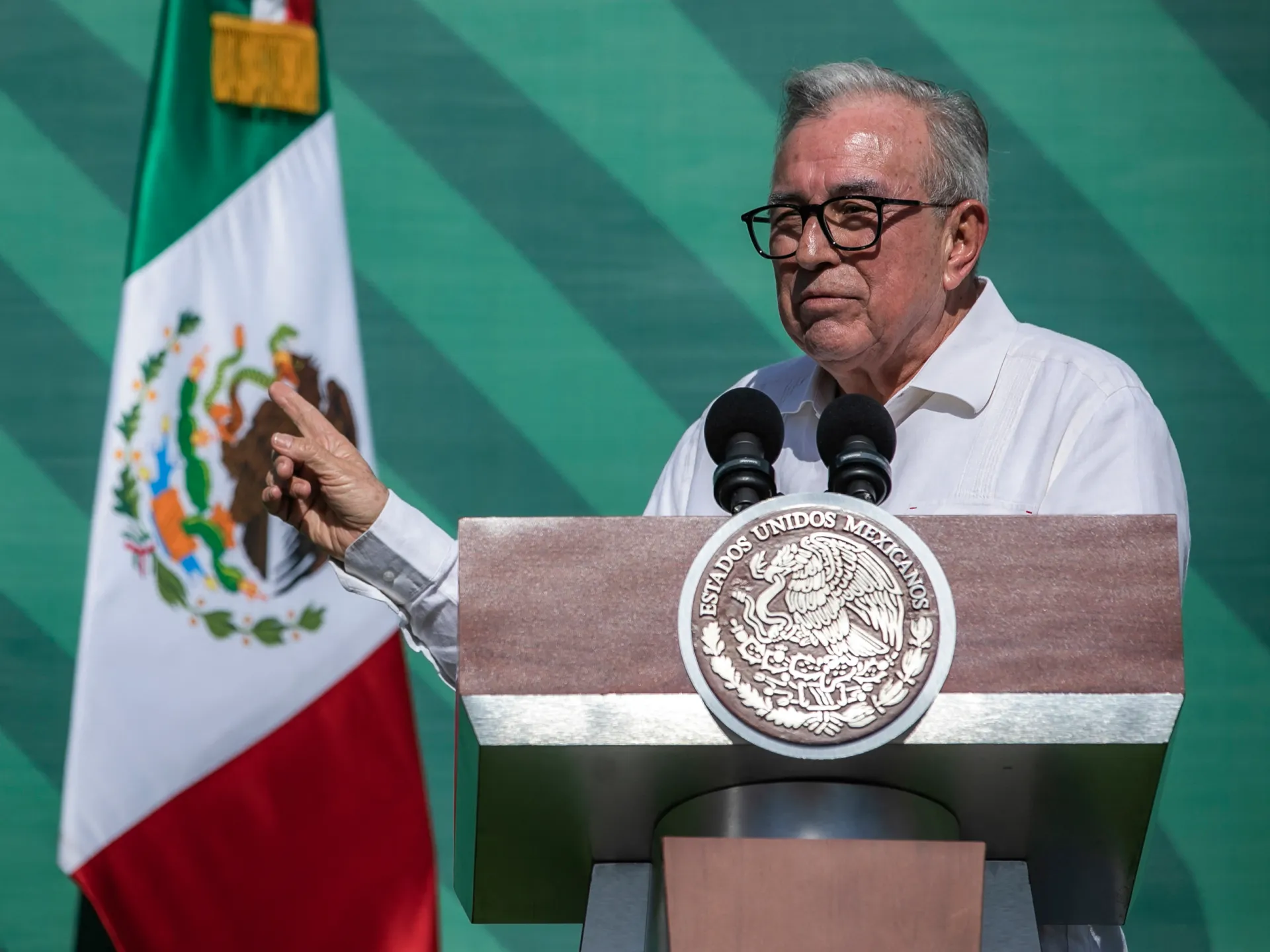

United States prosecutors have charged Mexico’s Sinaloa state Governor Rubén Rocha Moya and nine associates in a sweeping indictment alleging deep entanglements between the Sinaloa Cartel and Mexican political institutions—a move that could destabilize bilateral cooperation and financial integrity frameworks. The charges frame Rocha Moya’s office as central to facilitating drug trafficking, corruption, and political manipulation, with accusations of bribes, ballot tampering, and collusion with cartel affiliates to sustain Sinaloa’s governance structure. If proven, this would mark a historic escalation in U.S. strategy to dismantle transnational crime networks by targeting policymakers rather than solely criminal operatives.
The indictment underscores a critical vulnerability in Mexico’s institutional fabric, threatening sovereign capital flows and regional infrastructure resilience. By embedding cartel-linked actors into governance roles, these networks divert public resources toward illicit economies, eroding tax bases and deterring private and foreign direct investment in infrastructure projects. For venture capital ecosystems reliant on stable institutional environments, the case highlights systemic risks in markets where organized crime and state power converge. Such dynamics amplify volatility in sovereign borrowing costs, as investors signal heightened risk premiums amid political fallout from the trial and potential international sanctions.
Regional infrastructure implications are equally stark. Sinaloa, a critical transit corridor for narcotics shipments to the U.S., exemplifies how state corruption undermines logistics and security investments. The indictment’s focus on Rocha Moya’s alleged facilitation of cartel access to state networks risks derailing cross-border trade agreements under USMCA, particularly as agricultural and manufacturing zones in northern Mexico face heightened operational risks. Meanwhile, Mexico’s public security budget—already strained by cartel violence—faces renewed pressure to address institutional rot rather than fund border infrastructure upgrades. The U.S. stance, treating cartel-political symbiotic relationships as national security threats, could catalyze further scrutiny of Mexico’s financial compliance mechanisms, with ramifications for SWIFT access and correspondent banking relationships.