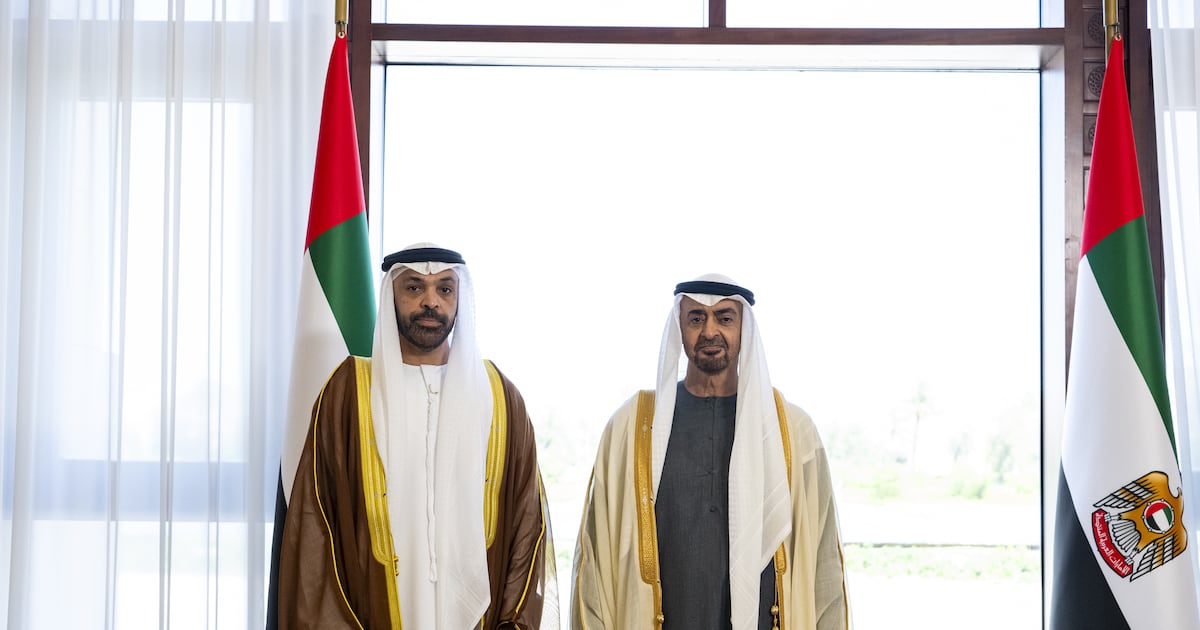
UAE Ambassadors Sworn In as President Sheikh Mohamed Oversees Ceremony
The appointment of UAE ambassadors to Costa Rica, ASEAN, Ukraine, and Uganda underscores a strategic recalibration of Abu Dhabi’s diplomatic-economic infrastructure, aligning with its ambition to diversify energy and investment outreach beyond OPEC dependencies. By embedding high-level representatives in growth corridors such as Southeast Asia (ASEAN) and East Africa (Uganda), the UAE aims to catalyze bilateral trade agreements and attract sovereign capital flows into regional infrastructure projects, particularly renewable energy and digital transformation initiatives. This move directly ties to the UAE’s broader economic diversification mandate under Vision 2030, leveraging state-backed sovereign wealth instruments like ADIA to co-invest in cross-border greenfield ventures, thereby positioning itself as a gatekeeper for global capital into emerging markets.
The expansion of UAE diplomatic footprints in tech-forward hubs like Costa Rica—home to Central America’s largest semiconductor cluster—and ASEAN—a region projecting 5% GDP growth through digitalization—signals a calculated pivot toward venture capital adjacencies. Ambassador-level engagements in these ecosystems enable direct liaison with sovereign funds and private equity syndicates driving tech-enabled infrastructure (e.g., EV corridors, smart grids), sectors where UAE state actors have aggressively sought to capture market share. This approach not only diversifies Abu Dhabi’s investment portfolio but also accelerates knowledge transfer from UAE tech hubs to recipient regions, embedding Emirati influence in global innovation value chains.
Geopolitically, these appointments reflect UAE pragmatism in balancing strategic partnerships amid shifting power dynamics. By appointing ambassadors to Ukraine (critical for EU energy security) and Costa Rica (a CELAC bloc linchpin), the UAE signals intent to broker African and Asian infrastructure partnerships that circumvent Western sanctions regimes, potentially funneling infrastructure capital toward contested but resource-rich zones. Such moves align with the UAE’s recent troika presidency of the COP28 climate summit, where it advocated “global north-south collaboration” in financing adaptation projects—a narrative likely to bolster its role in sovereign bond markets and blue bond issuance across MENA and Sub-Saharan Africa.