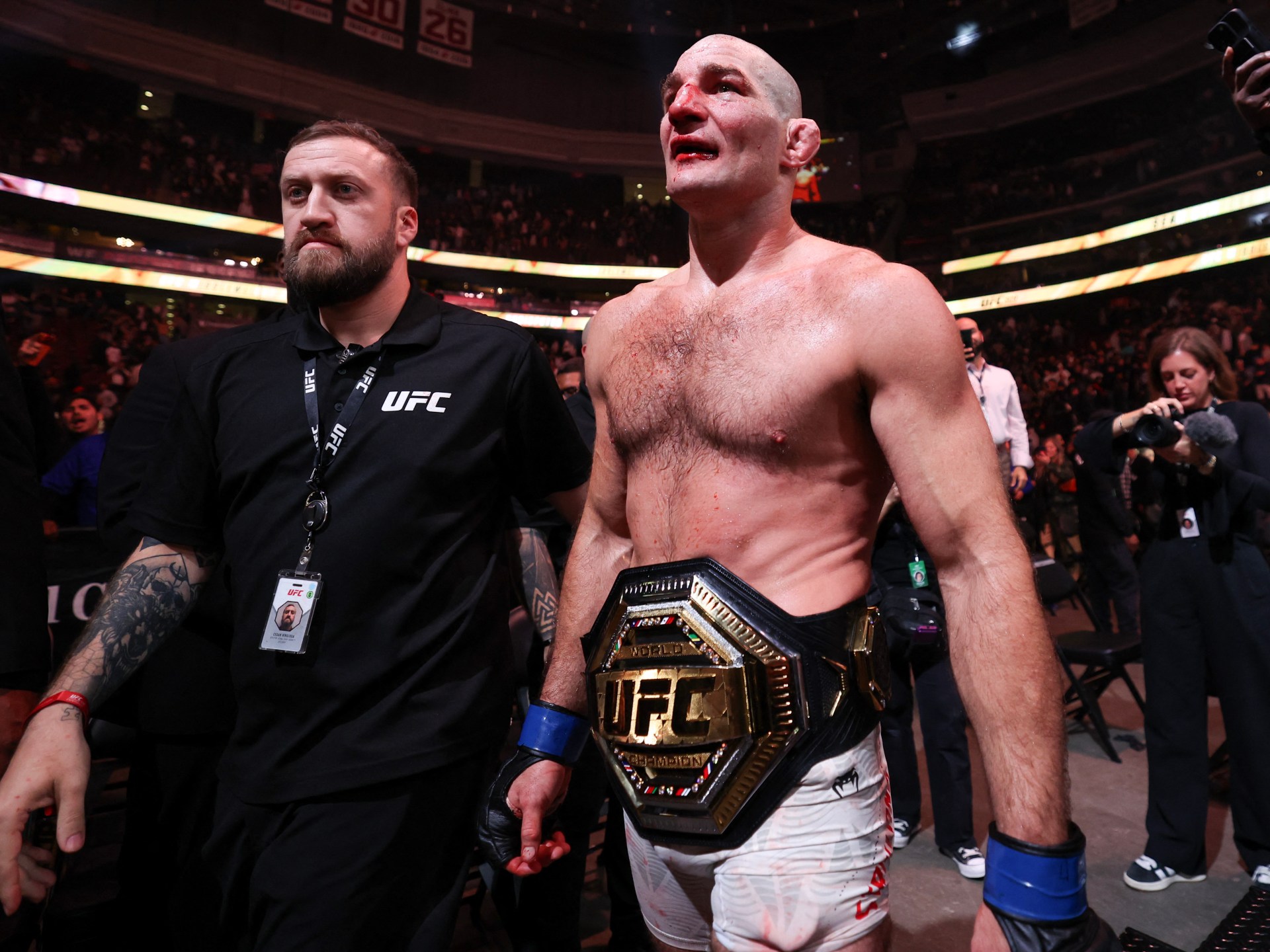

Sean Strickland’s narrow split-decision reclaiming of the UFC middleweight championship from Khamzat Chimaev—fighting under the United Arab Emirates banner—underscores a deeper regional calculus that extends well beyond the cage. Chimaev’s loss marks the first blemish on a record that had become a centerpiece of Abu Dhabi’s soft-power playbook: a Chechen-born fighter repackaged as Emirati talent to signal the Gulf state’s ambition to dominate global combat sports, attract sovereign wealth into entertainment rights, and deepen its foothold in the $5 billion-plus mixed martial arts market. For sovereign wealth funds already allocating capital toward sports properties as alternative asset classes, the bout exposed the reputational fragility of tethering regional prestige to a single athlete—particularly when pre-fight rhetoric escalated to threats of violence and ethno-political baiting that drew sharp criticism from international federations and sponsors alike.
The UFC’s proximity to its June 14 spectacle at the White House—framed by CEO Dana White as a “1 of 1 event” timed to President Trump’s 80th birthday and the nation’s semiquincentennial—highlights the degree to which the promotion has become a lever for geopolitical engagement. For the MENA corridor, this matters: Abu Dhabi and Riyadh have spent the better part of the last decade building parallel combat sports ecosystems through entities like WKFC and Project Force, each designed to capture event hosting revenue, broadcast rights, and venture-stage investment into athlete management platforms. Chimaev’s loss does not dismantle that infrastructure, but it does force a recalibration of ROI expectations for sovereign capital deployed in athlete branding—capital that sovereign entities in the UAE, Saudi Arabia, and increasingly Qatar are channeling with increasing sophistication into venture funds targeting sports-tech, fan engagement platforms, and data analytics.
Beyond the headline bout, the co-main event featuring Myanmar’s Joshua Van and Japan’s Tatsuro Taira—a title fight contested between two fighters born in the 2000s—signals the globalization of UFC’s talent pipeline, a trend that MENA promoters are racing to exploit through regional development academies and cross-border scouting networks. The undercard featuring Jim Miller’s emotional return after his son’s cancer battle, while a compelling human-interest story, also illustrates the sport’s labor economics: aging fighters providing gate attraction value while younger, marketable prospects from underserved geographies begin to command the promotional spotlight. For infrastructure planners in Dubai, Doha, and Amman—each competing to host marquee UFC cards—the Newark event serves as both a template and a cautionary tale: the financial upside of hosting marquee events is real, but so is the cost of managing pre-fight narratives that can alienate global broadcast partners and dilute the sovereign branding that makes Gulf states willing to underwrite the sport’s expansion in the first place.