
Sir Mark Rowley’s assertion that certain pro-Palestinian demonstrations in London evoke an “anti-Semitic” atmosphere underscores a troubling erosion of nuance in British public discourse. While the Metropolitan Police commissioner is correct to highlight genuine concerns about the intimidation of Jewish communities—and the urgent need to confront rising anti-Semitism—his framing risks conflating legitimate criticism of the Israeli state with hostility toward Jewish people. This blend of anti-Semitism and opposition to Israeli policies is not merely a semantic issue; it carries profound institutional consequences, potentially eroding the sovereignty of democratic institutions tasked with upholding civil liberties while safeguarding marginalized communities. The confusion between anti-Semitism and protest governance risks undermining both the rule of law and the social fabric of multicultural societies.
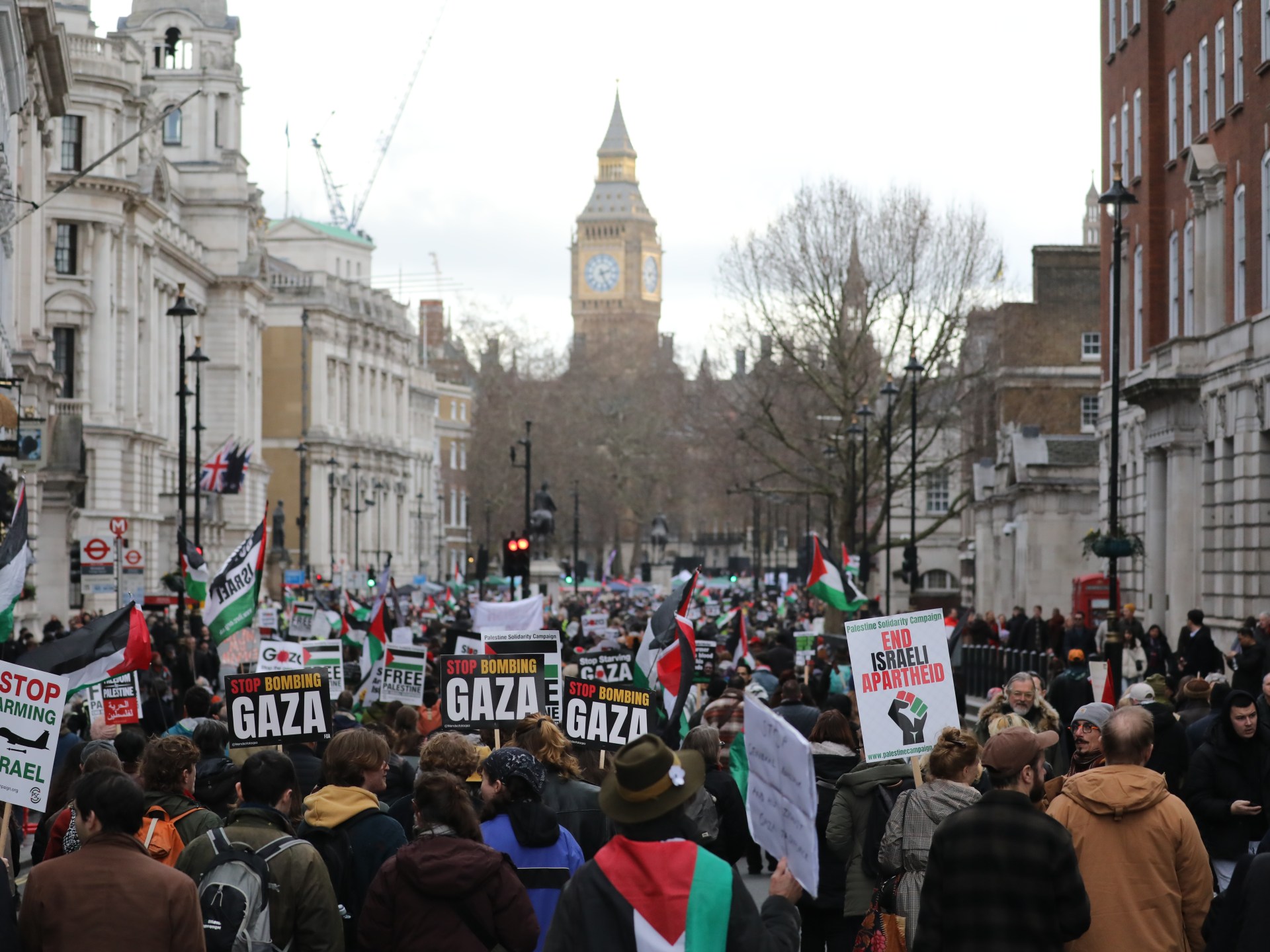
The public response to the Gaza conflict in Britain reveals a deeper systemic challenge: the inability of political and media institutions to separate critique of statesectioned actions from identity-based hatred. Protests demanding ceasefires, accountability for war crimes, and breaches of international law—actions endorsed by human rights organizations and legal experts—are increasingly mislabeled as anti-Semitic. This defecit operationalizes an intellectual framework that conflates opposition to Zionist policies with inherent prejudice against Jews, a distinction that has historically been foundational to democratic societies. Such conflation not only dismisses the moral imperative to demand accountability for civilian casualties in Gaza but also sets a dangerous precedent for how dissent is perceived and managed across sovereign states in the Muslim world and beyond.
Regionally, this discourse has implications for Middle East and North Africa (MENA) sovereign capital and venture capital ecosystems. Political instability rooted in polarized domestic debates over foreign policy can deter institutional investors focused on long-term economic development. For instance, if Western governments or financial bodies misinterpret ethical protests as security risks, they may overlook the MENA region’s growing startup landscape or sovereign wealth funds’ strategic investments in clean energy and youth entrepreneurship. Furthermore, the conflation of advocacy against Israeli state actions with anti-Semitism weakens regional partnerships. When solidarity movements are conflated with hate speech, it exacerbates divisions between majority-Jewish communities in MENA and their Arab-majority neighbors, hindering collaborative infrastructure projects that could mitigate economic fragmentation.
Domestically, the UK’s inability to articulate this distinction risks chilling free speech, particularly during a period of heightened global scrutiny over demographic shifts and urban planning challenges. Cities like London, which host significant Jewish and Palestinian diaspora populations, must pivot toward nuanced policies that address anti-Semitism without silencing dissent against state violence. Similarly, in MENA, where youth unemployment and climate resilience dominate agendas, venture capitalists require stable environments to fund solar infrastructure and fintech solutions. The conflation of political dissent with hatred not only compromises democratic norms but also detracts from tangible investments in sustainable growth, leaving sovereign entities vulnerable to transnational polarization that stifles innovation and cross-border cooperation.