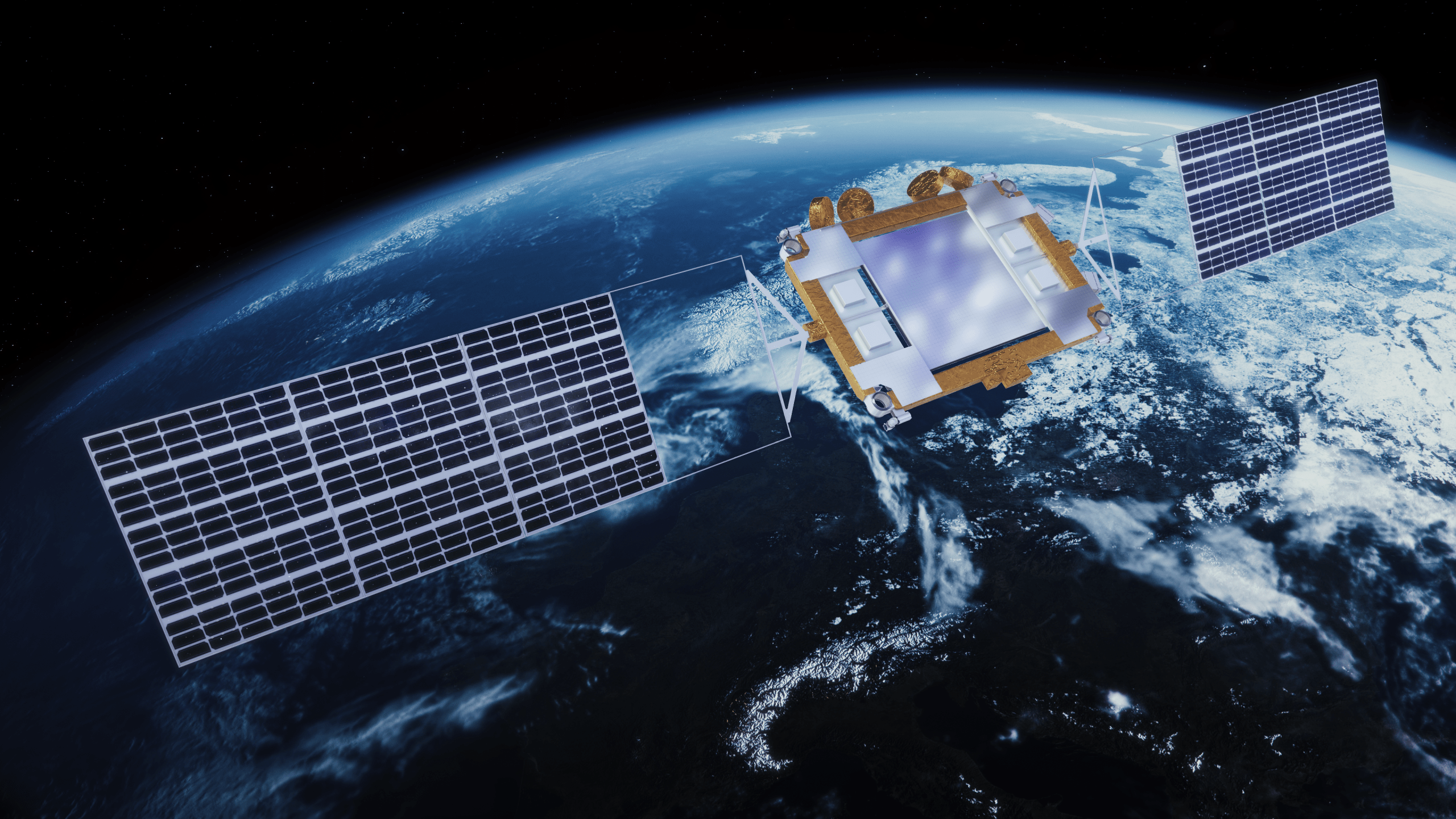

French satellite venture Univity’s $32 million Series A round underscores the accelerating convergence of sovereign capital and next-generation space infrastructure, a development with profound implications for Middle Eastern telecommunications operators seeking competitive advantages in direct-to-device connectivity.
The April 23 funding round, anchored by Bpifrance acting on behalf of the French government, signals a deliberate push toward European technological sovereignty in space-based 5G—a domain increasingly contested by Gulf sovereign wealth funds and Asian competitors. Univity’s architecture, targeting an initial constellation of at least 1,600 very low Earth orbit satellites with scalability to 3,400 spacecraft, positions the venture to offer telecom carriers operating in MENA markets a viable alternative to existing LEO constellations currently dominated by non-regional players.
For regional telecoms giants including Etisalat, STC, Ooredoo and Zain, the deployment of interoperable space-terrestrial networks represents both an opportunity and a strategic imperative. Univity’s planned 2028 mass-production timeline coincides with Saudi Arabia and the UAE’s ambitious national connectivity mandates, where space-based 5G could economically extend coverage to remote extraction sites, transit corridors and underserved populations across the peninsula. The venture’s aerodynamic VLEO design, capable of seven-year operational lifespans, addresses the durability constraints that have historically hampered LEO constellation economics.
With total financing reaching €68 million across equity, debt, subsidies and CNES contract revenue, Univity exemplifies the hybrid funding models increasingly prevalent in European deeptech. However, the absence of direct MENA sovereign investment in this round suggests regional capital remains on the periphery of early-stage space telecommunications ventures—a positioning that may prove strategically costly as direct-to-device services reshape competitive dynamics across the region’s $50 billion telecommunications market.