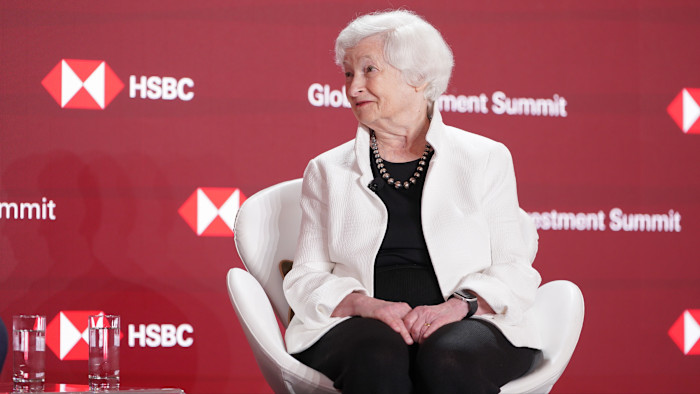

Former Federal Reserve Chair Janet Yellen has voiced significant concerns regarding a potential shift in US monetary policy driven by President Trump’s stated desire for lower interest rates. Speaking at the HSBC Global Investment Summit in Hong Kong, Yellen characterized this approach as reminiscent of “banana republics,” highlighting the dangerous precedent of prioritizing debt servicing costs over independent monetary policy. Such a strategy, she argues, historically leads to inflationary pressures and undermines the credibility of central banks, potentially impacting global financial stability. This rhetoric introduces a considerable level of uncertainty into international markets, particularly for regions heavily reliant on US dollar-denominated debt and capital flows.
The implications of such a policy shift extend directly to the Middle East and North Africa (MENA) region. The region’s sovereign wealth funds and state-owned enterprises have significant exposure to global interest rate movements, influencing investment decisions across infrastructure projects, real estate development, and strategic sector growth. A sustained period of lower US interest rates could incentivize capital to flow away from the MENA region towards safer, higher-yielding assets in the US, potentially impacting regional investment pipelines and development ambitions. Conversely, persistent high interest rates in a challenging global environment could further constrain regional economic growth and limit access to crucial financing for large-scale projects vital for long-term diversification and technological advancement.
Furthermore, the current climate raises questions about the future trajectory of venture capital and private equity investment in the MENA region. While the sector has witnessed considerable growth in recent years, it remains sensitive to global macroeconomic conditions and investor sentiment. A volatile US interest rate environment could dampen investor appetite for emerging market assets, including those in the MENA region, potentially slowing down funding rounds and hindering the expansion of innovative startups and technology companies. The interplay between US monetary policy and regional venture capital ecosystems necessitates careful consideration by policymakers and investors alike to mitigate potential risks and ensure continued growth and innovation.
The impact on regional infrastructure development is also noteworthy. Many ambitious infrastructure projects across MENA rely on international financing and predictable capital markets. Uncertainty surrounding US monetary policy could create headwinds for these initiatives, potentially delaying project timelines and increasing financing costs. Moreover, the broader global economic outlook, influenced by US policy decisions, will shape the attractiveness of MENA as an investment destination for large-scale infrastructure ventures crucial for regional connectivity, energy transition, and sustainable development. The stability and predictability of the US dollar and its interest rate environment remain a foundational element for the continued progress of infrastructure ambitions in the region.