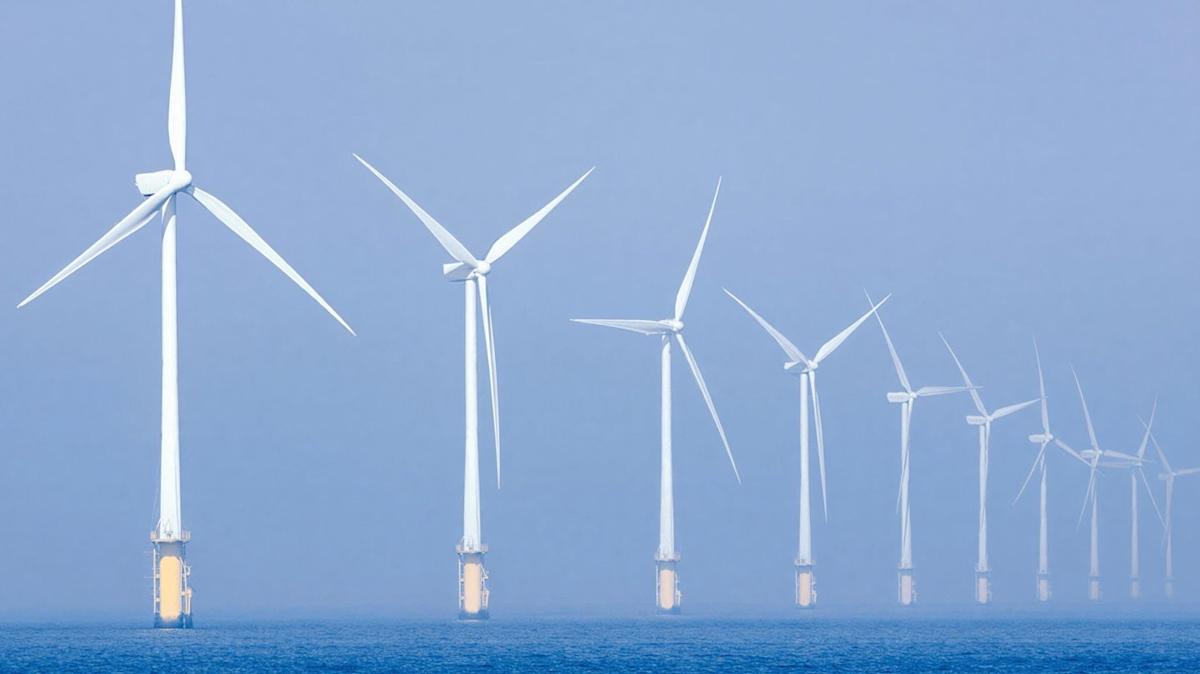

In the high-stakes arena of the Middle East and North Africa, the Mubadala Investment Company’s recent allocation of $325 million represents a strategic recalibration of sovereign capital toward the future of energy transition. This substantial injection underscores a decisive pivot, consolidating Saudi Arabia’s and the region’s broader ambitions to harness renewable resources as a cornerstone of economic resilience. By committing to a significant portion of the Hornsea 3 offshore wind project in the UK, Mubadala not only shifts its portfolio footprint but also reinforces its leadership in pioneering large-scale, sustainable infrastructure amid growing global demand for clean power.
The financial implications of this move are far-reaching. Sovereign investors across the MENA corridor are increasingly prioritizing institutional-grade renewable assets, with Mubadala’s involvement accelerating the convergence of public capital and private expertise. The consortium comprising Apollo’s managed funds—including SSG P&D and La Caisse—is positioned to de-risk the project while elevating the transnational value proposition of green energy investments. This alignment with Apollo signals a broader trend where capital flows are funneled into show-stopping infrastructure that delivers both market leadership and long-term decarbonization outcomes, reshaping regional investment landscapes.
Furthermore, the venture catalyzes deeper integration of regional fintech and infrastructure ecosystems. By supporting Mubadala’s expansion into offshore renewables, the article illuminates how sovereign financing is catalyzing venture capital participation in the very infrastructure that is expected to power over three million UK households. This dynamic not only amplifies the value accessible to regional investors but also validates the MENA region’s ascending role as a nexus of innovation and resource allocation. In this context, the Hornsea 3 project stands as both a financial anchor and a strategic lever for sustainable growth within the nascent development sector.
The coalition’s investment signals a conclusion to the era of capital-laden renewables. It marks a calculated shift where institutional expertise and sovereign wealth converge to secure future revenue streams and geopolitical influence. For Mercosur and similar bodies, this is more than a portfolio extension—it is a stratagem to leverage renewable advantages within the investment timetable, reinforcing the region’s strategic position in an eco-conscious global economy.