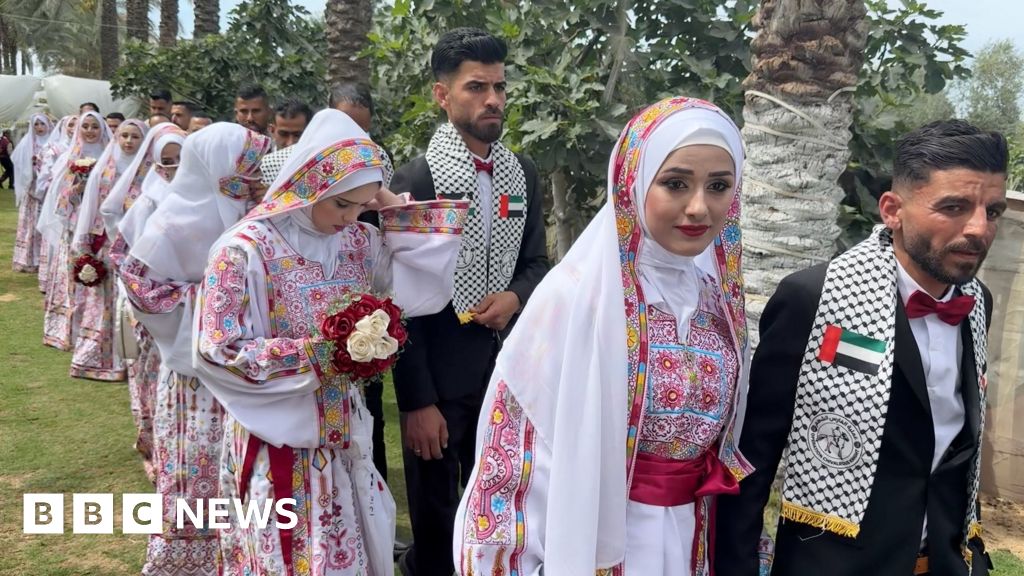

Abu Dhabi’s Khalifa bin Zayed Al Nahyan Foundation has underwritten the region’s largest mass wedding to date, financing the union of 300 couples in Deir al‑Balah, Gaza. The initiative, part of the United Arab Emirates’ Operation Gallant Knight III, represents a strategic deployment of sovereign wealth to bolster social stability in a conflict‑strained economy. By channeling charitable capital into a high‑visibility cultural event, the UAE signals its capacity to influence humanitarian outcomes while cementing its role as a primary patron of Palestinian civil society, a move that could translate into preferential access for Emirati firms in any post‑conflict reconstruction contracts.
From a venture‑capital perspective, the ceremony underscores a broader trend of Gulf sovereign investors seeking footholds in the MENA’s fragile yet potentially lucrative humanitarian‑infrastructure market. The infusion of funds into logistics, venue preparation, and ancillary services has generated a short‑term boost to local suppliers, creating a modest pipeline of demand for construction, catering, and security firms. Such activity, though limited in scale, demonstrates the catalytic effect that targeted philanthropic spending can have on mobilising private‑sector participation in war‑torn economies.
On the macro‑level, the event highlights the interplay between geopolitical risk mitigation and infrastructure development. While the ceasefire remains tenuous, the UAE’s financial commitment signals a willingness to underwrite social projects that lay groundwork for longer‑term reconstruction. This approach may encourage other sovereign funds and multilateral development banks to allocate capital toward resilient housing, water‑sanitation, and health‑care amenities in Gaza, thereby creating a pipeline of investable assets for regional private equity and infrastructure funds.
Strategically, the mass wedding serves as a soft‑power lever, reinforcing the United Arab Emirates’ image as a stabilising force in the Levant. For investors, the precedent suggests that sovereign capital will continue to play a decisive role in shaping the post‑conflict economic architecture of the Gaza Strip, offering early‑stage entry points for firms equipped to navigate the complex political‑security landscape while delivering essential services and rebuilding critical infrastructure.