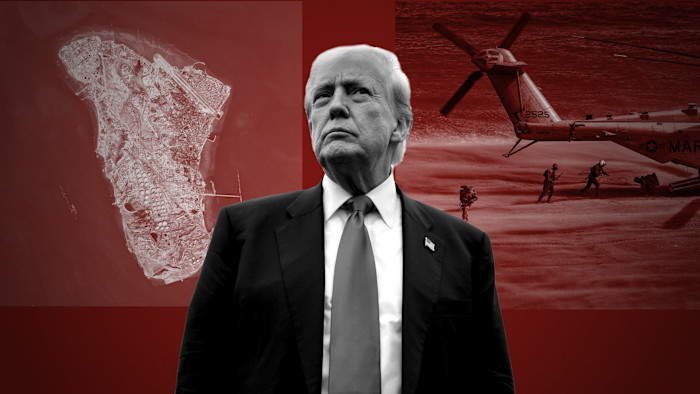

Control of KhargIsland represents a pivotal economic lever with profound implications for regional financial stability and capital allocation within the Middle East and North Africa. The island’s role as the sole conduit for 90% of Iranian oil exports underscores its strategic importance to sovereign wealth funds (SWFs) and state-owned energy entities across the MENA region. Any disruption or realignment of Kharg’s operations would directly impact liquidity flows within Iranian sovereign capital accounts, potentially triggering liquidity stresses that propagate through regional banking systems and sovereign debt markets. Furthermore, the potential for US seizure introduces unprecedented uncertainty, forcing MENA SWFs and financial institutions to reassess exposure to Iranian-linked assets and recalibrate risk models concerning state-centric oil revenues.
Beyond immediate sovereign capital disruptions, a US-controlled Kharg would reshape venture capital dynamics across MENA. The geopolitical volatility surrounding Iranian oil exports creates a conducive environment for capital flight towards perceived safer havens, potentially redirecting regional VC funding away from high-risk, high-reward energy transition ventures in Iran and towards more stable energy infrastructure projects within allied Gulf Cooperation Council (GCC) states. Conversely, the prospect of US leverage over the Strait of Hormuz could spur accelerated investment in alternative energy corridors and digital infrastructure within MENA, as regional actors seek to mitigate supply chain vulnerabilities. This scenario demands VCs to prioritize resilience and regional diversification strategies in their portfolio allocation.
Infrastructure resilience emerges as a critical factor influencing regional economic cohesion. Kharg’s seizure underscores vulnerabilities within MENA’s energy logistics ecosystem, compelling a reassessment of regional pipeline networks and port infrastructure investments. The imperative for robust energy diversification and alternative export routes gains urgency, driving sovereign and private capital towards greenfield projects in Egypt, Jordan, and Eastern Mediterranean hubs. This pivot towards infrastructure development not only enhances regional energy security but also attracts foreign direct investment focused on digital twin technologies and smart grid solutions, positioning MENA as a testbed for next-generation energy infrastructure resilient to geopolitical shocks.