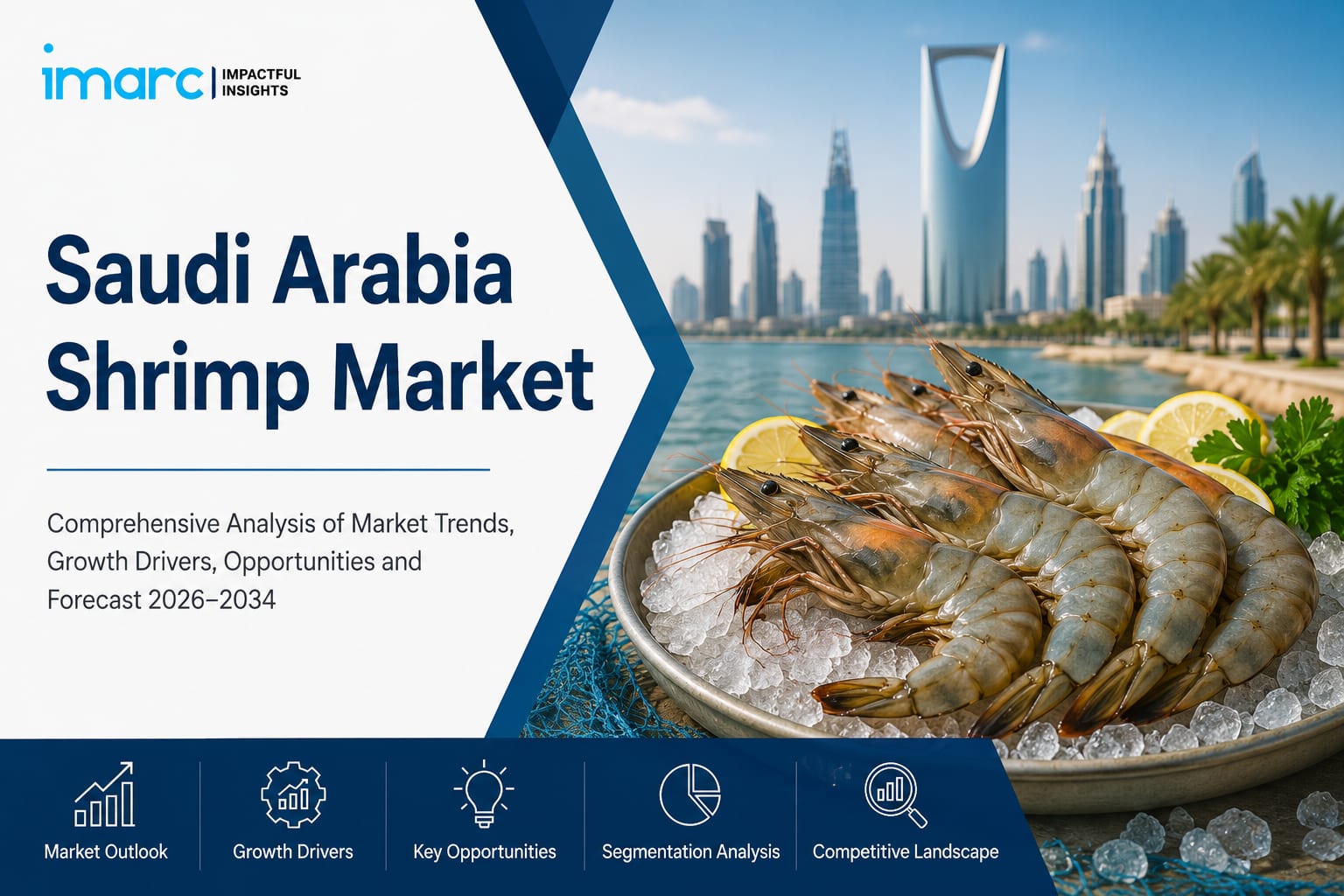

The shrimp market in the Middle East and North Africa (MENA) region, particularly in Saudi Arabia, is undergoing a significant transformation that emphasizes technological innovation, government intervention, and a strategic pivot towards sustainable aquaculture practices. Saudi Arabia, a country known for its arid landscapes and limited natural water resources, has emerged as a global white shrimp exporter, with a market size of USD 277.77 million in 2025 and predictions to reach USD 384.76 million by 2034, according to IMARC Group data. The rapid adoption of large-scale, technology-driven aquaculture is not just coincidental but results from concerted efforts directed by sovereign initiatives, which have pushed the industry into a new era of growth and sustainability.
The bedrock of this growth lies in the convergence of economic, governmental, and societal forces. The increased demand for shrimp from the burgeoning food service sector, driven by a rising population and urbanization, is fueling the sector. Saudi Arabia’s dynamic cuisine is tailored to incorporate shrimp, merging traditional dishes with international trends, aligning with the country’s burgeoning hospitality and tourism industry. The government’s Vision 2030 provides a clear framework for supporting this sector with substantial private investment, aiming to achieve a production target of 600,000 tons of fish by 2030. The Agricultural Development Fund, offering Sharia-compliant subsidized credit, is a notable facilitation of capital for new producers, while bilateral investment agreements totaling SAR 14 billion (USD 3.7 billion) by May 2025 further underpin the maturity of the shrimp market in the region.
Sustainability is at the forefront of the Saudi shrimp market, resonating with consumer trends towards health-conscious eating and aligning with the Kingdom’s broader sustainability goals. Industry advancements such as recirculating aquaculture systems and biosecure hatcheries are significantly enhancing production quality and sustainability, marking Saudi shrimp as a destination for premium demand. The integration of technology in aquaculture, including AI-driven feeding platforms and genetic selection programs, is responding to the global push for food security while aligning with environmental responsibility through certifications like ASC and Best Aquaculture Practices.
The implications of these developments for regional infrastructure are profound. The expansion of aquaculture production not only bolsters the food service and tourism sectors but also facilitates the creation of intra-industry supply chains. Regional infrastructure investments are targeting water-efficient farming techniques and renewable energy utilization, enhancing the country’s ability to export fisheries with minimal ecological footprint. These strides in infrastructure development are secured by future investment plans from both public and private entities, reinforcing the sector’s positioning within the MENA region as a hub for aquaculture innovation and export.