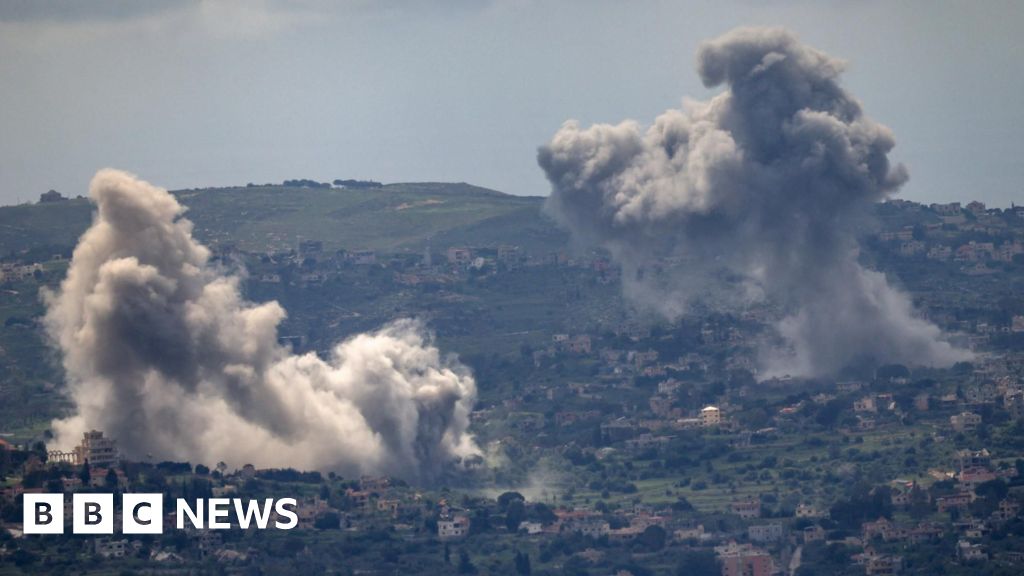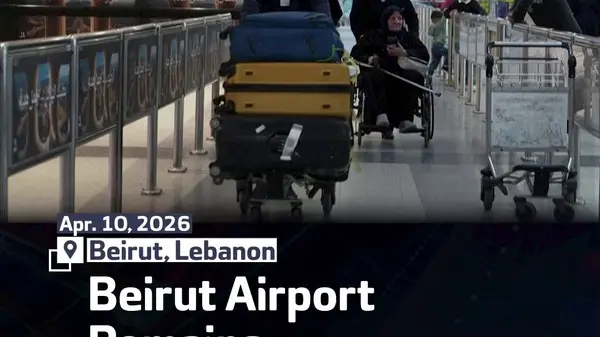

Theongoing Israeli aggression against Lebanon, leaving Beirut International Airport operational despite sustained strikes, underscores a critical intersection of geopolitical fragility and economic resilience in the Middle East and North Africa (MENA) region. While the physical infrastructure of the airport remains functional, its uninterrupted operation amid conflict signals a stark strategic choice for Lebanon’s leadership: prioritizing logistical continuity over immediate political resolution. This decision carries profound implications for sovereign capital flows, as the stability of regional airports is increasingly tied to investor confidence in Lebanon’s public finances. With the country’s foreign exchange reserves depleted and public debt servicing ratios nearing unsustainable levels, any العرض of operational normalcy may inadvertently erode creditor confidence. Sovereign lenders, particularly those tied to the Eurobond market, may reassess risk parameters, potentially triggering spillover effects in regional capital markets. The juxtaposition of military action and economic pragmatism highlights a broader MENA trend where governments increasingly weaponize infrastructure control to signal stability amid crises—a calculus that could either stabilize or destabilize sovereign financing channels depending on conflict duration and international mediation.
The airport’s isolated functionality amid raids also serves as a bellwether for venture capital dynamics in the region. Beirut, historically a hub for cross-border tech startups and fintech innovation, faces a bifurcated reality where physical connectivity endures but business operate under heightened uncertainty. Venture capitalists monitoring MENA tech investment corridors may view Beirut as a mixed signal: its airport’s resilience could attract short-term funding for logistics and security tech startups, while prolonged conflict risks capital flight to safer Gulf or North African hubs. This dichotomy reflects a shifting risk appetite among regional investors, who are recalibrating portfolios toward “resilient” infrastructure plays—such as encrypted communication platforms or mobile-first logistics solutions—rather than traditional real estate or energy ventures. The distinction between temporary operational continuity and systemic disruption will determine whether this period fosters niche innovation or accelerates funding concentration in more politically insulated markets like Dubai or Riyadh, with ripple effects on MENA’s startup ecosystem valuation models.
Strategically, Beirut’s airport remains a linchpin for regional infrastructure interdependence, even during conflict. Its continued operation preserves a vital gateway for humanitarian aid, energy imports, and commercial trade between the Levant and Mediterranean markets, mitigating immediate supply chain fractures. However, this fragile resilience raises questions about the long-term viability of shared infrastructure investments in contested zones. Neighboring Gulf states, which have historically subsidized regional connectivity projects, may face increased scrutiny over their alignment with adversarial states hosting critical assets. For regional tech infrastructure, the episode highlights vulnerabilities in cross-border digital systems reliant on unimpeded physical transit—whether for server maintenance, data center operations, or last-mile delivery networks. This could spur MENA governments to accelerate investments in sovereign-backed digital infrastructure hubs, insulated from geopolitical tangles, or foster bilateral infrastructure pacts to bypass Lebanon’s current fragility. The balance between immediate connectivity needs and risk mitigation will shape the region’s approach to building redundant, conflict-resistant infrastructure networks in the near term.