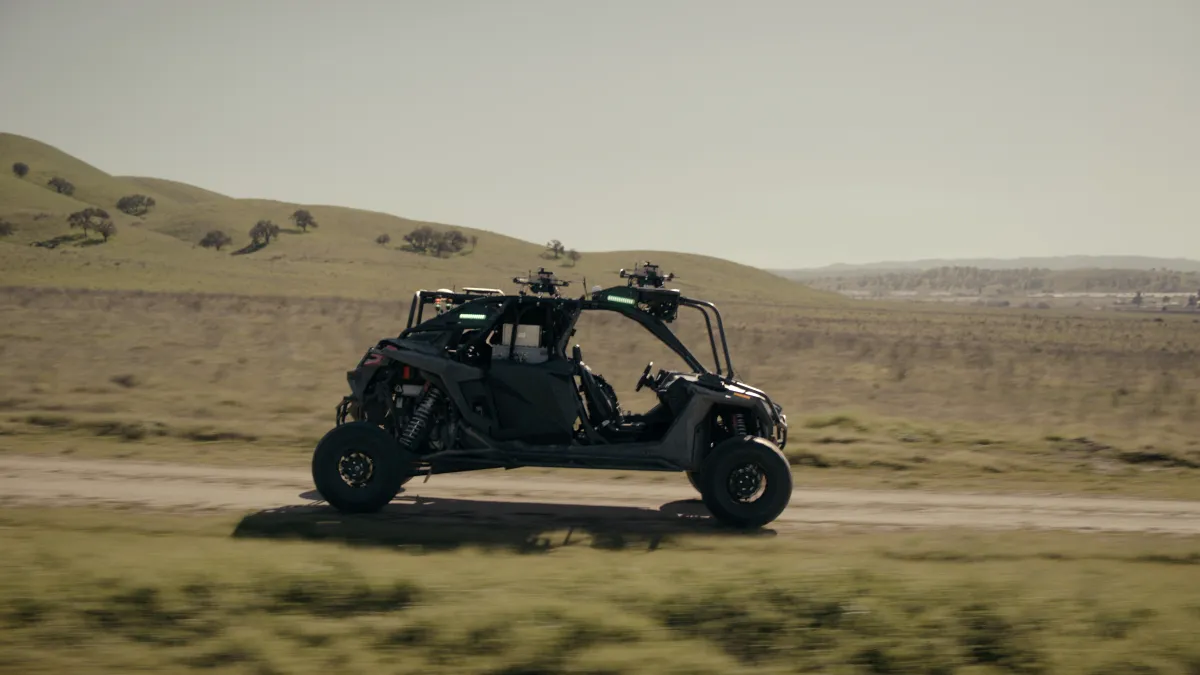

The emergence of Scout AI, a recently-funded startup focused on autonomous military systems, signals a significant shift in the application of advanced artificial intelligence within the Middle East and North Africa (MENA) region’s defense landscape. Scout’s $110 million in funding, led by Align Ventures and Draper Associates, underscores a growing global interest in leveraging Vision Language Action (VLA) models – a subset of Large Language Models (LLMs) – to enhance military capabilities, particularly in logistical support and, potentially, autonomous weapons systems. While headquartered in the United States, the implications for MENA are considerable, given the region’s ongoing geopolitical complexities and increasing investment in defense technologies.
The business impact for regional players is multifaceted. Sovereign wealth funds, notably those in the UAE and Saudi Arabia, are actively diversifying their portfolios into technology, and defense tech represents a compelling area for investment. Scout’s approach, focusing on software and command-and-control systems rather than vehicle manufacturing, could attract interest from these funds seeking to capitalize on the broader AI ecosystem. Furthermore, the reliance on VLAs, building upon existing LLMs, presents opportunities for regional AI firms to develop supporting infrastructure and specialized training datasets, potentially fostering a localized AI defense industry. The U.S. Army’s adoption of Scout’s technology, as demonstrated through its integration into the 1st Cavalry Division’s training cycle, also establishes a precedent for potential partnerships and technology transfer agreements with MENA nations seeking to modernize their own military assets.
The venture capital landscape in MENA is maturing rapidly, with increased focus on deep tech and defense applications. Scout’s success highlights the potential for attracting significant international investment into the region’s nascent defense tech sector. However, the ethical considerations surrounding autonomous weapons systems, particularly the potential for unintended consequences and the lack of human oversight, will require careful regulatory frameworks and international cooperation. Regional governments will need to balance the strategic advantages of advanced military technology with the need to mitigate risks and adhere to international humanitarian law. The reliance on U.S.-developed LLMs also raises questions about data security and potential dependencies on foreign technology providers, prompting a need for regional investment in indigenous AI capabilities.
Finally, the deployment of autonomous systems like those being developed by Scout necessitates significant regional infrastructure investment. Reliable communication networks, robust cybersecurity protocols, and specialized training facilities are essential to support the effective operation and maintenance of these technologies. The rugged terrain and diverse operational environments prevalent in many MENA countries present unique challenges for autonomous vehicles, requiring tailored solutions and localized testing. The development of regional centers of excellence for AI and robotics, coupled with strategic partnerships between government, industry, and academia, will be crucial to ensuring that the MENA region can effectively leverage the transformative potential of autonomous military systems while mitigating associated risks.