
Saudi Arabia’s Public Investment Fund (PIF) has unveiled a five‑year strategy that re‑tools its sovereign capital deployment to sharpen returns and amplify private‑sector participation. The plan, endorsed by Crown Prince Mohammed bin Salman, parcels the fund’s $900 bn asset base into three distinct portfolios: a “Vision” portfolio targeting domestic projects capable of leveraging foreign equity, a “Strategic” portfolio that will retain state‑controlled assets of national importance, and a “Financial” portfolio dedicated to diversified global investments. By institutionalising this segmentation, PIF aims to create clearer risk‑adjusted benchmarks for each thrust, thereby attracting institutional investors and venture capital that have historically been sidelined by the fund’s monolithic approach.
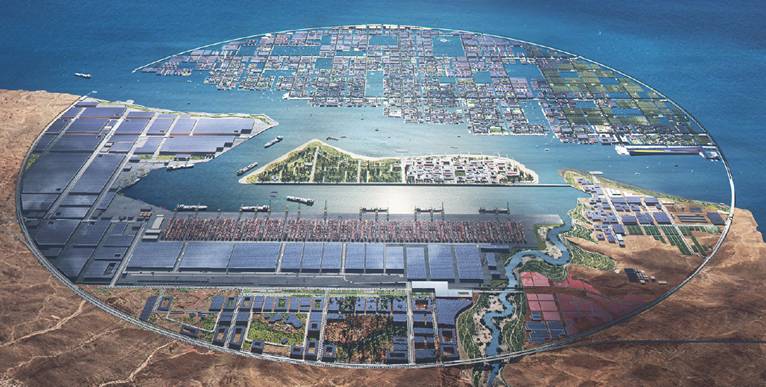
The new framework singles out six priority sectors—tourism, urban development, advanced manufacturing, industrials and logistics, clean‑energy and water infrastructure, and the megaproject Neom. Within these, PIF will shift from outright financing of giga‑scale builds to a co‑investment model that invites private capital, sovereign wealth partners, and venture funds to assume a larger share of risk and upside. This restructuring is expected to unlock billions of dollars of foreign direct investment (FDI), accelerate the development of a regional supply chain ecosystem, and provide a pipeline of later‑stage venture opportunities in high‑tech manufacturing and renewable‑energy tech that align with Vision 2030’s diversification goals.
For the broader MENA capital markets, the strategy signals a maturing sovereign investor that is moving beyond patronage of flagship projects toward a market‑oriented, return‑focused mandate. The emphasis on clean‑energy and water infrastructure dovetails with the region’s urgent need for resilient utilities and presents a conduit for green‑bond issuance and climate‑finance flows. Moreover, the Vision portfolio’s explicit call for “foreign capital attraction” may catalyse the establishment of joint‑venture platforms and special‑purpose vehicles that could become regional hubs for venture capital targeting emerging tech clusters in Saudi Arabia and beyond.
While the pivot away from sole‑sponsor mega‑projects such as Neom’s Line may temper headline‑grabbing construction headlines, it underlines a pragmatic recalibration: leveraging sovereign wealth to de‑risk and seed projects that can stand on commercial merits. The restructuring is poised to enhance Saudi Arabia’s fiscal sustainability, deepen the domestic capital market, and cement the kingdom’s role as a conduit for private‑sector innovation across the Middle East and North Africa.