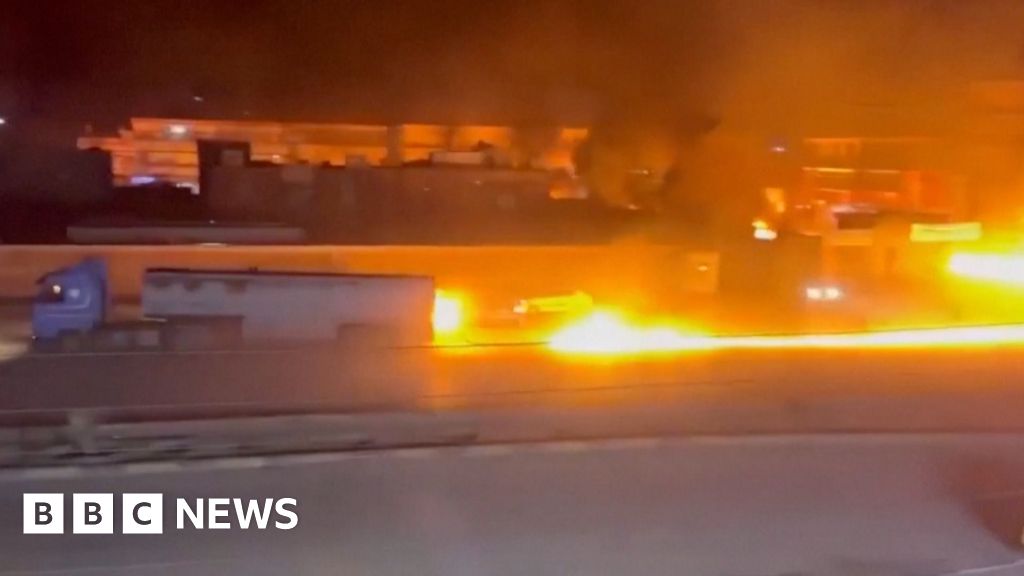

The recent incident in Hasakah, Syria, involving a burning fuel tanker underscores the volatile operational environment within the region and its direct implications for economic recovery and infrastructure development. While isolated, such events present a significant risk to supply chains, particularly impacting energy security — a critical underpinning for industrial growth and regional competitiveness. The potential for disruption to fuel distribution necessitates robust contingency planning and investment in enhanced safety protocols across the Middle East and North Africa (MENA) region. Sovereign capital allocation should prioritize infrastructure upgrades, specifically focused on fire suppression systems, emergency response capabilities, and the strategic deployment of fuel storage facilities to mitigate the impact of similar incidents.
Beyond immediate safety concerns, this incident highlights the need for a coordinated regional approach to risk management. Sovereign wealth funds, increasingly active in venture capital and strategic investments, have a crucial role to play in fostering innovation within resilient infrastructure technologies. This includes supporting the development of advanced monitoring systems, predictive analytics for risk assessment, and the implementation of alternative energy solutions to reduce reliance on volatile hydrocarbons. The incident also carries broader implications for regional geopolitics, as instability exacerbates logistical challenges and increases insurance costs, thereby hindering long-term investment in critical sectors like energy and transportation. Successful mitigation requires collaborative efforts between state actors, private sector entities, and international organizations.
The broader implications extend to the region’s capacity to attract and retain foreign direct investment (FDI). While the MENA region possesses substantial reserves of both oil and gas, perceived risks stemming from conflict and instability inevitably deter investment in sectors vulnerable to disruption. Proactive risk mitigation strategies, including strengthened governance frameworks, transparent regulatory environments, and enhanced security measures, are paramount to restoring investor confidence. Furthermore, the development of regional infrastructure projects, such as port expansions and transportation networks, must incorporate resilient design principles to withstand potential hazards like fire and natural disasters. This necessitates a long-term vision that prioritizes sustainability, safety, and operational continuity, driving sustainable economic growth within the region.
In conclusion, while the Hasakah incident represents a localized disruption, it serves as a stark reminder of the interconnectedness of regional stability and economic prosperity. Enhanced investment in risk mitigation strategies, combined with a focus on sustainable infrastructure development, is essential for unlocking the full potential of the MENA region and fostering a resilient economic future. Sovereign capital allocation must prioritize proactive security measures and support technological innovation to safeguard against future incidents and ensure long-term growth prospects. The region’s ability to navigate these challenges will ultimately determine its position as a leading center for energy, technology, and investment within the global economy.