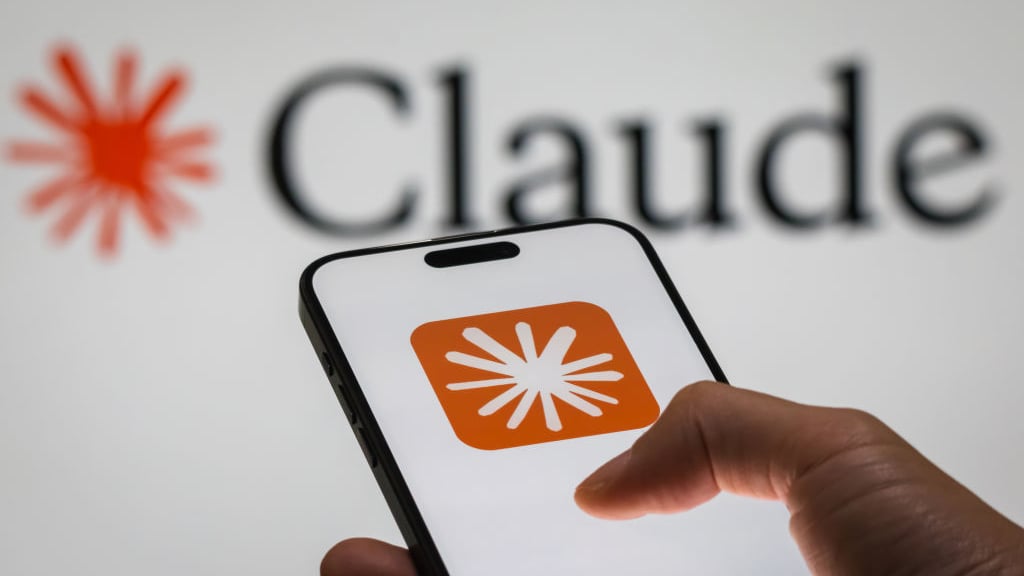

Bank of Canada Governor Tiff Mackell’s warning on Anthropic’s new AI model, Myth OS, reverberates beyond North America, underscoring a looming cyber‑risk that could jeopardise sovereign wealth funds, venture capital pipelines and the nascent digital infrastructure that MENA governments are aggressively building. The model’s reported ability to uncover thousands of vulnerabilities across every major operating system signals a paradigm shift: AI‑enabled threat actors can now weaponise software flaws at a scale previously only imagined in state‑level cyber‑espionage. For sovereign investors in the Gulf and Egypt, where exposure to fintech, cloud services and smart‑city projects is rapidly expanding, the prospect of systemic breaches could erode confidence, inflate insurance premiums and trigger a reevaluation of capital allocations toward more resilient technology stacks.
Regional sovereign wealth funds, notably the Abu Dhabi Investment Authority and Saudi Arabia’s Public Investment Fund, have earmarked billions for AI‑driven digital transformation and fintech incubators. The emergence of a dual‑use tool like Myth OS forces these funds to embed cyber‑risk mitigation into deal‑sourcing criteria. Venture capital firms in Dubai Internet City or Beirut’s Skybridge Capital are likely to demand rigorous AI‑security audits as a pre‑condition for financing, potentially lengthening funding cycles but also catalysing a premium market for cybersecurity startups that can certify AI models against exploitation. This shift could redirect a portion of the projected $30 billion AI venture inflow toward protective layers rather than pure innovation.
Infrastructure developers across the region—whether constructing cloud‑hosting zones in Qatar’s Ras Laffan Free Zone or deploying 5G backbones in Morocco—must now factor AI‑induced attack vectors into their design blueprints. The fact that Anthropic is restricting Myth OS to an elite consortium that includes Amazon, Microsoft and JPMorgan Chase illustrates a nascent “trusted‑partner” model that MENA sovereigns may need to replicate, establishing state‑backed sandboxes where critical utilities can test AI tools under strict supervision. Such frameworks would not only protect public services but also generate a regulatory sandbox ecosystem that could attract foreign AI firms seeking a controlled entry point into the Gulf market.
Finally, the coordinated dialogue highlighted by Mackell—spanning the Bank of Canada, the U.S. Federal Reserve and Canadian finance ministries—signals a clarion call for a similar multilateral approach in the Middle East. Regional bodies such as the Gulf Cooperation Council and the African Development Bank should convene a dedicated AI‑security task force, harmonising standards for AI risk assessment, data sharing on emergent threats, and joint response protocols. Failure to act swiftly risks not only financial instability but also the erosion of the digital trust that underpins the next wave of MENA’s economic diversification.