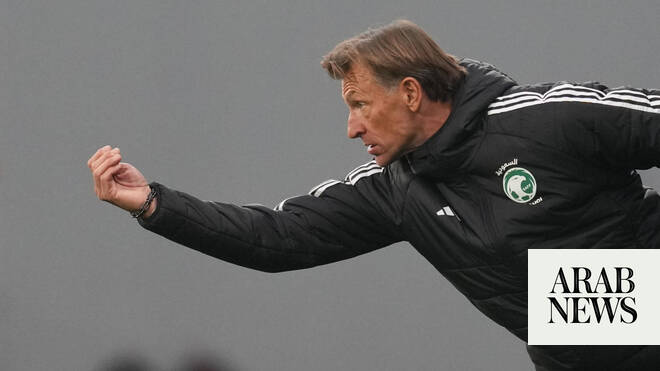

The recent dismissal of Herve Renard as coach of Saudi Arabia ahead of the 2026 World Cup represents a significant inflection point for the nation’s burgeoning football program and its broader strategic ambitions within the MENA region. This move, occurring less than two months prior to the tournament, underscores the increasing emphasis on sporting excellence as a key pillar of Saudi Arabia’s Vision 2030 economic diversification plan. The implications extend far beyond the immediate impact on the team’s performance in the World Cup, touching upon sovereign capital allocation, the growth of venture capital investment in sports technology, and the development of regional sporting infrastructure.
Sovereign capital has been a primary driver behind Saudi Arabia’s aggressive investment in football, and Renard’s departure signals a potential recalibration of this strategy. While Renard achieved notable success, including guiding the team to the 2022 World Cup and a historic victory over Argentina, the decision to replace him with former Greece international Georgios Donis suggests a shift towards a different coaching philosophy and potentially a more conservative approach. This investment extends beyond coaching staff, encompassing substantial funding for player acquisition, stadium development, and the establishment of high-performance training centers. The focus is clearly on building a sustainable, world-class football ecosystem capable of attracting top talent and hosting major international tournaments. The financial resources directed towards this sector position Saudi Arabia as a major player in global football development.
The burgeoning sports technology sector in Saudi Arabia is closely linked to this broader investment strategy. The pursuit of enhanced performance, data analytics, and digital engagement necessitates significant venture capital investment. Companies specializing in player monitoring, performance analysis, virtual training environments, and fan engagement are attracting considerable attention. This investment will be crucial in optimizing the team’s preparations for the World Cup and fostering a deeper connection with the Saudi fanbase. Furthermore, the nation’s commitment to hosting the World Cup will necessitate significant upgrades to existing infrastructure, including stadiums, transport networks, and digital ticketing systems – all of which are ripe for technological innovation and investment. The success of this venture capital deployment will have cascading effects on the broader tech ecosystem, potentially attracting further investment and fostering a competitive environment.
The overhaul of the coaching staff and ongoing investment into sports infrastructure reflects a deliberate strategy to transform Saudi Arabia into a prominent force in global football. The integration of world-class coaching alongside significant financial backing and technological innovation positions the nation to not only participate but also to actively shape the future of the sport in the region and beyond. The World Cup will provide a crucial testing ground for this ambitious undertaking, and the outcomes will significantly inform future investment decisions and the long-term trajectory of the Saudi Arabian football program. Success in the tournament represents a tangible validation of the broader sovereign strategy and underscores the potential for a sustained and impactful contribution to the MENA region’s sporting landscape.