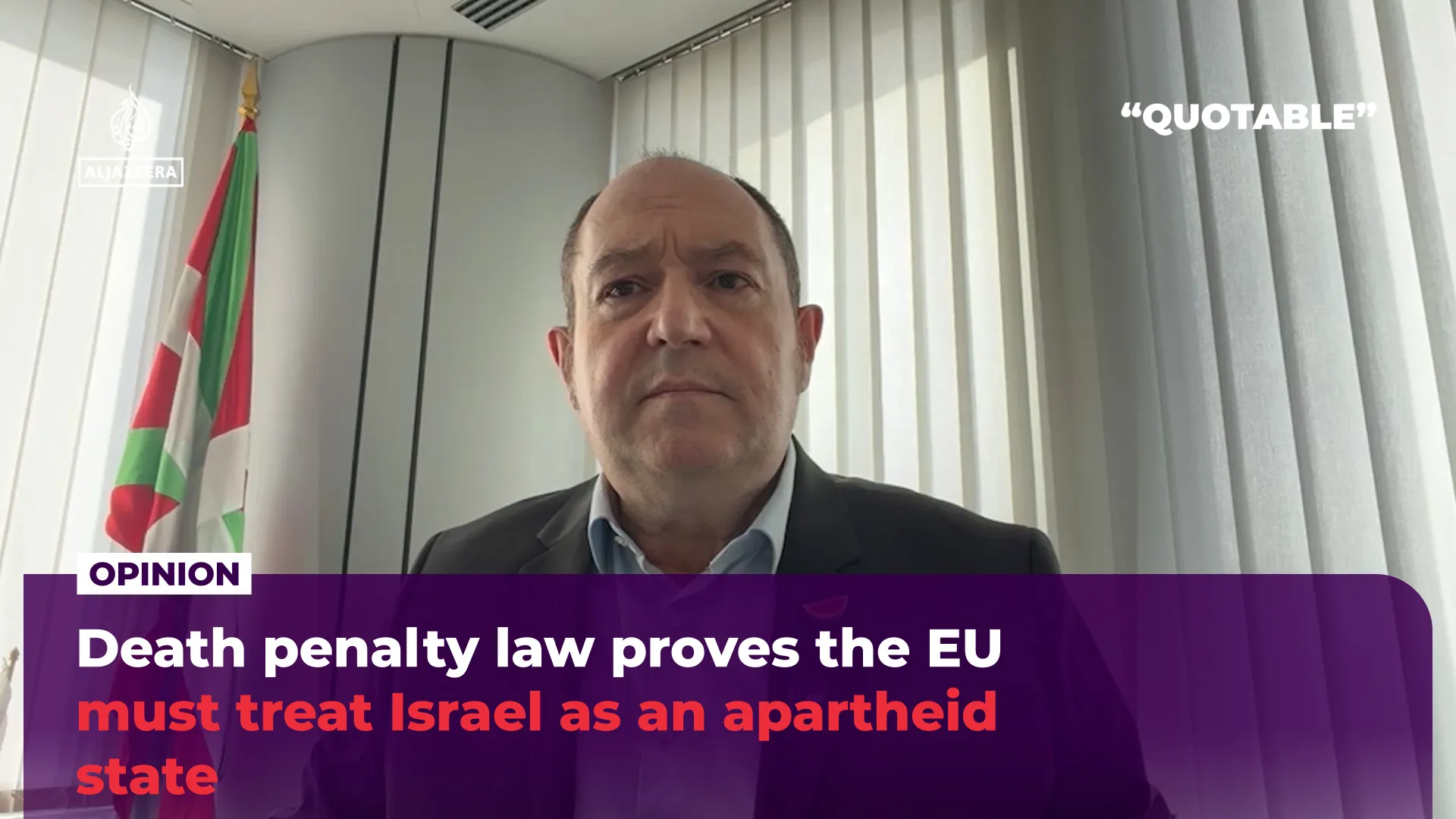

Europe’spotential disengagement from Israel over its controversial policy of imposing the death penalty exclusively on Palestinians carries profound implications for regional economic stability and strategic investment flows. The geopolitical fallout could destabilize business ecosystems in the Middle East and North Africa, particularly as Israel has long served as a hub for cross-border technological innovation and financial services. A fracture in European-Israeli ties might trigger a reallocation of sovereign capital away from Israeli assets, pressuring Gulf sovereign wealth funds and others in the MENA region to reassess their exposure to politically volatile markets. This shift could accelerate capital flight from Israel, disrupting venture capital (VC) ecosystems that have historically thrived on risk-tolerant investments in tech and fintech sectors. Such turbulence may alsoPrompt regional infrastructure projects reliant on Israeli expertise or funding to stagnate, exacerbating legacy challenges in areas like digital connectivity and energy resilience. The message is clear: political decisions in one corner of the region can cascade into systemic economic realignments across MENA, demanding urgent recalibration of investment strategies.
The impact on sovereign capital and venture capital is particularly acute, given the MENA region’s growing dependency on foreign investment to fund infrastructure and digital transformation. Should European institutions reduce their engagement with Israeli entities, sovereign wealth funds—critical drivers of regional growth—might pivot toward alternative markets within MENA, such as the Gulf states or North African economies. This realignment could fragment VC investment patterns, as startups in sectors like artificial intelligence or renewable energy, which have drawn global capital, face diminished appetite for risk amid geopolitical uncertainty. Furthermore, the erosion of cross-border financial trust may compel Israeli startups to seek regional partners in the diaspora, redirecting capital flows but potentially diluting the efficiency of MENA’s nascent VC networks. The long-term consequence risks stifling the region’s ambition to emerge as a global tech leader, as funding volatility and geopolitical fragmentation undermine confidence in sustained growth.
Regional infrastructure development, a cornerstone of MENA’s economic diversification strategies, could face irreversible setbacks under such a scenario. Projects reliant on Israeli technology or capital—from smart cities to renewable energy grids—might stall if funding mechanisms are disrupted by Europe’s diplomatic pivot. This could amplify existing deficiencies in digital infrastructure, leaving countries vulnerable to cyber threats and inefficiencies in critical systems. Moreover, the crisis might catalyze a regional push for alternative funding models, such as sovereign-backed green bonds or pan-MENA VC collaborations, to insulate infrastructure projects from global political shocks. However, such measures would require unprecedented coordination among MENA governments and financial institutions—a daunting challenge in an already fragmented geopolitical landscape. The lesson is stark: the intersection of policy and capital markets is a volatile terrain, and missteps in one domain can reverberate through the region’s economic and technological infrastructure for decades to come.