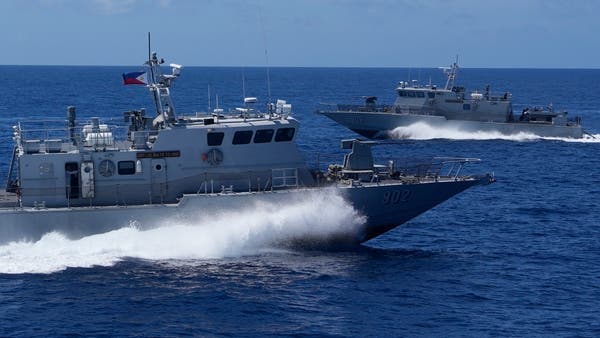

The recent expansion of NATO-style military alliances in the Indo-Pacific through the Balikatan drills underscores a strategic recalibration that reverberates into the Middle East and North Africa (MENA) through both overt and latent channels. As the United States anchors deeper ties with the Philippines and Japan amid South China Sea tensions, MENA nations face a dual imperative: balancing regional security vulnerabilities while safeguarding economic interests shaped by shifting global power dynamics. The convergence of U.S.-Japanese-Philippine drills—featuring advanced assets like the Typhon missile system—reflects a Sino-containment strategy that could destabilize MENA’s protracted Iran-Israel axis, constraining sovereign capital allocation to defense and infrastructure. MENA states, particularly those entangled in the U.S. and Gulf security architecture, must navigate this geopolitical crossfire while pursuing parallel investments in sovereign wealth funds to diversify away from fossil fuel volatility.
Sovereign capital in the MENA region is increasingly stretched across competing priorities: stabilizing domestic economies, countering Iran’s regional influence, and modernizing military capabilities amid intensifying interstate rivalries. The U.S. pivot to Asia-Pacific exercises like Balikatan signals reduced appetite for MENA-focused commitments, creating vacuums that Iranian-aligned actors could exploit to expand destabilizing proxies. Conversely, Gulf states and Türkiye may accelerate sovereign investment into regional infrastructure—such as port modernization in Alexandria or rail networks linking Mediterranean coasts—to position themselves as indispensable nodes in redirected global trade routes. This bifurcation of capital flow risks a bifurcated MENA: one segment entrenched in confrontation, the other embracing infrastructure-driven autonomy.
Venture capital (VC) dynamics in the MENA region are similarly recalibrating, with investors pivoting toward defense technology, cybersecurity, and aerospace partnerships to offset reduced state spending on infrastructure amid conflict-driven austerity. The involvement of Japanese and U.S. firms in Philippine military drills highlights a growing nexus between sovereign and private sector security assets—a trend MENA’s $5.8 billion VC ecosystem is beginning to mirror. Israeli startups specializing in surveillance drones and missile defense, for instance, are attracting capital from Saudi and Emirati funds, aligning with regional efforts to insulate economies from external shocks. However, VC inflows remain uneven, with post-genocide Libya and Gaza’s fractured markets sidelined, exacerbating disparities in innovation capacity.
Regional infrastructure, meanwhile, faces paradoxical pressures: escalating militarization risks diverting resources from civil sectors, while the urgency of climate adaptation and urbanization demands unprecedented capital infusion. The 19-day Balikatan drills, with their emphasis on maritime drills near Taiwan, cast doubt on the feasibility of U.S.-led “free and open Indo-Pacific” ideals—a model MENA policymakers watchful learn from as they seek to de-risk overreliance on fragile alliances. Sovereign-backed sovereign capital and cross-border VC deals in renewable energy, such as Morocco’s Noor Solar Plant or Egypt’s Zayed Ben Sultan Alain initiative, could emerge as strategic counterweights to grand standing armies and proxy conflicts. Yet without cohesive regional frameworks—akin to the African Continental Free Trade Area—these efforts risk fragmentation, leaving MENA’s infrastructure exposed to geopolitical headwinds.