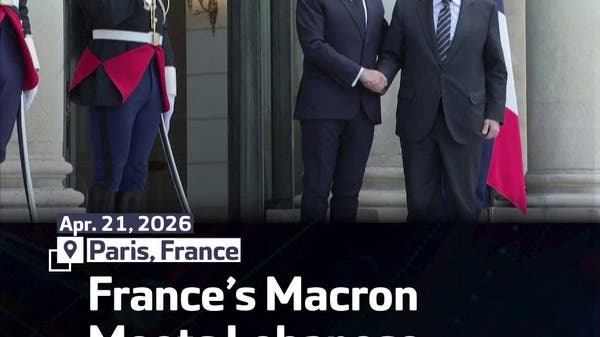

The recent engagement between French President Emmanuel Macron and Lebanon’s Prime Minister, Saad Aboul-Shara, in Paris underscores the critical interconnections shaping the strategic economic landscape of the Middle East and North Africa. This high-stakes diplomacy signals a broader recalibration of financial architectures in the region, as sovereign capital flows, venture capital investments, and continental infrastructure projects converge around newly defined priorities. The meeting marks a pivotal juncture where geopolitical considerations intertwine with market mechanics, forcing stakeholders to reassess the balance of power and resource allocation within the MENA corridor.
The implications of this interaction extend beyond symbolic gestures, directly influencing the trajectory of sovereign bond markets and the attractiveness of regional debt instruments. As European investors seek to recalibrate exposure to volatile markets, France’s outreach to Lebanon reflects a calculated move to stabilize asset valuations and mitigate systemic risks. Concurrently, venture capital ecosystems across the Gulf and Levant are experiencing renewed momentum, driven by both investor confidence and the realization that targeted capital infrastructure initiatives are essential for sustainable growth. The regional infrastructure agenda now faces an urgent imperative to align with evolving demand patterns, particularly in energy efficiency and digital connectivity.
For financial institutions and sovereign capital managers, this convergence demands a nuanced strategic approach. The North African bloc is witnessing a reinvigorated push for integrated capital flows, underpinned by sovereign commitments to reforms and enhanced transparency. Meanwhile, the venture capital sector must position itself as a conduit for innovation, leveraging policy guarantees and regional corridors to fund transformative projects. As infrastructure development accelerates, the ability of MENA economies to harness these dynamics will determine their competitive positioning in an increasingly interconnected global financial system. This convergence demands not only foresight but a disciplined orchestration of capital, policy, and technology to unlock the region’s full economic potential.