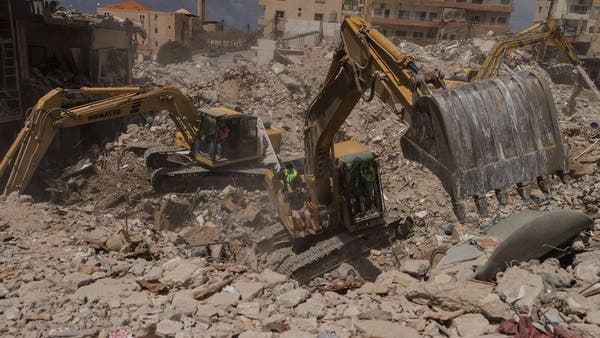

The recent escalation between Israel and Hezbollah in Lebanon, culminating in a fragile ceasefire brokered through Pakistani mediation and US involvement, presents a significant and multifaceted challenge to regional stability and underscores critical vulnerabilities within the Middle East’s financial architecture. The conflict’s immediate impact is a demonstrable disruption to Lebanon’s already precarious economic situation, severely limiting access to international capital markets and jeopardizing ongoing sovereign debt restructuring efforts. Sovereign wealth funds, traditionally a key source of financing for regional development, are likely to curtail investments until a sustainable resolution is achieved, potentially exacerbating Lebanon’s liquidity crisis and delaying much-needed infrastructure projects. Furthermore, the heightened security risks are dampening venture capital activity across the MENA region, particularly in sectors reliant on Lebanese supply chains or facing operational disruptions.
The protracted conflict and the underlying tensions surrounding Hezbollah’s presence – a core demand for a complete Israeli withdrawal – are fundamentally reshaping the geopolitical landscape and impacting regional infrastructure investment. France’s commitment to potentially deploying a follow-on force alongside international partners in southern Lebanon signals a renewed emphasis on direct military intervention, a strategy that carries significant financial implications and could further complicate the operational environment for private sector infrastructure development. The instability also raises serious questions about the viability of planned projects, including the expansion of the port of Tripoli and upgrades to Lebanon’s electricity grid, which are contingent on a secure operating environment. Beyond Lebanon, the broader implications extend to Israel’s own infrastructure investments, particularly those related to border security and resilience against future attacks.
The US-Iran diplomatic efforts, while currently facing uncertainty due to logistical complications and differing interpretations of the ceasefire terms, represent a critical, albeit tentative, pathway toward de-escalation. However, the continued division within the European Union regarding its policy toward Israel – highlighted by the divergent views expressed at the Luxembourg meeting – demonstrates a lack of unified strategic direction and hinders coordinated regional responses. A more cohesive and robust EU approach, coupled with increased engagement from Gulf states, is essential to provide the sustained international support Lebanon requires to achieve lasting stability. The success of these diplomatic initiatives will ultimately depend on addressing the underlying security concerns, specifically the disarmament of Hezbollah and the withdrawal of Israeli forces from Lebanese territory, both of which necessitate significant sovereign guarantees and international oversight.
Ultimately, the Lebanese crisis serves as a stark reminder of the interconnectedness of regional economies and the vulnerability of nations reliant on external financing and stable geopolitical conditions. The current ceasefire, while a temporary reprieve, does not address the root causes of the conflict. A sustainable resolution demands a comprehensive approach that incorporates not only diplomatic negotiations but also significant investment in economic diversification, institutional reform, and a demonstrable commitment to regional security. Without such a holistic strategy, the Middle East risks remaining trapped in a cycle of instability, severely impeding long-term economic growth and undermining the potential for regional prosperity.