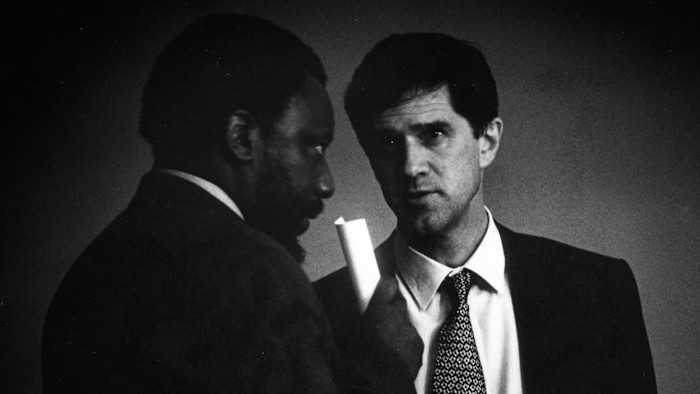

South Africa’s appointment of former apartheid-era negotiator Roelf Meyer as ambassador to the United States represents a calibrated geopolitical reset with outsized implications for Middle East and North Africa (MENA) sovereign capital allocators, who hold over $480bn in combined direct and fund-based exposure to South African markets. The move, announced as Pretoria seeks to repair ties frayed by the expulsion of its previous envoy over anti-Trump rhetoric and U.S. frustration with the ANC’s unwillingness to curtail ties to Russia, Iran and China, directly addresses a key risk premium for MENA sovereign wealth funds (SWFs) that prioritize stable regulatory frameworks for long-term deployments. Meyer’s track record navigating hardline Afrikaner factions during the 1994 transition, paired with his non-ANC apparatchik status, gives him unique credibility to reassure both Washington’s partisan base and Pretoria’s reformist constituencies, a dynamic that reduces political tail risk for MENA’s $4.2tn SWF sector as it scales African allocations.
The reset also removes bottlenecks for MENA venture capital (VC) ecosystems expanding into Sub-Saharan Africa, where South Africa accounts for 42% of regional early-stage deal flow in 2024, per Preqin data. U.S. hostility toward Pretoria had previously triggered heightened OFAC compliance scrutiny for MENA-based VCs investing in South African startups with indirect exposure to mainland Chinese or Russian capital, adding 150–200 basis points in additional compliance costs to early-stage tickets. Meyer’s mandate to clarify Pretoria’s foreign policy positioning will ease these frictions, unlocking accelerated deployment of MENA VC dry powder—estimated at $18bn across Gulf and North African funds—into South African fintech, agritech and energy transition startups. South Africa’s institutional resilience, evidenced by the recent jailing of populist leader Julius Malema for illegal weapons use and the revival of the South African Revenue Service, further strengthens the investment case for MENA limited partners allocating to Africa-focused venture funds.
Infrastructure implications are equally significant for MENA operators, who hold $32bn in active projects across South Africa’s renewable energy, port logistics and transmission sectors, led by Saudi ACWA Power, UAE’s DP World and Qatar’s Nebras Power. Previous U.S. threats to leverage secondary sanctions against firms operating alongside Chinese state-owned enterprises in South Africa had forced MENA infrastructure groups to model 15–20% haircuts on South African project returns to account for potential U.S. regulatory backlash. A stabilization of U.S.-South Africa ties, paired with Pretoria’s recent opening of the power sector to private participation to address chronic Eskom outages, aligns with MENA sovereign capital’s $160bn multi-year strategy to deploy capital into African energy transition and logistics infrastructure. Meyer’s ability to rebut far-right misinformation about South Africa’s Black economic empowerment policies will also reduce social license risks for MENA firms operating in the country, where local content requirements remain a key regulatory hurdle for foreign infrastructure players.
Beyond bilateral U.S.-South Africa dynamics, the reset creates a template for MENA capital navigating competing great power interests across emerging markets. Pretoria’s willingness to prioritize sovereign economic stability over partisan ANC positioning—exemplified by Ramaphosa’s earlier decision to permit private sector intervention in the power crisis—mirrors the pragmatic approach adopted by MENA sovereigns in their own infrastructure and VC deployments. For MENA allocators, the Meyer appointment signals that South Africa remains a stable gateway to Sub-Saharan Africa, even amid global geopolitical fragmentation, with reduced tail risks for the region’s $220bn Africa-focused investment pipeline through 2030.