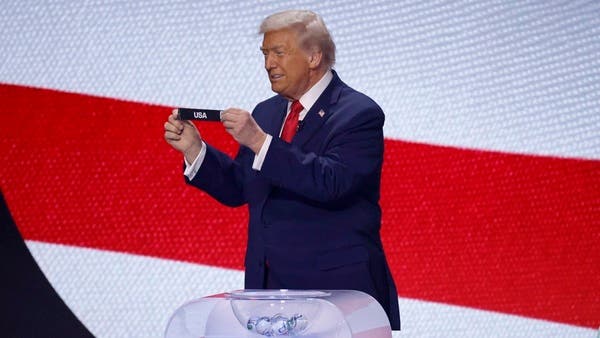

The geopolitical recalibration within global sporting governance has taken a significant turn, following reports that a senior envoy to the US administration has formally proposed that Italy replace Iran in the upcoming FIFA World Cup. This development extends beyond mere sporting protocol, representing a calculated maneuver to mend fractured diplomatic relations between Washington and Rome, which were strained by public disputes concerning religious leadership. The suggestion underscores how international events are increasingly leveraged as instruments of soft power and political reconciliation, reflecting the intricate interplay between statecraft and global institutions.
The potential substitution holds profound implications for sovereign capital flows and regional prestige, particularly within the Middle East and North Africa (MENA). For Iran, the threat of exclusion from a marquee global economic stage represents a further erosion of its standing, complicating its ability to attract investment and project influence. Conversely, Italy’s inclusion would signify a validation of its enduring cultural and sporting pedigree, reinforcing the nation’s soft power on a platform where commercial and diplomatic interests converge on a global scale.
From a regional infrastructure and investment perspective, the situation highlights the volatility inherent in cross-border sporting and financial commitments. While the logistical and broadcast infrastructure for the tournament is already established across North America, the political contingencies serve as a stark reminder to consortiums and sovereign wealth funds of the need for robust risk assessment frameworks. The episode ultimately reinforces the principle that in the MENA region, as in global markets, geopolitical stability remains the primary determinant of long-term capital allocation and legacy project viability.