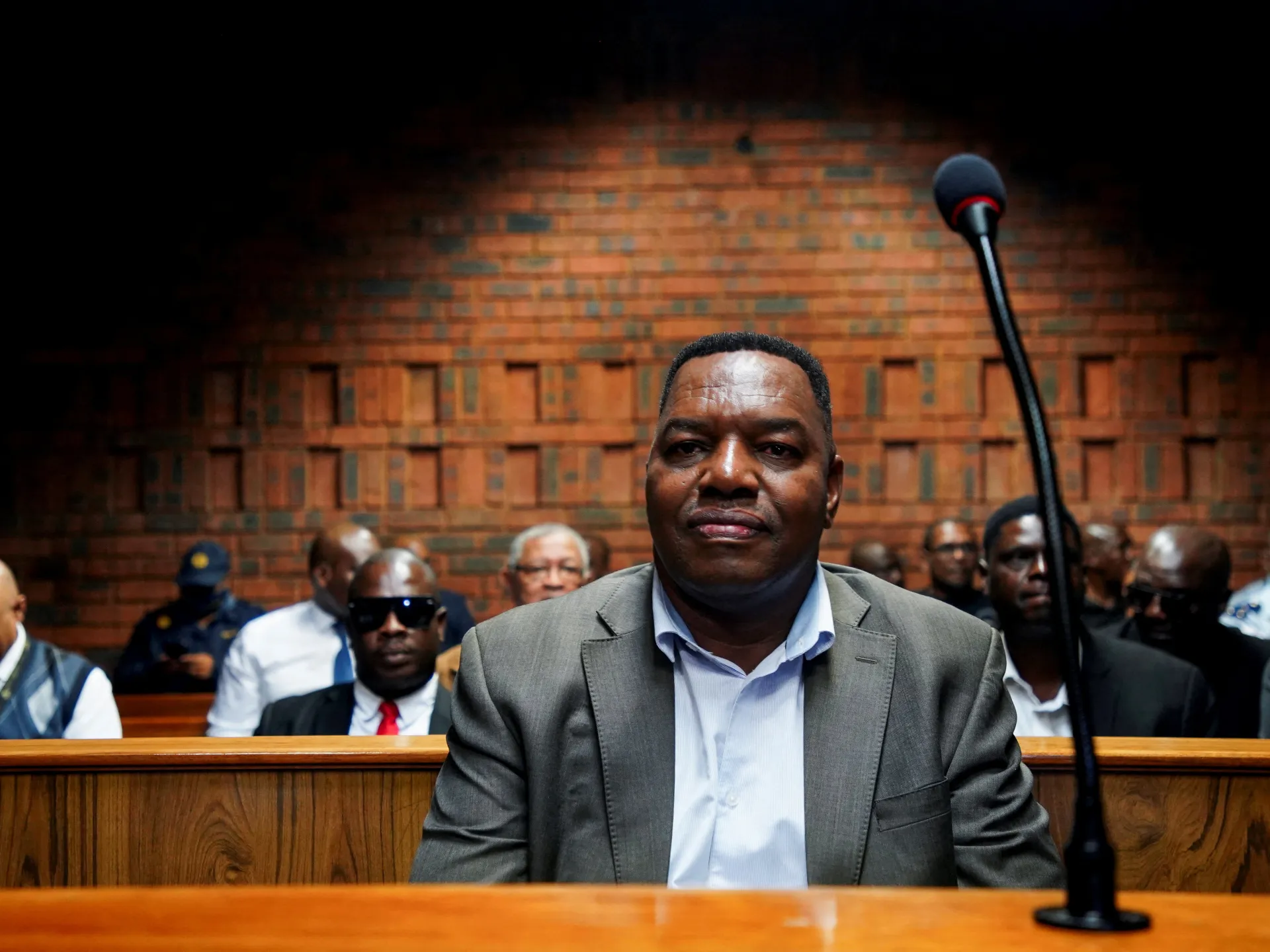

The sudden suspension of Police Commissioner Fannie Masemola amid a high‑profile procurement fraud investigation underscores a broader governance crisis that threatens to unravel the confidence of sovereign and private investors across MENA. In jurisdictions where state‑controlled security apparatuses play a pivotal role in the provision of critical infrastructure—be it ports, airports, or secure logistics corridors—any hint of collusion between law‑enforcement officials and private entities jeopardises the integrity of public procurement processes, a key risk factor for cross‑border capital deployment.
Masemola’s alleged manipulation of a 360‑million‑rand healthcare tender for the police force signals a systemic failure that could erode the perceived reliability of state‑backed contracts in South Africa, a country that is already a significant partner for emerging markets in the Middle East and North Africa. The incident, coupled with the recent chain of suspensions at senior police levels, casts doubt on the robustness of South Africa’s anti‑corruption measures—an issue that resonates with sovereign funds and investment banks evaluating exposure to the country’s public contracting domain.
From a venture capital perspective, the fallout constrains the climate for startup ecosystems that rely on government subsidies, procurement tenders, or public‑private partnerships for early scale. The stalled procurement cycle surrounding the 360‑million‑rand tender, now cancelled, has already delayed the deployment of essential health services for police officers—a tangible example of how governance weaknesses can stall revenue streams for firms embedded in the public supply chain. Venture funds currently allowing exposure to South African tech and health‑tech firms will need to reassess risk profiles, potentially tightening due diligence or increasing contingent liability provisions.
For MENA‑based infrastructure investors eyeing joint ventures or portfolio diversification in the region, this episode serves as a cautionary signal. Sovereign guarantees that underpin large‑scale projects—particularly those involving security and public infrastructure—must be scrutinised for institutional resilience. Failure to implement transparent, auditable procurement frameworks risks eroding the credibility of entire projects, which could trigger cash‑flow interruptions, contractual defaults, and ultimately, a retreat of international capital from high‑earning, high‑risk markets such as South Africa. The suspension of Masemola, therefore, is not merely a domestic personnel decision but a flashpoint for the re‑evaluation of sovereign risk and the resilience of public‑private partnerships across the MENA region.