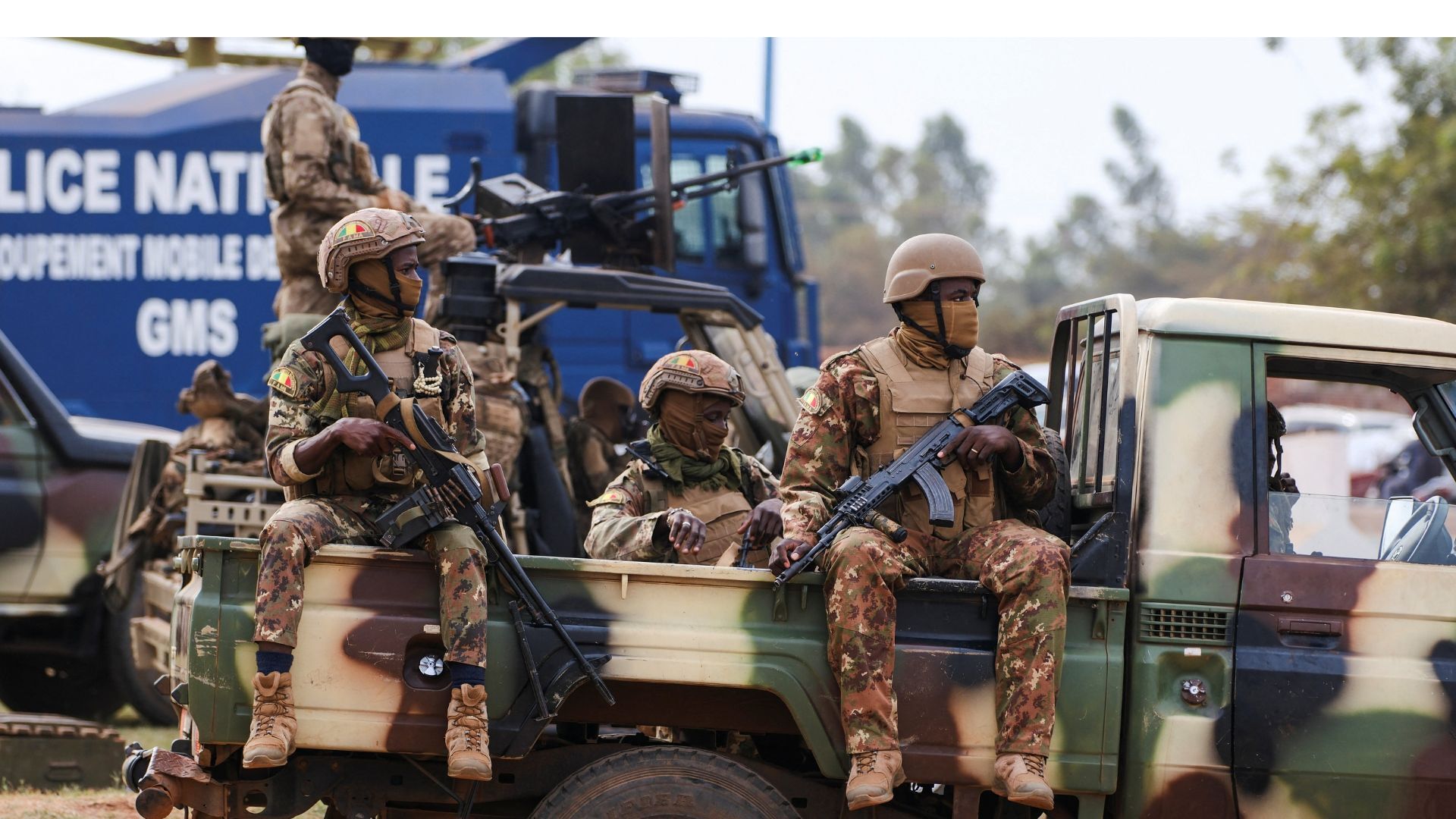

Mali’s recent geopolitical upheaval, marked by the destabilizing collaboration between erstwhile adversaries—including entities linked to al-Qaeda—in a coordinated assault on military infrastructure, underscores a critical erosion of state control over key economic and strategic assets. The death of the defense minister and targeted attacks on Russian mercenary forces aligned with the government signal a flashpoint in the nation’s fragility, with direct implications for sovereign capital flows. Investors and financial institutions operating in or linked to Mali now face heightened counterparty risk, as institutional confidence wanes amid perceptions of state inefficacy and non-state actor infiltration. This scenario is likely to precipitate capital flight, particularly in sectors sensitive to political volatility, such as energy, mining, and real estate. Regionally, Mali’s instability serves as a cautionary narrative for MENA policymakers, potentially deterring sovereign wealth fund diversification efforts and straining regional security cooperation frameworks that underpin economic stability.
The confluence of insurgent resurgence and organized violence in Mali necessitates an urgent reevaluation of venture capital (VC) deployment in the broader Sahel and Maghreb regions. Historically, the MENA region has positioned itself as a strategic hub for early-stage VC activity, attracted by youthful demographics and nascent tech ecosystems. However, Mali’s case exemplifies how acute security deterioration can void risk appetite, forcing VCs to prioritize capital preservation over growth initiatives. Local startups reliant on cross-border investment—particularly those in fintech or agritech—may face exit uncertainties or liquidity crunches. Moreover, the incident could accelerate a shift in VC focus toward more stable MENA markets, such as Singapore- or Dubai-based incubation hubs, thereby redirecting regional innovation funding. This redistribution risks entrenching economic segregation within the MENA, favoring nations with perceived lower geopolitical exposure while marginalizing conflict-adjacent economies.
On regional infrastructure, Mali’s instability threatens to disrupt critical logistical and energy corridors that underpin MENA trade and resource integration. The country’s position as a transit point for access to West Africa’s resources—enhanced by kürşen gas pipelines and cross-border mining operations—positions it as a linchpin in regional supply chains.Any further deterioration in security could compel rerouting of infrastructure investments, increasing costs for energy exporters and disrupting trade flows. Additionally, the conflict’s spillover effects may necessitate recalibration of African Union and MENA regional defense initiatives, diverting sovereign resources from infrastructure projects to security reinforcement. Long-term, this could perpetuate a cycle of underinvestment in critical sectors, exacerbating development gaps and undermining efforts to attract foreign direct investment (FDI) in the region’s infrastructure corridors.