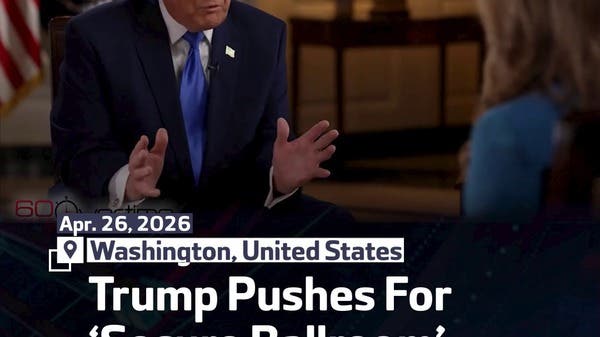

The abrupt removal of the entire 22‑member National Science Board (NSB) – the governance arm of the U.S. National Science Foundation (NSF) – signals a profound shift in federal research policy that will reverberate across the Middle East and North Africa. The NSF, with an 2025 budget exceeding $8 billion, remains a cornerstone of global technology pipelines, funneling capital into next‑generation semiconductors, quantum computing, and advanced materials that underpin the region’s sovereign wealth fund diversification strategies. A US‑led re‑orientation toward politically aligned appointees threatens the predictability of cross‑border research collaborations, jeopardising joint ventures that MENA sovereign investors have earmarked to reduce exposure to oil‑centric assets.
For Gulf sovereign wealth funds and Egyptian state‑backed venture capital platforms, the NSB purge raises immediate concerns about the continuity of multibillion‑dollar grant programmes that have underwritten joint laboratory complexes in Dubai, Riyadh, and Casablanca. These programmes have historically leveraged NSF seed funding to attract U.S. university spin‑outs, creating pipelines for local venture capital to co‑invest in high‑impact startups. Uncertainty about the future direction of U.S. federal science funding could delay the closing of several mega‑funds slated for 2026, compressing deal flow and inflating cost of capital for regional tech incubators.
Infrastructure projects that depend on NSF‑sponsored research—such as the smart‑grid pilots in the UAE and renewable‑energy storage testbeds in Tunisia—also face heightened risk. The United States remains a primary source of technical standards and validation frameworks; any politicisation of the NSF’s agenda may stall the adoption of internationally recognised benchmarks, forcing MENA governments to either develop parallel standards or incur additional compliance costs. Such delays could erode the competitive advantage of the region’s burgeoning digital and clean‑energy ecosystems.
Investors and policymakers in the MENA corridor are therefore poised to recalibrate exposure to U.S. federal science support. Diversification of research partnerships toward European Union Horizon programmes and emerging Asian science ministries is accelerating, while sovereign capital allocations are being re‑examined for resilience against geopolitical volatility. The coming weeks will be critical in assessing whether the Trump administration will replace the dismissed board with ideologically driven appointees or restore a degree of independence that preserves the trans‑atlantic research corridor essential to the region’s long‑term technological ambition.