
Ottawa’s decision to deem members of Iran’s Islamic Revolutionary Guard Corps (IRGC) inadmissible effectively seals a diplomatic rift that could ripple through the broader MENA investment ecosystem. By barring individuals linked to the IRGC from entering Canada—a key hub for sovereign wealth and venture capital flows—the move signals heightened scrutiny of entities with dual military‑commercial interests, prompting Canadian pension funds and institutional investors to reassess exposure to Iranian state‑controlled assets.
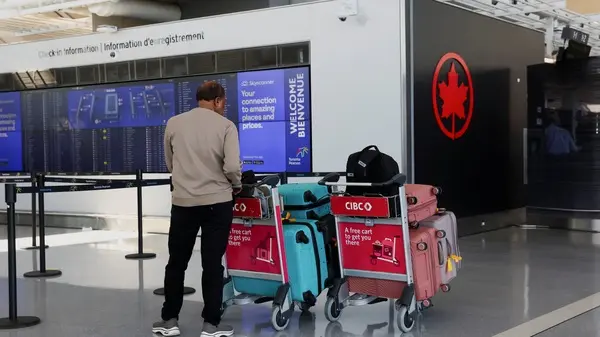
Iranian officials, including the president of the national football federation and senior federation executives, departed Canada after being subjected to what they characterized as mistreatment at Toronto’s airport, underscoring the operational frictions that arise when sovereign representatives intersect with Western immigration regimes. The episode may deter future high‑profile Iranian delegations from engaging in Canadian‑based conferences or partnership negotiations, curtailing knowledge‑transfer channels that historically supported technology transfer and infrastructure financing across the region.
From a sovereign capital perspective, the episode amplifies risk premiums on Iranian sovereign bonds and state‑owned enterprises, as credit rating agencies factor in the probability of diplomatic isolation and restricted access to Western financial services. This heightened risk could curtail the flow of Gulf‑based sovereign wealth funds, which have been seeking diversification opportunities in North American technology and renewable energy projects, toward Iranian ventures, thereby reshaping capital allocation strategies within the Gulf Cooperation Council.
For venture capital and regional infrastructure, the sanctions‑adjacent narrative creates a chilling effect on cross‑border financing. Canadian VC firms that previously targeted Iranian start‑ups for fintech and agri‑tech innovation may now pivot toward more geopolitically insulated markets, while European and Asian investors might demand stronger due‑diligence on any Iranian counterpart to mitigate reputational risk. Consequently, the infrastructure pipeline benefiting from Iranian sovereign funding—particularly in transport, energy, and digital connectivity—could experience delays, as sovereign lenders reassess the geopolitical calculus before committing capital to MENA projects tied to entities with IRGC affiliations.