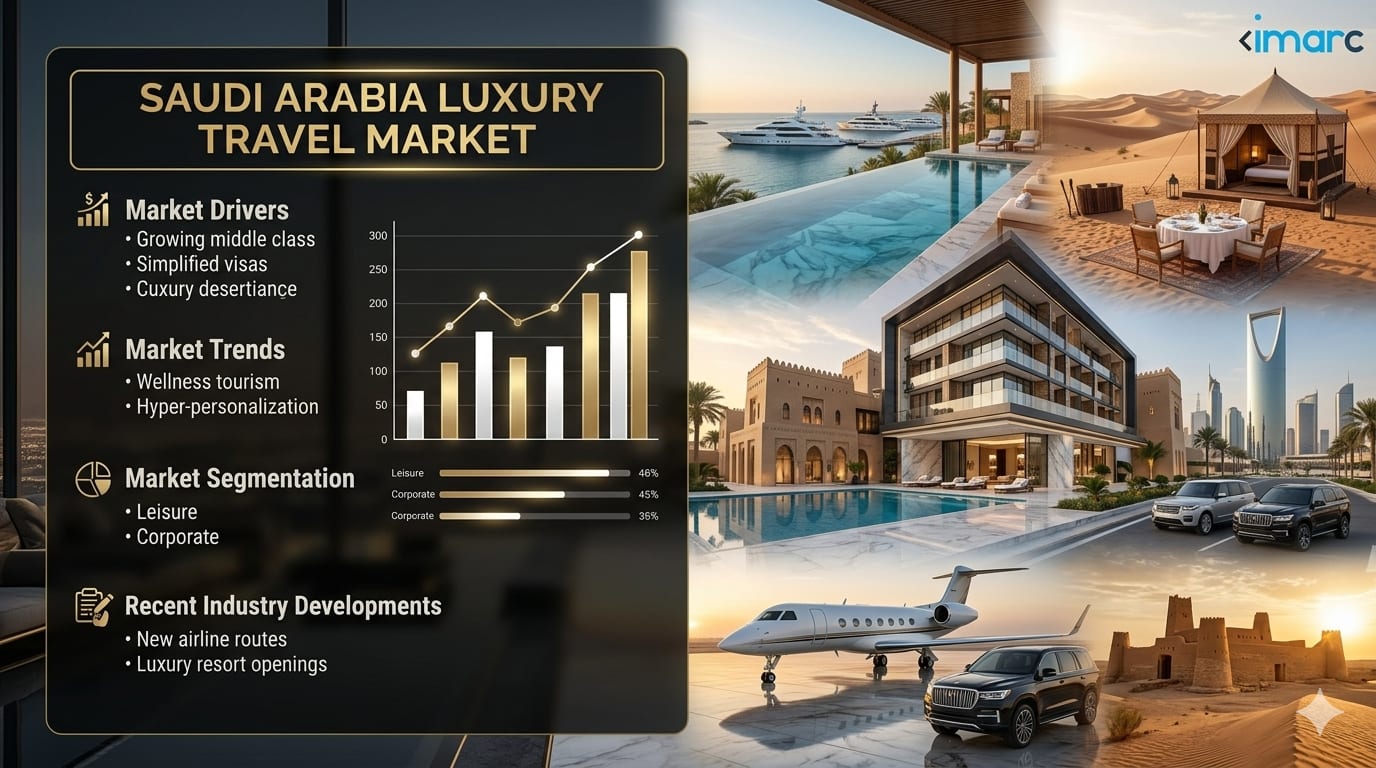

Saudi Arabia’s luxury tourism sector, underpinned by Vision 2030 and sovereign capital deployment, is rapidly emerging as a strategic pillar for economic diversification and long-term growth. The Public Investment Fund’s commitment exceeding $63 billion to mega-projects like NEOM, The Red Sea Project, and Diriyah Gate represents a deliberate, nation-scale investment in high-yield assets targeting global high-net-worth travelers (HNWIs). This capital infusion is not merely enhancing existing infrastructure but creating entirely new luxury destinations designed for exclusivity and premium expenditure, with the Red Sea Project alone projected to contribute $5.8 billion to GDP and target 50 luxury hotels by 2030. The sector’s expansion is further accelerated by dedicated sovereign-backed initiatives such as Riyadh Air, aiming to directly facilitate luxury segment connectivity and experience curation.
The development of integrated luxury ecosystems is catalyzing significant venture capital activity and driving substantial capital expenditure across supporting infrastructure. The surge in luxury accommodation, where 61% of hotel rooms fall into the luxury/upscale/upper-upscale categories and the luxury segment commands 37.3% market share, has drawn global hospitality titls like Four Seasons, Aman, and SLS/EDITION to build flagship properties, necessitating concurrent investments in logistics, retail, and specialized services. Simultaneously, the Kingdom’s focus on event-driven luxury via Formula 1, LIV Golf, and Qiddiya’s $50 billion entertainment hub creates high-value ancillary markets, attracting VC interest in tech-enabled guest experiences, premium transportation solutions (including superyacht services at Sindalah Island), and bespoke hospitality tech.
This strategic recalibration positions Saudi Arabia as a critical node in the evolving global luxury landscape, with profound implications for regional infrastructure and competitive positioning. The ambitious 150 million visitors by 2030 target, fueled by unprecedented air connectivity and curated international marketing, necessitates continuous investment in port facilities, premium terminal expansions, and digital tourism platforms to support the influx. The success of this model, leveraging sovereign capital to de-risk large-scale luxury asset creation and attract private capital, risks amplifying regional disparities unless neighboring economies develop comparable integrated luxury propositions or forge complementary partnerships. Ultimately, Saudi Arabia’s luxury tourism build-out is testing the viability of state-directed, high-capex tourism as a primary economic driver within the broader MENA region.