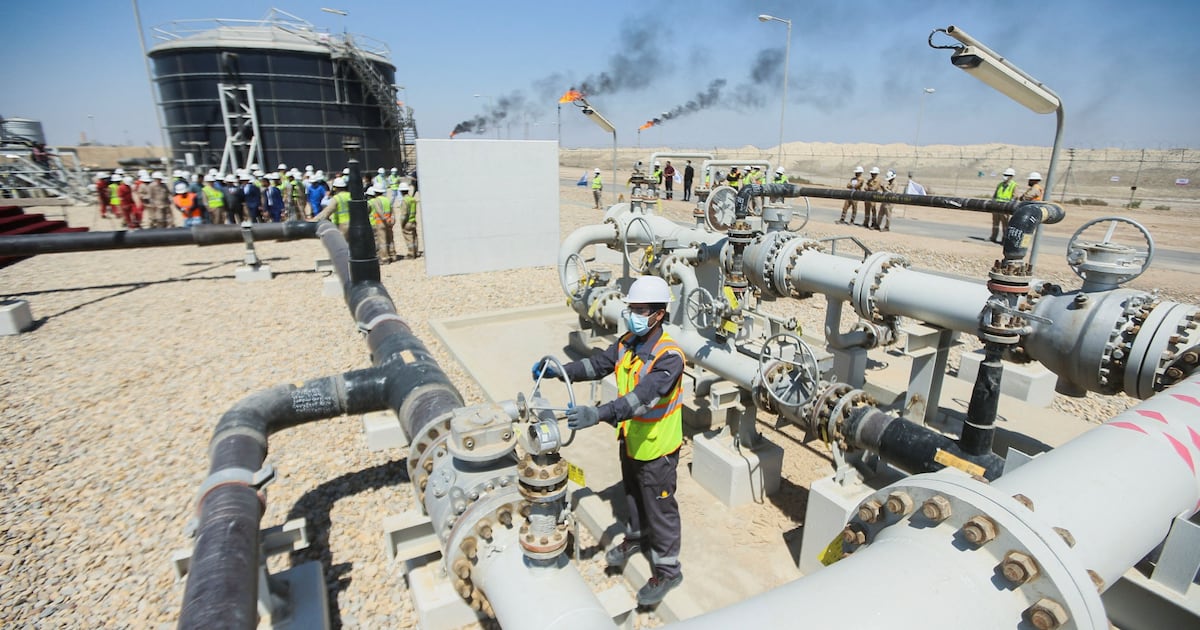

The escalating tensions in the Persian Gulf corridor represent a critical inflection point for Middle Eastern capital deployment strategies, with sovereign wealth funds from Abu Dhabi to Riyadh recalibrating allocation matrices amid heightened geopolitical volatility. Iran’s expanding conflict perimeter threatens to disrupt the region’s energy export infrastructure, directly impacting the $2.3 trillion in sovereign capital managed across GCC states that depend on stable hydrocarbon revenues. The potential for Strait of Hormuz disruption has already triggered defensive positioning among Gulf petrodollar investors, with preliminary data showing increased allocations to hard assets and reduced exposure to regional equities, particularly affecting the $380 billion in cross-border M&A activity that typically flows through Dubai and Doha intermediaries.
For venture capital ecosystems stretching from Cairo to Dubai, the Iran conflict introduces significant recalibration risk for the $47 billion in regional tech investments managed across 180+ funds. MENA-based VCs have demonstrated increasing sophistication in recent years, with Saudi Arabia’s Vision 2030 program and UAE’s digital transformation agenda driving $12.8 billion in VC commitments during 2023 alone. However, sustained regional instability threatens to compress deal flow and extend due diligence timelines, particularly affecting fintech, logistics, and food security startups that form the backbone of economic diversification strategies. The conflict’s spillover effects are already evident in Egypt’s startup scene, where foreign direct investment has declined 23% as international LPs prioritize portfolio protection over emerging market allocations.
From a critical infrastructure perspective, the Gulf states’ $1.7 trillion in announced infrastructure projects faces immediate reassessment, with security risk premiums likely to drive cost overruns across the region’s most ambitious development programs. Saudi Arabia’s NEOM corridor and the UAE’s clean energy initiatives require uninterrupted supply chains that conflict zones threaten to compromise, potentially increasing project financing costs by 150-200 basis points. The insurance and reinsurance markets based in Dubai and Bahrain are already repricing political risk coverage, with premiums for regional infrastructure debt rising sharply. Concurrently, China’s Belt and Road Initiative partners in the region are accelerating alternative routing strategies, potentially redirecting $89 billion in planned investments toward more stable North African jurisdictions.
The intersection of Middle Eastern sovereign capital and global superpower diplomacy introduces another layer of complexity, as regional investors maintain positions across both Western and Chinese asset classes worth approximately $840 billion. Any sustained conflict dynamics will force GCC sovereign investors to navigate competing economic interests while preserving their traditionally neutral stance in great power competition. The implications extend beyond immediate market volatility to fundamental questions about regional economic architecture: whether the current $3.2 trillion in cross-regional trade relationships can withstand prolonged disruption, and how quickly MENA economies can pivot toward self-reliance models that reduce dependence on volatile external capital flows. Early indicators suggest accelerated localization efforts, particularly in food security and technology manufacturing, potentially reshaping decades of import-dependent economic modeling across the region.