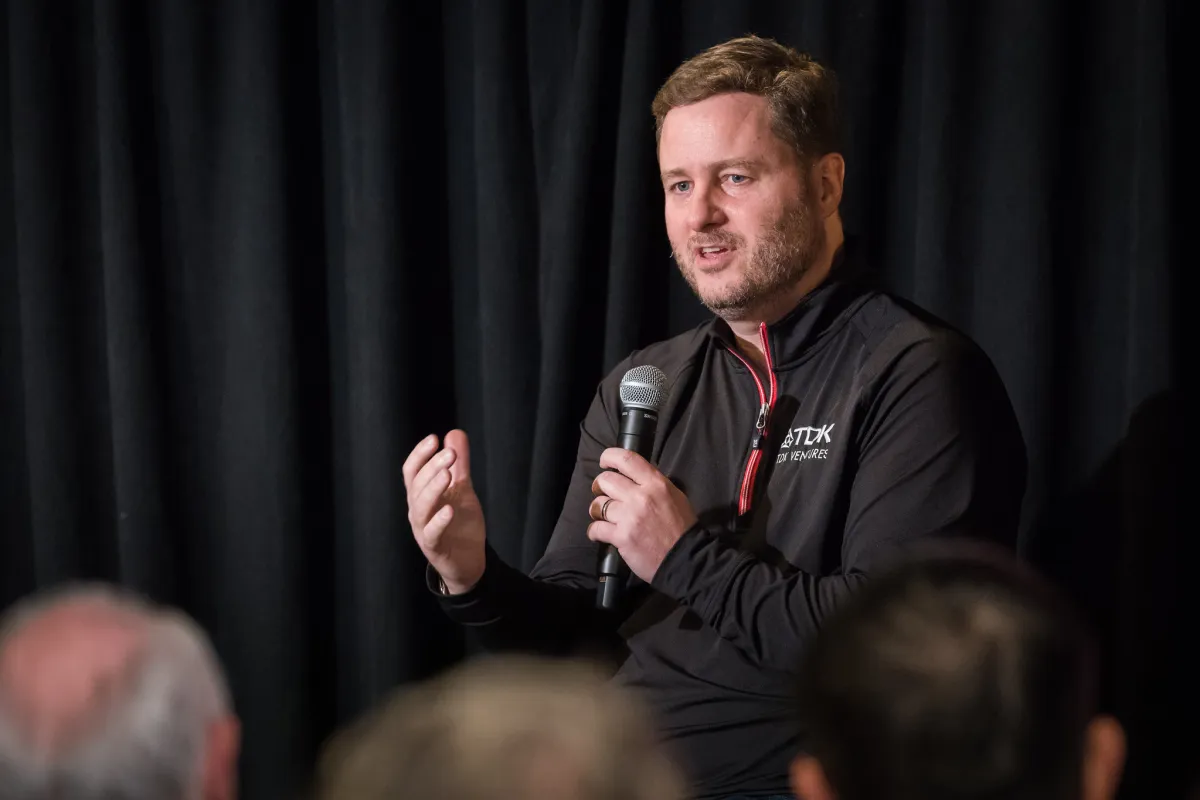

Capital allocators across the MENA region should regard the four-year horizon as the decisive threshold for sovereign and corporate balance-sheet deployment. Nicolas Sauvage’s thesis—refined at TDK Ventures, now steering $500 million across four funds—treats patient, infrastructure-grade optionality as the only arbitrage left in a world where consensus arrives after asset prices have already repriced. For Gulf sovereign wealth funds and pan-MENA family offices managing decade-long liabilities, the lesson is structural: over-allocating to consensus infrastructure today imperils the optionality required to own the bottlenecks of 2028–2030. The objective is not to chase AI hype cycles but to hardwire sovereign portfolios against the next compression of capex cycles in compute, energy and advanced manufacturing.
The regional implication is clearest in the stack beneath inference. Groq’s ascent to a $6.9 billion valuation underscores how inference demand—non-linear, elastic and unconstrained by consumer replacement cycles—has inverted traditional hardware economics. For petro-dollar allocators underwriting data-center corridors from Dammam to Abu Dhabi and Dubai, this mandates a shift from passive hyperscale tenancy to owning the specialized silicon and power architectures that determine who captures margin in an AI-native economy. Sodium-ion and alternative-battery chemistries, once peripheral to venture diligence, are now sovereign-risk mitigants, decoupling MENA data-center build-outs from lithium and cobalt supply chains dominated by rival industrial blocs. Capital formation is tilting toward architectures that convert stranded energy into globally tradable compute, effectively exporting kilowatt-hours as inference capacity.
Geopolitical pressure is accelerating the mandate. China’s emergence in “vibe manufacturing”—AI-driven compression of design-build-test loops on physical hardware—threatens to strand legacy industrial capex across export-oriented MENA hubs, while dexterity gaps in physical AI leave robotics economics bifurcated between generalist aspirations and narrow, defensible workcells. For regional venture and sovereign funds, the bottleneck is no longer capital but fluency in orchestration: CPUs re-ascendant as the choreographers of multi-step agent workflows, and ruggedized, single-task robotics that keep logistics and process engineering productive under demographic constraints. Allocators that internalize this bottleneck now will not merely ride the next cycle; they will set the terms of capital cost, standards and supply-chain control for the MENA technology stack for the next decade.