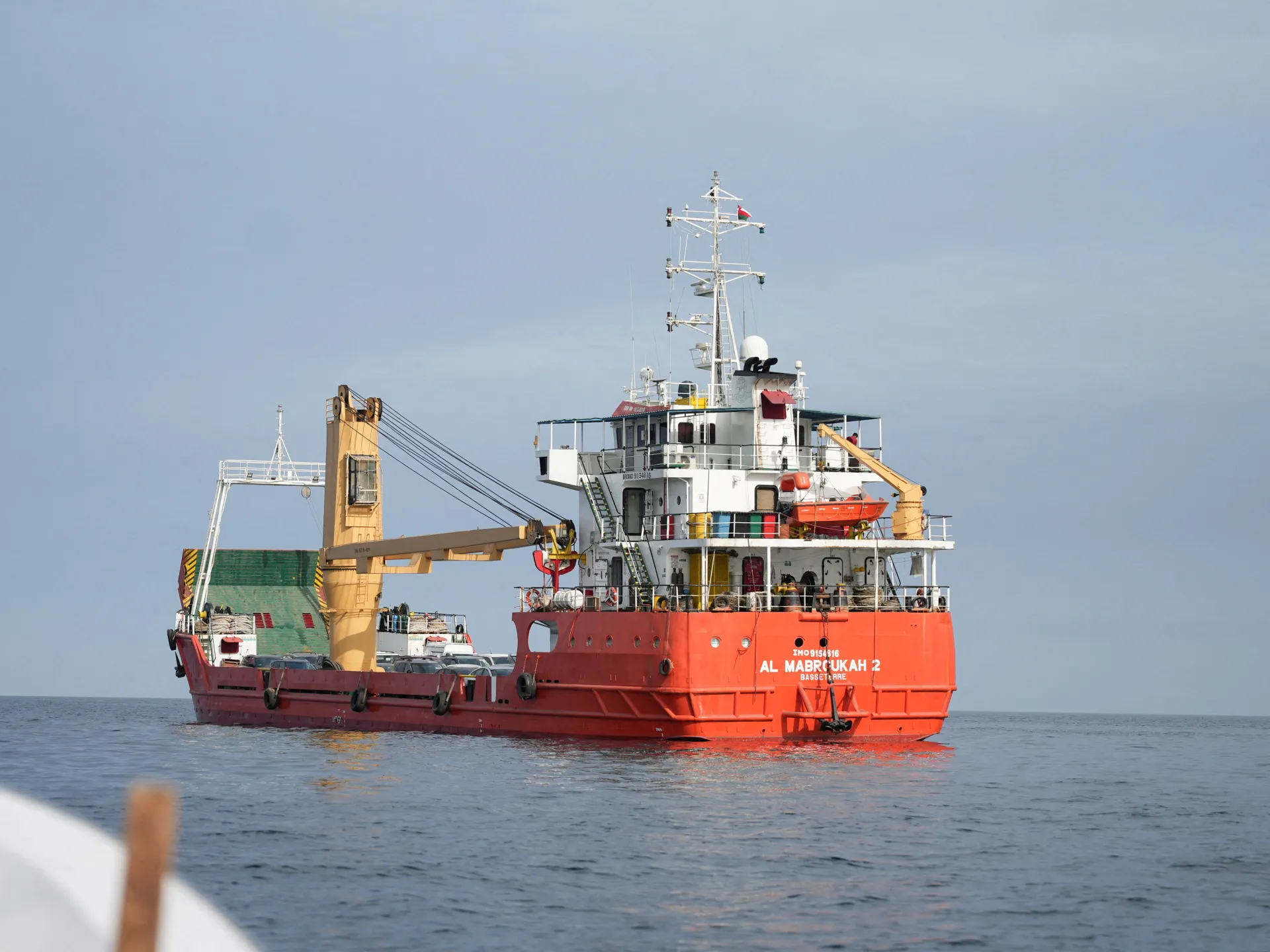

President Trump’s decision to deploy a U.S. naval task force through the Gulf of Oman to assist stranded vessels in the Strait of Hormuz underscores escalating tensions between Washington and Tehran, with profound implications for global energy markets and regional stability. The Strait, a critical artery for 20% of global oil and 15% of LNG shipments, has been targeted by Iran since U.S.-Israeli strikes on February 28, 2024, exacerbating supply chain vulnerabilities. Despite Trump’s rhetoric, oil prices—particularly Brent crude—remain stagnant, reflecting skepticism about the mission’s efficacy in countering Iran’s de facto blockade. Analysts caution that U.S. military intervention risks entrenching regional fragmentation, displacing capital from upstream energy projects and intensifying geopolitical polarization between the West and Gulf states, already strained by divergent trajectories in energy transition and economic diversification.
The reentry of U.S. capital into the region through this mission is fraught with antithetic consequences. While Washington aims to reassure energy exporters and stabilize trade routes, Iraq and Saudi Arabia—key Gulf partners—face divergent pressures: Baghdad risks diplomatic isolation over alignment with Washington, while Riyadh’s Vision 2030 mandates reduced reliance on hydrocarbons, creating a strategic recalibration of sovereign capital flows. Iran’s exclusion from Western financial systems, now compounded by military-hostile posturing, accelerates capital flight and weakens state finances, potentially triggering fiscal austerity and domestic unrest. Meanwhile, the U.S. move inadvertently bolsters regional rivals like China, which has deepened ties with Iranian oil firms and Pakistani logistical hubs, diluting Washington’s influence in attracting venture capital to MENA’s burgeoning fintech and renewable energy corridors.
Regional infrastructure remains a linchpin amid the volatility, with the Strait’s instability acting as both catalyst and liability for cross-border investments. Alternative routes—such as the Suez Mandatory Canal’s underutilization—highlight systemic vulnerabilities in global supply chains, while Gulf states pivot toward LNG and hydrogen infrastructure to insulate economies from further shocks. However, U.S. military presence risks diverting private-sector investments in ports and logistics networks toward security-focused expenditures rather than innovation. In Lebanon, where Israel’s ongoing strikes in the south disrupt infrastructure already battered by conflict, the socioeconomic fabric frays further, deterring diaspora investments critical to post-war recovery. China and Turkey, seizing on the disorder, are likely to amplify initiatives like the China-Pakistan-Russia Economic Corridor and TurkStream+, positioning themselves as arbiters of a multipolar energy order that sidelines U.S. primacy.
The ripple effects extend to venture capital, albeit indirectly, as the sector prioritizes resilience over growth in the near term. Startups in logistics, cybersecurity, and decentralized finance are emerging as beneficiaries of heightened regional risk, while Gulf Arab capitals channel MENA-based venture funds into defense tech and nearshoring initiatives to offset U.S. depreciations. However, the overarching uncertainty deters long-term bets in tech and infrastructure, with investors hedging against further escalation rather than doubling down. This cyclo of insecurity reinforces the region’s bifurcation into rival financial hubs—Dubai and Abu Dhabi consolidating as Western-aligned gateways, while Istanbul, Baku, and Muscat ascend as challengers leveraging East-West divergence to capture overlooked capital. The Strait of Hormuz, a geopolitical chessboard, thus redefines the calculus of sovereign capital and institutional risk in ways that will reverberate far beyond the immediate crisis.