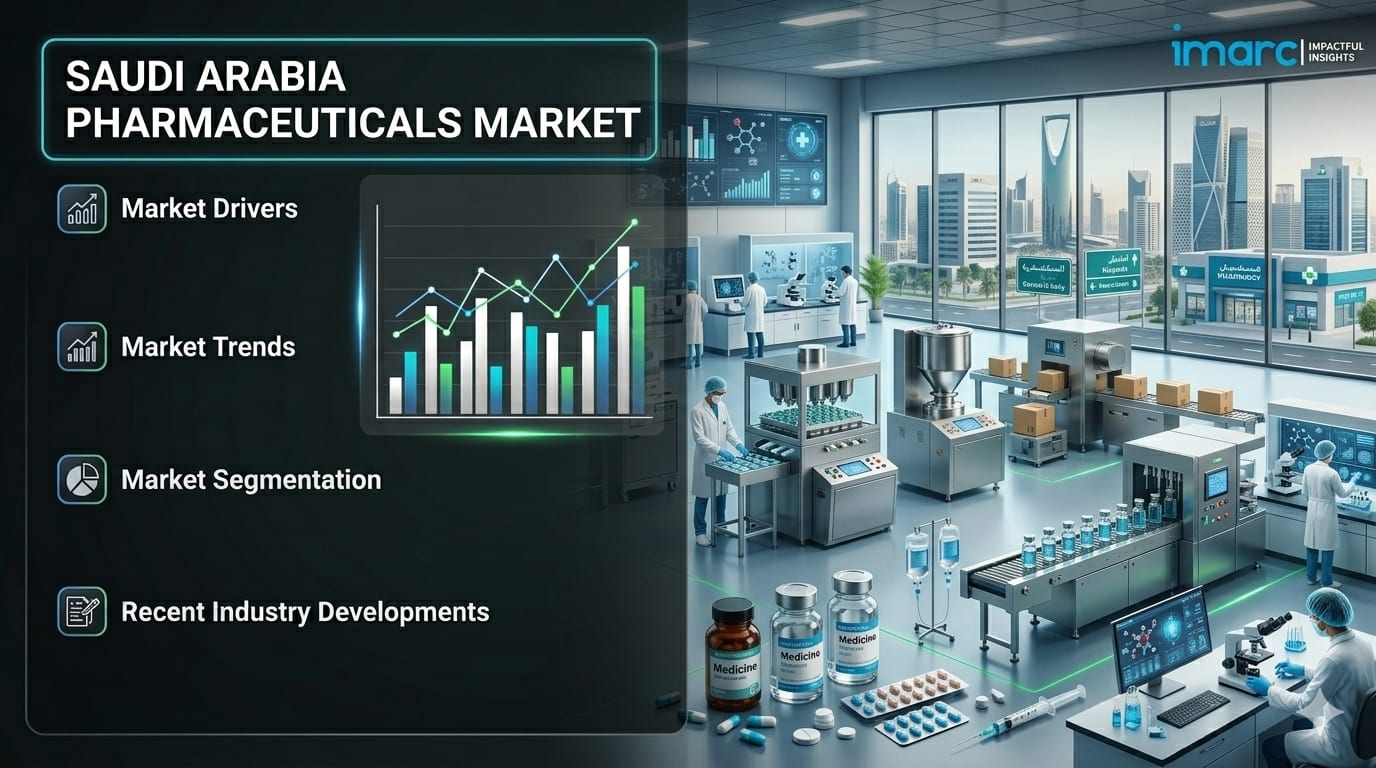

Saudi Arabia’s pharmaceutical sector has emerged as a cornerstone of the Kingdom’s economic diversification strategy, with profound implications for the broader MENA region. The market’s expansion from $9.6 billion in 2025 to an projected $11.79 billion by 2034 reflects not merely commercial growth but a deliberate reconfiguration of regional healthcare supply chains. With prescription drugs commanding 64% market share and cardiovascular therapeutics driving 30% of demand, the sector represents a stable, predictable investment horizon that sovereign wealth funds and institutional investors view as critical infrastructure. This transformation positions Saudi Arabia as the region’s pharmaceutical manufacturing hub, with the Northern and Central Region’s 38% market concentration serving as both domestic anchor and export distribution node for broader MENA markets seeking to reduce dependencies on Western pharmaceutical supply chains.
The Public Investment Fund’s strategic deployment of sovereign capital into pharmaceutical manufacturing signals a fundamental shift in regional investment patterns. The Pfizer-Lifera partnership and MS Pharma’s $50 million biologics facility represent more than corporate joint ventures—they constitute a new model of technology transfer financing where global pharmaceutical expertise converges with Gulf capital to create regional production capabilities. The Lifera-Jamjoom Pharma joint venture targeting local vaccine and biologic manufacturing directly advances Vision 2030’s import substitution agenda while establishing a blueprint for sovereign-backed pharmaceutical industrialization that other MENA nations are likely to emulate. This capital deployment strategy transforms pharmaceutical investment from a consumer market play into a strategic infrastructure play with built-in export potential across the Arabic-speaking world.
Digital health infrastructure and venture capital flows are simultaneously reshaping pharmaceutical distribution networks throughout the region. With 33.6 million e-commerce participants in Saudi Arabia as of 2024, licensed online pharmacy platforms represent a disruption vector that threatens traditional distribution models while creating new investment opportunities in healthTech and supply chain digitization. The rapid expansion of retail pharmacy networks—Aster Pharmacy’s Trio flagship model exemplifies this trend—indicates substantial private capital allocation toward healthcare infrastructure development. These developments suggest that pharmaceutical investment in Saudi Arabia operates as a catalyst for broader health infrastructure modernization, with digital commerce platforms and expanded physical networks serving as templates for Egypt, UAE, and other regional markets undergoing similar transformation.
The convergence of aging demographics, rising chronic disease prevalence, and government-led healthcare expansion creates a self-reinforcing demand cycle that extends far beyond Saudi Arabia’s borders. With cardiovascular and metabolic diseases driving pharmaceutical consumption patterns, the market’s evolution toward biologics and specialty medicines indicates a regional shift up the value chain that will influence pricing dynamics and treatment accessibility across emerging markets. Healthcare infrastructure scale-up, including new hospitals and specialty clinics concentrated in Riyadh, directly correlates with pharmaceutical consumption growth rates that other MENA countries are pursuing through their own public health investments. This pharmaceutical ecosystem transformation represents a strategic realignment of regional healthcare economics, where Saudi Arabia’s Vision 2030-driven pharmaceutical localization serves as both domestic imperative and regional competitive advantage.