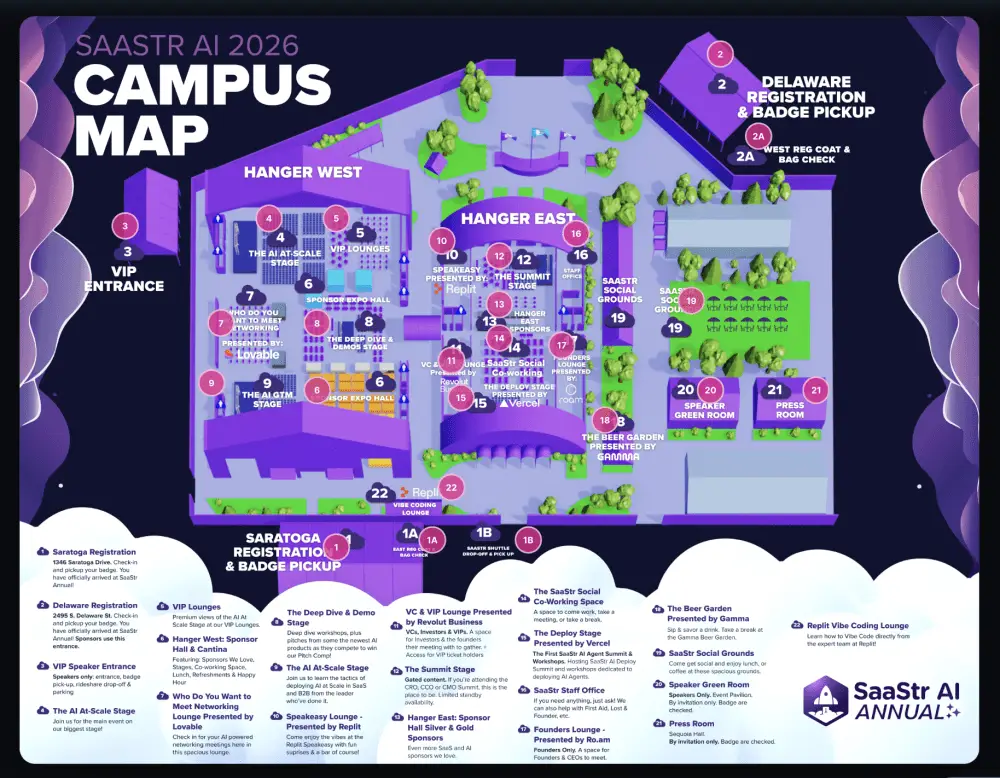

The 2026 edition of SaaStr AI Annual, scheduled for May 12–14 at the San Mateo County Event Center, has logged 140% year-on-year attendance growth, underscoring surging global institutional and corporate demand for applied AI and SaaS deployment frameworks. For MENA’s financial and technology ecosystems, the event serves as a critical barometer for capital allocation trends: the region’s sovereign wealth funds—including Saudi Arabia’s Public Investment Fund (PIF), the UAE’s Mubadala and ADIA, and Qatar’s QIA—collectively allocate more than $400bn annually to global alternative assets, with a growing share flowing to AI and SaaS vehicles that dominate the SaaStr agenda. Record delegations from MENA-based VC firms, growth-stage startups and sovereign-backed tech accelerators are attending this year, reflecting the region’s push to align domestic digital transformation roadmaps with global best practices in scalable AI adoption.
Sovereign capital implications are front and center. Sponsors including established SaaS leaders Salesforce, Databricks and Stripe, alongside AI-native firms Anthropic, Replit, CoreWeave and Google Cloud, are core holdings for top-tier global VC funds that count MENA sovereigns as anchor limited partners, meaning deployment trends discussed at the conference will directly shape future capital flows back to the region. The event’s dedicated pitch competition, judged in part by Google Gemini, and “Meet a VC” sessions will see a swelling cohort of MENA founders pitching AI-enabled SaaS tools tailored to regional sectors from energy and logistics to government services, as global VCs increasingly allocate to MENA’s $2.3bn annual tech VC market, which saw a 37% year-on-year jump in AI-related deal value in Q1 2026. Separately, closed-door CRO, CCO and CMO summits will be closely watched by MENA enterprise leaders modernizing legacy sales and marketing stacks to meet profitability mandates set by sovereign owners.
Infrastructure and operational implications for MENA are equally pronounced. The conference’s focus on production-ready AI agent deployment aligns with accelerated buildout of regional cloud infrastructure, including new Google Cloud and Azure regions in Riyadh and Dubai, and PIF-backed investments in domestic AI compute capacity. MENA telcos and banks, which account for 42% of regional enterprise SaaS spending, are sending technical delegations to the event’s Vibe Coding Lounge and deploy workshops to source tools for customer-facing AI agents, a priority as GCC governments push to digitize public services ahead of 2030 economic diversification deadlines. For MENA startups, takeaways from SaaStr’s sessions on unit economics and sustainable growth will be critical as the region’s VC ecosystem shifts from growth-at-all-costs to returns-driven models, backed by sovereign mandates to generate 8–10% net returns on tech allocations.