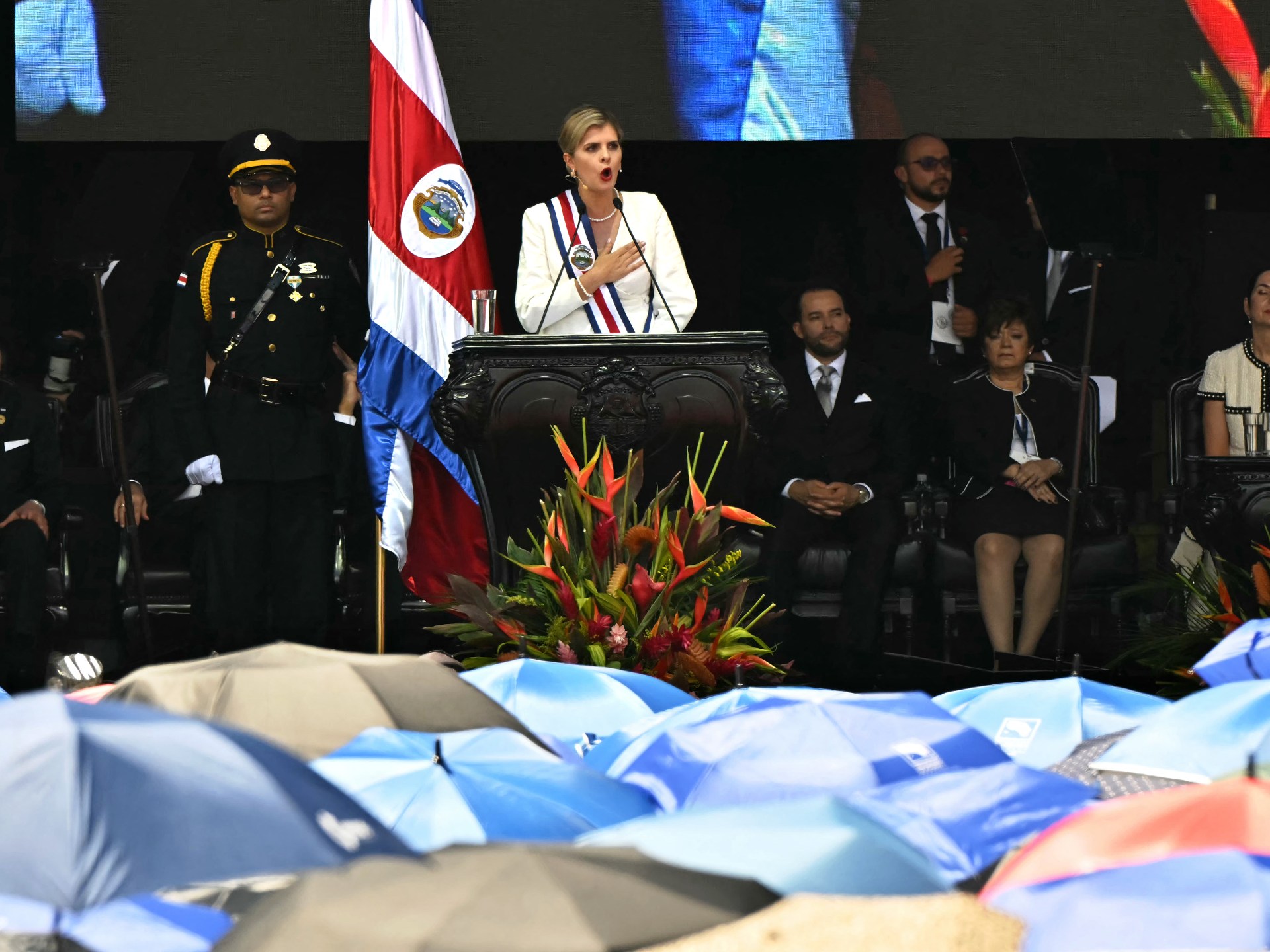

Laura Fernandez’s inauguration as Costa Rica’s president, backed by an outright majority for her right‑wing Sovereign People’s Party (PPSO), sends a clear signal to investors that the Central American corridor will pivot toward a security‑first growth model. For sovereign wealth funds and regional venture capital houses eyeing the north‑south logistics route that links the Gulf to the Atlantic, the promise of a “war without quarter” on organized crime translates into reduced supply‑chain risk and a more predictable operating environment for export‑oriented tech and agribusiness platforms. The government’s decision to retain outgoing leader Rodrigo Chaves as dual minister of the presidency and finance further underlines policy continuity, reassuring Abu Dhabi‑based sovereign investors that fiscal discipline and US‑aligned trade frameworks will remain intact.
Strategically, the appointment of Vice‑President Douglas Soto as ambassador to Washington embeds a direct conduit for US‑MENA financial collaborations, potentially unlocking co‑financing structures for digital infrastructure projects spanning the Panama Canal to the Red Sea corridor. The presence of U.S. envoy Kristi Noem and Israeli President Isaac Herzog at the inauguration underscores a geopolitical alignment that could accelerate joint‑venture pipelines involving Israeli cybersecurity firms and Gulf venture capital funds seeking footholds in the burgeoning Central American market.
From an infrastructure standpoint, Costa Rica’s plan to construct a maximum‑security prison modeled on El Salvador’s CECOT facility reflects a willingness to import hardened security architectures, a sector where MENA construction conglomerates—particularly those from Saudi Arabia and Qatar—have demonstrated comparative advantage. Coupled with the recent “third‑country” deportation agreements, the government is effectively creating a captive labor pool that may be leveraged for public‑private partnership projects in utilities, data centres, and renewable energy, aligning with the ESG mandates of many Gulf‑based sovereign investors.
The PPSO’s 31‑seat grip on the 57‑member legislature grants Fernandez unchecked legislative bandwidth to enact comprehensive reforms in the judiciary and security sectors, a development that could streamline licensing processes for fintech and agritech start‑ups seeking to commercialise in the region. For MENA venture capitalists, this presents a timely entry point to seed‑stage enterprises that require both regulatory clarity and robust security guarantees, thereby enhancing the risk‑adjusted returns of cross‑regional investment theses.