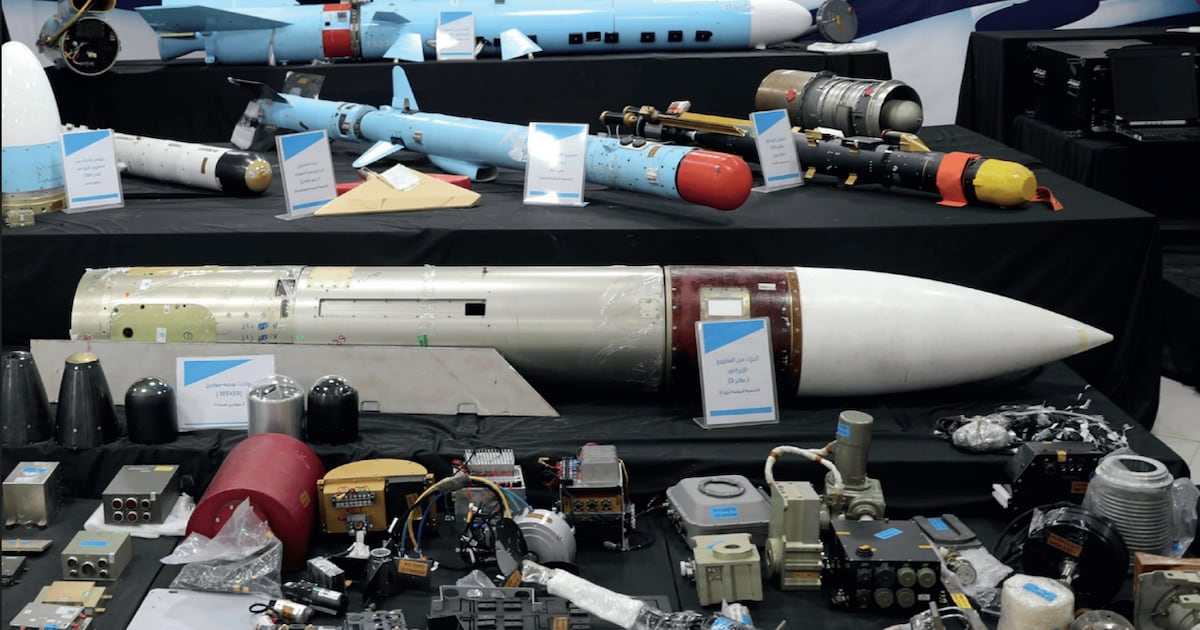

Recent maritime interceptions in the Red Sea, documented by ConflictArmament Research, reveal that the Houthi movement has assembled a diversified arsenal of over 800 weapons components, including at least ten distinct missile variants and advanced unmanned aerial systems—many bearing Iranian nomenclature despite minimal direct Iranian provenance. The components, sourced from a network spanning 16 countries, are packaged as “DIY kits” that complicate detection and underscore a sophisticated, high‑value logistics chain reliant on both Iranian strategic direction and foreign technology supply.
For the Gulf Cooperation Council (GCC) economies, this evolving threat amplifies operational risk premiums on maritime insurance, erodes confidence in Red Sea trade corridors, and threatens sovereign wealth fund exposure to shipping and port assets. Regional banks are already revising loan covenants for shipping‑related borrowers, while sovereign investors are intensifying due‑diligence on infrastructure projects that could be vulnerable to missile strikes or drone attacks, prompting a shift toward hardened, redundant supply‑chain designs.
Venture capital firms operating in the MENA region are reallocating capital toward resilient infrastructure technologies—such as modular port systems, offshore monitoring platforms, and secure communications—while scaling back exposure to projects with limited contingency planning. The heightened security environment is also spurring sovereign funds to prioritize strategic partnerships with defense‑oriented technology providers, seeking to embed advanced counter‑UAV and missile‑defence capabilities within national infrastructure roadmaps.
Overall, the Houthis’ expanded weapons capability signals a strategic escalation that reverberates through the region’s financial architecture: heightened risk premiums, tighter credit terms, and a decisive pivot among sovereign and private capital toward fortified, technology‑driven infrastructure to safeguard trade, energy, and investment flows across the Middle East and North Africa.