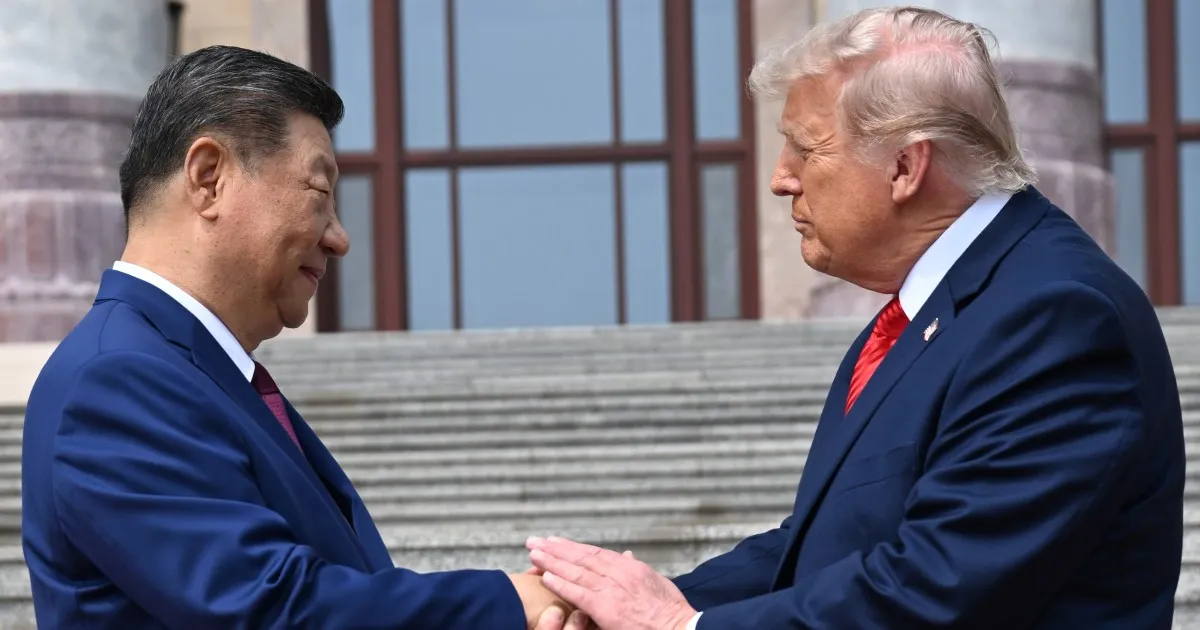

The summit between Presidents Trump and Xi underscores a recalibration in global economic architecture with profound implications for the MENA region. The stabilisation, rather than revitalisation, of US-China relations, characterised by persistent tariffs averaging 47.5% and 31.9% respectively, creates structural pressures on global supply chains that MENA nations are strategically positioned to mitigate. Sovereign wealth funds in the Gulf, possessing unparalleled capital liquidity, are increasingly viewed as critical arbiters capable of bridging the financing gap for regional infrastructure projects designed to facilitate trade diversion and resilience. Simultaneously, the heightened focus on critical minerals, particularly rare earths essential for advanced manufacturing and defence, presents an opportunity for MENA countries with untapped geological potential to attract significant sovereign investment and forge new strategic partnerships beyond traditional dependencies.
The geopolitical rivalry between Washington and Beijing catalyses a tangible shift in venture capital flows towards MENA tech ecosystems, as global investors seek alternative innovation hubs beyond China’s constrained access. Regional acceleration in artificial intelligence, fintech, and semiconductor design is no longer a niche ambition but a strategic imperative, attracting VC capital previously concentrated in East Asia. Concurrently, MENA’s strategic geographical location necessitates substantial investment in logistics infrastructure, including ports, digital corridors, and special economic zones, to capitalise on the anticipated re-routing of global trade flows and position the region as a pivotal node in a multi-polar economic order.
Ultimately, the extended pause in the US-China trade war, amidst deep-seated distrust and strategic competition, forces MENA economies towards proactive integration into global value chains. The region must leverage its sovereign capital not merely for portfolio diversification but for targeted development of indigenous industrial capabilities and next-generation infrastructure. Failure to seize this moment risks perpetuating economic vulnerability to the superpower competition. Success, however, could cement MENA’s role as a resilient economic intermediary and a significant hub for the future of technology and trade.