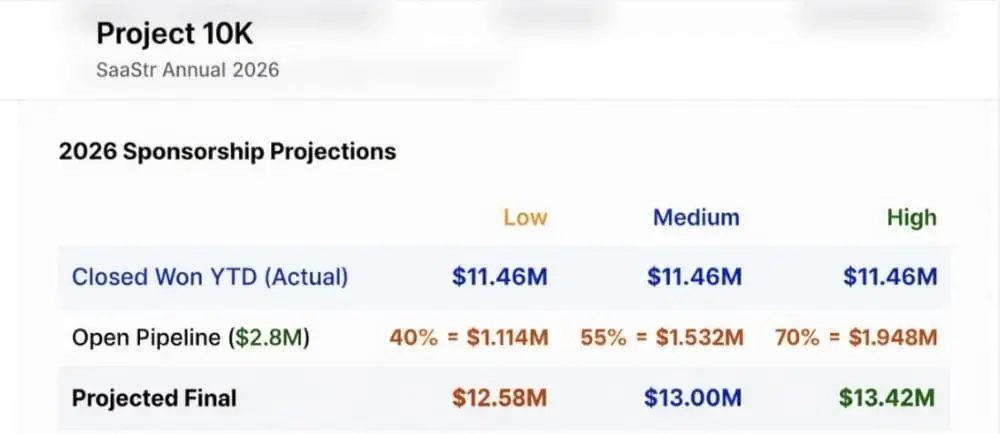

The emergence of internally-built AI autonomous systems represents a pivotal inflection point for the Middle East and North Africa’s digital transformation imperatives. SaaStr’s deployment of “10K”—an AI autonomous marketing executive—demonstrates how forward-thinking organizations are rapidly evolving beyond traditional SaaS dependencies to architect proprietary intelligence layers. This shift carries profound implications for regional sovereign capital allocators, who must recalibrate their technological investment frameworks to prioritize infrastructure-grade AI capabilities over consumer-facing applications. The MENA region’s $80 billion-plus in annual sovereign investment flows could catalyze similar domestic innovations if directed toward institutional-grade autonomous systems rather than imported solutions.
The business methodology underpinning 10K’s operational autonomy reveals critical infrastructure gaps across the MENA ecosystem. Traditional CRM platforms and legacy forecasting methodologies, still prevalent throughout Gulf Cooperation Council states and North African markets, perpetuate the same data integrity challenges that plagued conventional enterprises prior to AI integration. Regional venture capital firms, which deployed $4.2 billion across MENA technology investments in 2024, increasingly face portfolio companies constrained by fragmented data infrastructures and human-biased decision frameworks. The competitive advantage derived from real-time, unfiltered business intelligence now represents a fundamental differentiator for market entrants seeking to capture share from established players still reliant on quarterly review cycles.
For MENA’s sovereign wealth funds and institutional investors, 10K’s autonomous forecasting mechanism illustrates an emerging category of infrastructure investments: internal AI agents capable of systematic bias elimination across operational functions. Unlike external SaaS platforms which introduce latency and dependency risks, internally-architected AI systems provide direct algorithmic oversight of revenue projections, workforce productivity, and market positioning. This architectural shift aligns strategically with Saudi Arabia’s Vision 2030 objectives around digital self-sufficiency and UAE’s AI-oriented economic diversification mandates. The regional technology stack’s evolution toward autonomous operational intelligence will likely determine which jurisdictions capture the next generation of high-value enterprise software revenues.
The broader implications extend beyond individual organizational efficiency to encompass entire regional economic ecosystems. As MENA markets witness increasing foreign direct investment in technology infrastructure, the distinction between AI-enhanced operations and AI-autonomous processes becomes material for capital allocation decisions. Traditional venture capital underwriting models, which benchmark against historical performance metrics, become inadequate when evaluating companies operating with real-time autonomous intelligence systems. Regional innovation hubs from Cairo to Riyadh must develop new evaluation frameworks capable of assessing proprietary AI infrastructure investments that generate exponential improvements in operational accuracy and decision velocity—fundamentally reshaping how institutional capital allocates across the technology spectrum.