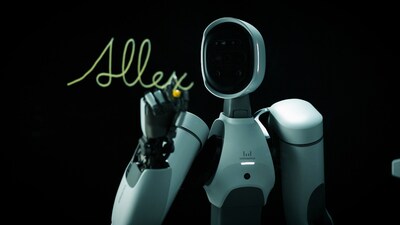

WIRobotics, a South Korean humanoid robotics pioneer, has secured approximately KRW 100 billion (USD 68 million) in Series B funding, underscoring growing institutional appetite for physical AI and advanced robotics infrastructure in emerging markets. Led by JB Investment and a syndicate of private equity firms including InterVest, SBVA, and Smilegate Investment, the round represents a vote of confidence in the company’s ability to scale its ALLEX humanoid platform and wearable robotics ecosystem. At a time when global capital markets are prioritizing deep-tech ventures with clear industrial applications, WIRobotics’ focus on wearable-AI integration positions it as a potential beneficiary of sovereign wealth funds and MENA region infrastructure modernization initiatives targeting fourth-industrial revolution capabilities. The investment also highlights Korean firms’ strategic diversification beyond semiconductor foundries, leveraging Physical AI for dual-use military-civilian applications that align with regional geopolitical-technological competitiveness demands.
The timing of this funding round dovetails with surging MENA region interest in sovereign capital investments targeting automation-driven economic diversification. Saudi Arabia’s NEOM project, UAE’s AI Office, and Qatar’s National Development Fund have collectively allocated billions to robotics and AI infrastructure since 2024, seeking to offset hydrocarbon dependency with technology-enabled productivity solutions. While WIRobotics operates from South Korea, its wearable robotics sales in Türkiye, Egypt, and Gulf Cooperation Council states suggest emerging demand corridors for exoskeleton-AI technologies. However, the firm faces significant capital expenditure challenges in scaling humanoid robotics—a sector requiring convergence of advanced materials, simulation infrastructure, and closed-loop control systems that strain venture capital balance sheets. Only 12% of MENA venture capital investments (USD 3.2 billion sector-wide) target deep-tech physical systems, reflecting a critical gap that sovereign wealth funds may resolve through dedicated robotics infrastructure funds.
Technically, WIRobotics’ ALLEX platform demonstrates convergence between consumer robotics commercialization and enterprise AI applications. Its 3,000th WIM unit sold and sequential revenue growth—from KRW 560 million in 2023 to forecast KRW 5 billion in 2026—validates wearables-as-a-market-entry strategy. By leveraging NVIDIA’s Physical AI Fellowship and AWS collaborations, the company gains early access to hyper-scale cloud robotics infrastructure, critical for training foundation models for humanoid locomotion. Yet regional infrastructure disparities in energy-intensive AI training hubs present headwinds; South Korea’s energy mix (70% fossil fuels vs. 20% renewables) contrasts with Morocco’s recent solar-powered data center investments, which may become preferred nexus points for Physical AI development in the MENA region. Long-term success hinges on partnership models that bypass short-cycle venture capital reinvestment cycles prevalent in East Asian deep-tech ecosystems.