
QatarAirways Expands Regional Footprint Amidst Economic Diversification Efforts
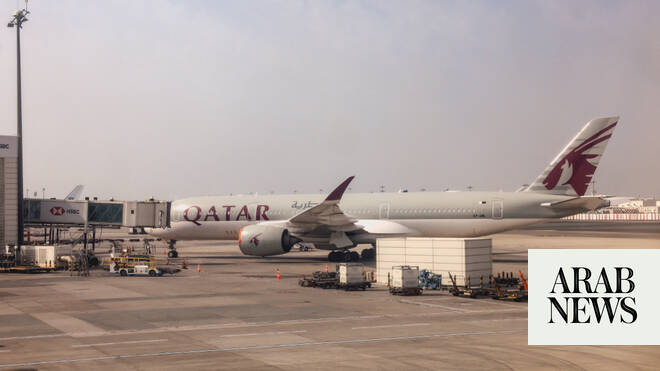
The strategic expansion of Qatar Airways’ flight schedule reflects the Gulf nation’s broader economic reorientation away from hydrocarbon dependence, leveraging sovereign capital to solidify its aviation leadership while enhancing regional connectivity. Operating 29 flights on Thursday underscores a deliberate intensification of its network, a move directly tied to Qatar’s sovereign wealth fund initiatives and state-directed industrial policy. This operational scale-up positions Qatar Airways not merely as an airline, but as a critical vector for the sovereign wealth fund’s diversification strategy, facilitating investment in associated sectors like tourism, logistics, and technology-enabled services linked to air travel within the MENA corridor.
The increased frequency is underpinned by significant sovereign capital deployment, likely involving strategic investments in fleet modernization, route optimization, and potentially, the development of digital infrastructure to support the growing passenger and cargo volumes. This infusion of state capital provides Qatar Airways with a competitive advantage distinct from purely commercial airlines, enabling long-term investments that enhance its hub functionality and position it as a regional infrastructure anchor. The airline’s ability to deploy capital without immediate profit pressure allows for the aggressive expansion necessary to capture market share from Gulf and broader MENA carriers, directly influencing the competitive landscape and setting infrastructure benchmarks for regional aviation hubs.
The operational intensification amplifies pressure on Hamad International Airport’s infrastructure capabilities, highlighting critical needs for ongoing capacity enhancements in terminals, cargo facilities, and ground handling services. This expansion necessitates significant infrastructure investment, potentially drawing on public-private partnerships (PPPs) or further sovereign fund participation to ensure the airport can handle the increased throughput efficiently. Concurrently, the growth trajectory creates fertile ground for venture capital (VC) activity, particularly in technologies that support airline operations and passenger experience at scale, such as advanced reservation systems, AI-driven logistics optimization, and digital identity solutions for seamless travel. This synergy between state-led airline expansion, infrastructure development, and VC-funded innovation positions Qatar Airways’ strategy as a microcosm of the MENA region’s efforts to transition towards knowledge-based economies, where sovereign capital acts as the primary catalyst for infrastructure-led economic diversification.