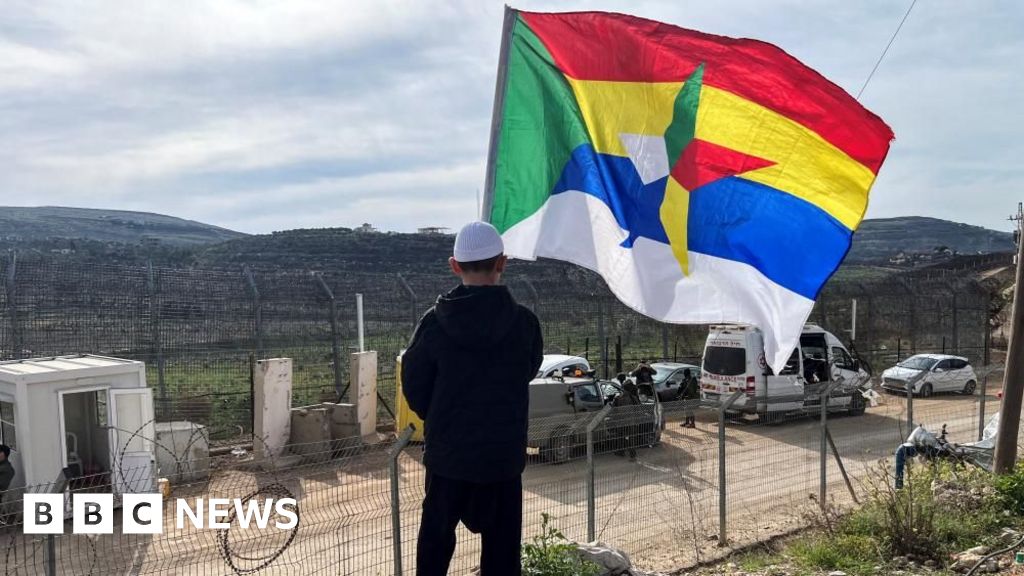

Escalating cross-border security dynamics, particularly those leveraging ethno-sectarian narratives, directly recalibrate the risk calculus for institutional capital across the Middle East and North Africa. For sovereign wealth funds and major pension allocators in the Gulf and North Africa, such instability introduces a premium on geopolitical volatility that reorders portfolio construction. Capital is rapidly diverted from frontier markets with porous borders toward the deep, politically insulated ecosystems of Saudi Arabia, the UAE, and Qatar, where mega-project pipelines—from NEOM to Egypt’s new administrative capital—offer a perceived sovereign-guaranteed buffer against regional spillover.
This environment fundamentally disrupts the venture capital calculus for the Levant and Mashreq. Early-stage and growth equity, which thrives on predictable regulatory frameworks and regional scalability, faces a sharp contraction in war-adjacent zones. Investors are applying heightened due diligence to any portfolio company with supply chain dependencies or talent networks crossing the Blue Line, forcing a strategic pivot toward domestic, self-contained markets. The immediate impact is a measurable decline in cross-border angel and Series A funding for Lebanese and Jordanian tech startups, while Dubai and Riyadh capture an outsized share of the region’s risk capital as safe-haven hubs.
The long-term infrastructure blueprint for the region is being redrawn under pressure. Multilateral development banks and sovereign-backed infrastructure vehicles are reassessing the viability of trans-national corridors—such as the Iraq-Jordan road link or Mediterranean gas pipeline routes—through a new lens of military contingency. This accelerates a trend toward nationally siloed, digitally-anchored infrastructure projects (e.g., sovereign cloud zones, national fiber backbones) over interdependent physical trade networks. The business implication is a fragmentation of the MENA single market, raising the cost of regional commerce and incentivizing foreign direct investors to duplicate supply chains within politically aligned blocs rather than optimize across the entire region.
Ultimately, the instrumentalization of communal affiliations for security objectives creates a permanent drag on regional economic integration. For sovereign capital, it mandates a strategic decoupling of political engagement from economic partnership, leading to a bifurcated investment landscape where capital follows the flag of stability. The venture ecosystem contracts to national silos, and infrastructure development prioritizes defensive, sovereign-controlled assets over connective, multilateral ones. The region’s potential as a unified trade and technology corridor is consequently deferred, with economic gains increasingly captured by those states able to most credibly insulate their projects from the conflict dynamics of their neighbors.