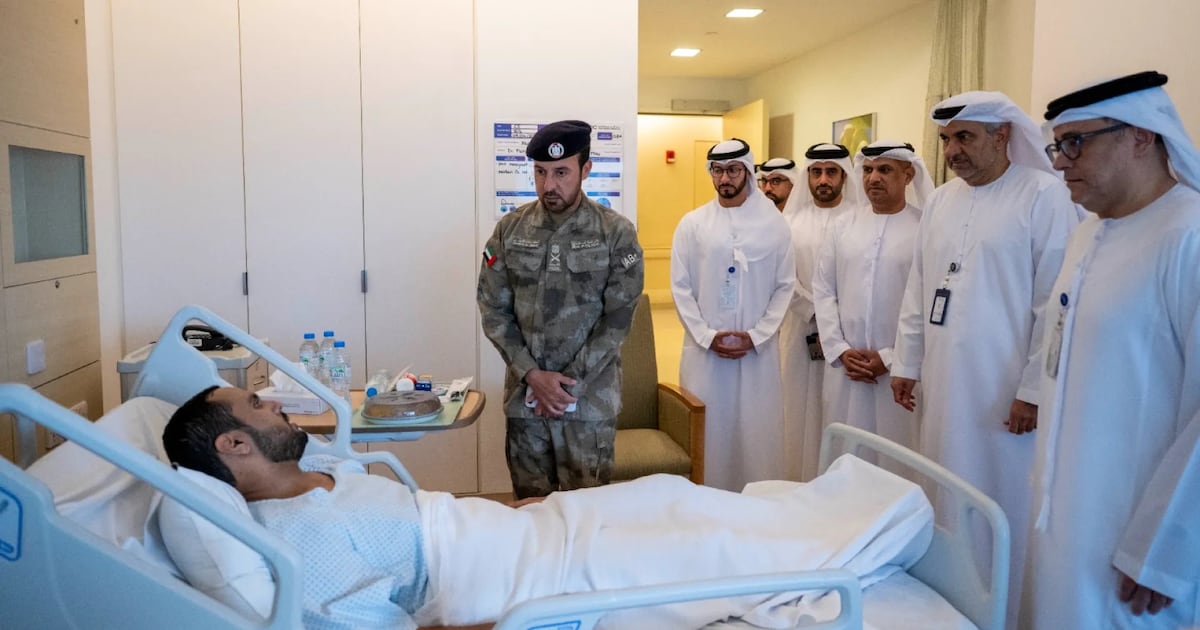

The escalating conflict between Iran and Israel is generating significant, and increasingly destabilizing, repercussions across the Middle East, with the United Arab Emirates at the forefront of a heightened operational response. Abu Dhabi’s demonstrable commitment, as evidenced by the recent high-level delegation led by Maj Gen Ahmed Al Muhair to Sheikh Shakhbout Medical City, underscores the strategic imperative for regional stability and the prioritization of citizen welfare amidst ongoing hostilities. This visit, alongside a concurrent operational assessment by the Abu Dhabi Department of Energy and AD Ports Group, highlights a proactive approach to bolstering critical infrastructure resilience – specifically, the nation’s healthcare capacity – in the face of persistent aerial threats.
The immediate business impact is substantial. While the tentative two-week ceasefire brokered between the US and Iran offers a temporary reprieve, the sustained barrage of missile and drone attacks necessitates a rapid reassessment of investment strategies. Sovereign wealth funds, particularly those linked to Abu Dhabi and Dubai, are likely to curtail expansion plans in sectors vulnerable to disruption, including logistics, energy, and tourism. Furthermore, the heightened security environment is driving increased demand for cybersecurity services and physical protection measures, creating opportunities for specialized technology providers – a trend mirroring activity observed in Europe and North America. The potential for prolonged instability is also prompting a re-evaluation of supply chain diversification strategies, with increased emphasis on regional sourcing and alternative trade routes.
Venture capital activity within the MENA region is experiencing a pronounced shift. Early-stage investments, particularly in sectors reliant on operational continuity, are facing increased scrutiny. However, there’s a parallel surge in demand for technologies supporting resilience – including drone detection and countermeasure systems, advanced surveillance solutions, and critical infrastructure hardening. Sovereign capital, traditionally a dominant force in regional investment, is now actively directing resources towards bolstering national defense capabilities and supporting the healthcare sector, effectively shifting capital away from purely commercial ventures. This strategic realignment will likely accelerate the development of domestic defense industries and further consolidate the role of state-backed entities in key sectors.
Finally, the conflict is accelerating the need for significant regional infrastructure upgrades. Beyond bolstering medical facilities, the UAE’s proactive measures signal a broader commitment to enhancing its defensive capabilities, including radar systems, air defense networks, and potentially, subterranean infrastructure. This necessitates substantial investment in advanced technologies and skilled personnel. The long-term implications extend beyond immediate security concerns, potentially triggering a wave of modernization across critical infrastructure sectors – energy, transportation, and communications – designed to mitigate future risks and ensure operational continuity. The geopolitical uncertainty is, therefore, not merely a security challenge, but a catalyst for a fundamental reshaping of the MENA region’s economic and technological landscape.